You take away a privilege.
You give a consequence.
You repeat the same rule for what feels like the hundredth time.
And somehow, nothing changes.
Maybe your child gets angry.
Maybe they shut down.
Maybe the behavior gets even worse.
At some point, many parents start asking themselves: “Why isn’t this working?”
You are not alone if you have ever experienced such feelings. And it doesn’t imply you’re a bad parent.
In many cases, traditional discipline fails with trauma-affected children because trauma can change how a child responds to stress, relationships, and correction.
Defiance might mask underlying issues. What looks like a child refusing to listen may actually be a child struggling to feel safe enough to learn.
Understanding that difference can change everything.
Why Traditional Discipline Works for Some Children—But Not for Others
Most traditional discipline methods are built on a simple idea:
A child makes a poor choice. A consequence follows. The child learns from that consequence.
For many children, this can work reasonably well.
But there is something important happening underneath the surface.
Traditional discipline assumes a child can access four key abilities:
1. They Feel Safe Enough to Learn
Children learn best when they feel emotionally safe.
If a child experiences correction as rejection, criticism, or danger, learning becomes much harder.
2. They Can Stay Regulated During Stress
Traditional discipline assumes a child can manage strong emotions well enough to think clearly.
But many trauma-affected children become overwhelmed long before they reach that point.
3. They Trust the Adult Giving the Correction
Learning often happens through relationships.
When a child feels connected to a trusted adult, they are usually more open to guidance.
This idea is closely connected to attachment and emotional safety, something explored in depth in what your child’s behavior is actually communicating.
4. They Can Connect Actions With Outcomes
Traditional discipline assumes a child can think:
“I made this choice, and this was the result.”
But when a child’s nervous system is focused on survival, that learning process can break down.
This is one reason the same consequence may work for one child but seem completely ineffective for another.
Trauma does not make children incapable of learning.
It simply means they may need more support, connection, and regulation before learning can happen.
If you’re beginning to see behavior differently, you may find our Free Parenting Guide helpful. It explains how stress, overwhelm, and emotional needs often sit underneath challenging behavior.
When a Child’s Nervous System Is Focused on Survival, Learning Takes a Back Seat
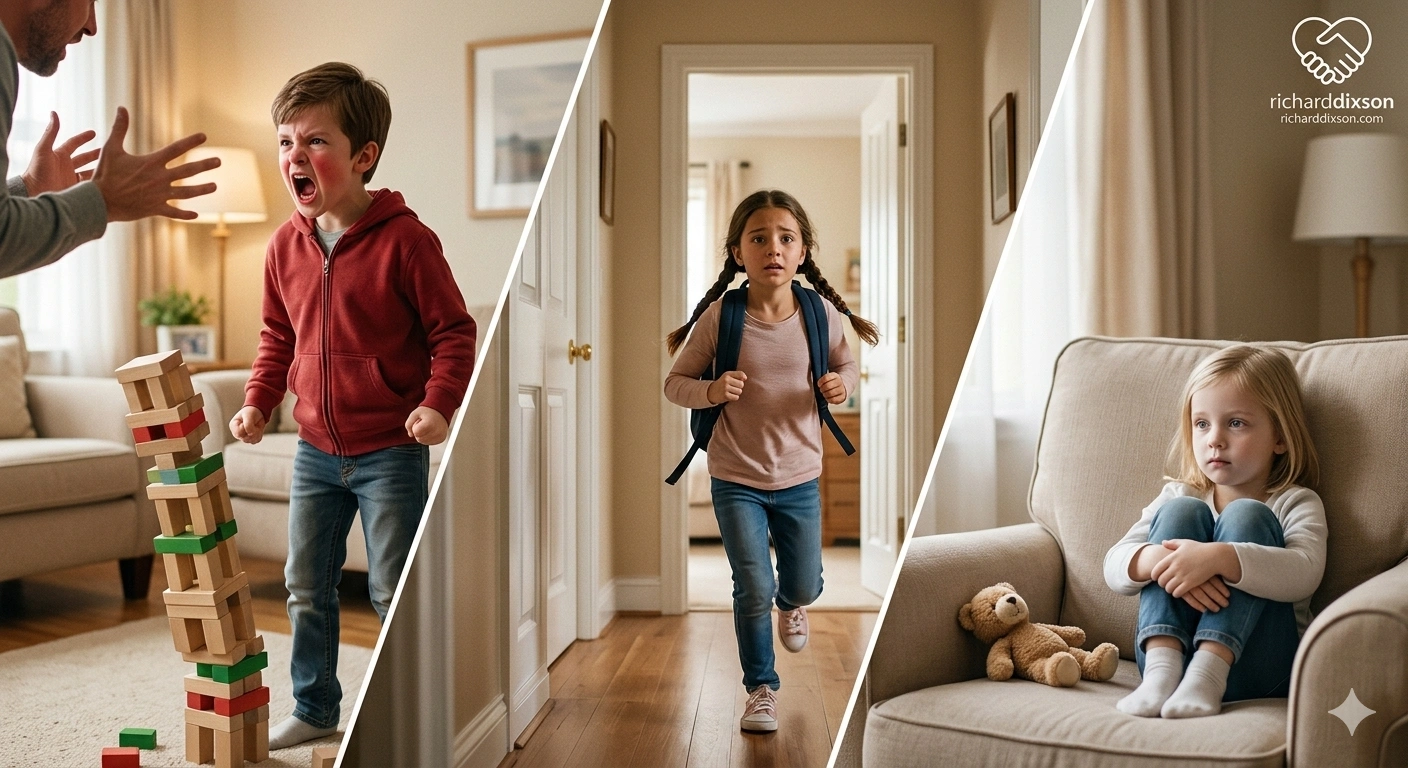
Children who have experienced trauma often become highly sensitive to stress. A small problem can feel much bigger to them. A correction can feel like rejection. A consequence can feel like danger.
When this happens, the nervous system shifts into survival mode. To understand why this occurs on a biological level, you should grasp how your own nervous system influences how you react as a parent.
You may see:
- Fighting
- Arguing
- Yelling
- Running away
- Shutting down
- Refusing to talk
These reactions are often known as fight, flight, or freeze responses.
The important thing to understand is this:
When a child is focused on survival, they are not focused on learning.
This idea is supported by trauma researcher Dr. Bruce Perry, whose work through the NeuroSequential Network has shaped how many professionals understand the impact of early stress on brain development. His research explains why punishment alone often fails to create lasting change.
That does not excuse harmful behavior. But it helps explain why consequences alone often fall short.
You may also enjoy reading our article on why children melt down after school, which explores how stress builds up in a child’s nervous system throughout the day.
“They Know Better” Doesn’t Always Mean They Can Do Better
One of the most frustrating parenting experiences is watching a child repeat the same behavior again and again.
You know they understand the rule.
They can even tell you the rules. Yet the behavior continues.
Why?
Because knowing a skill and using a skill are two different things.
Think about an adult who knows they should stay calm during an argument. Knowing is one thing. Actually staying calm in the moment is another. Children are no different.
Many trauma-affected children understand expectations. What they struggle with is accessing self-control when emotions become overwhelming.
This is why consequences alone often fail to solve the problem. The missing piece is often emotional regulation and learning how to become a calmer parent is often where lasting change begins.
Why Punishment and Consequences Sometimes Make Things Worse
Many parents increase consequences when behavior does not improve.
That makes sense.
After all, most of us were taught that stronger consequences create stronger learning.
But trauma can change how children experience discipline.
1- Punishment Can Feel Like More Threat
A child who already feels unsafe may experience punishment as another threat.
Instead of becoming calmer, they become more reactive.
2- Shame Can Increase Dysregulation
When children feel ashamed, they often become defensive. Some lash out. Others shut down. Neither response creates learning.
3- Disconnection Makes Change Harder
Children learn best in relationships where they feel safe and connected. When correction creates distance, learning often becomes harder.
If consequences are not working in your home, you may find our article about what to do when consequences don’t work with your child helpful.
Why Traditional Discipline Often Fails: A Simple Framework
Many parents find this easier to understand when they see the process step by step.
- Trauma increases a child’s sensitivity to stress.
- Stress activates survival responses in the nervous system.
- Survival responses reduce access to thinking and self-control.
- Reduced self-control makes learning from consequences harder.
- The behavior repeats, even when consequences increase.
This does not mean the child does not care.
It often means the child needs help returning to a place where learning is possible.
This is one reason trauma-informed parenting focuses on regulation before correction.
The Goal of Discipline Is Learning—Not Control
Many people use the words discipline and punishment as if they mean the same thing.
| Punishment | Discipline |
| Focuses on compliance | Focuses on learning |
| Often driven by reaction | Intentionally teaches skills |
| Creates fear of mistakes | Creates opportunities for growth |
| Short-term behavior change | Long-term skill development |
| Asks “What happens because of this?” | Asks “What can be learned from this?” |
The goal is not simply to make behavior stop today. The goal is to help children build skills they can use tomorrow, skills like emotional regulation, problem solving, responsibility, self-control, and healthy communication.
When discipline becomes skill-building, long-term change becomes much more possible.
Signs Your Child May Be Responding From Survival Rather Than Defiance
Every child is different. But some common signs include:
- Big reactions to small problems
- Extreme sensitivity to correction
- Frequent emotional outbursts
- Sudden shutdowns
- Difficulty calming down
- Strong need for control
- Repeated behaviors despite consequences
This does not automatically mean a child has experienced trauma. But it can be a helpful clue that there may be more happening beneath the surface. Our guide on why your child only melts down with you explores this pattern in detail.
What Makes Discipline More Effective for Trauma-Affected Children
The good news is that children can learn new skills. But they often need a different path.
A Simple Trauma-Informed Discipline Framework
Many parents ask:
“If punishment isn’t working, what should I do instead?”
While every child is different, these five steps can create a strong foundation.
The good news is that children can learn new skills. But they often need a different path.
Step 1: Regulate First
A child who is overwhelmed cannot learn effectively. Focus on helping them feel safe and calm before trying to teach a lesson. The 90-second rule for parents is one simple tool that can help during these moments.
Step 2: Connect Before Correcting
Connection does not remove accountability. It simply prepares the brain for learning. A child who feels understood is often more willing to listen. Learn more about this in our piece on connection before correction.
Step 3: Teach the Missing Skill
Ask yourself: “What skill was missing at that moment?” Was it emotional regulation? Problem-solving? Impulse control? Communication? The answer often points to what needs to be taught.
Step 4: Use Natural and Supportive Consequences
Consequences can still play an important role. The goal is not punishment. The goal is helping children understand how actions affect themselves and others. Consequences work best when they come from calm, clear limits rather than reactive anger. For a practical approach, see how to set boundaries without yelling, shaming, or giving in.
Step 5: Repair and Practice
After difficult moments, help children reflect, repair relationships when needed, and practice better responses for next time. Learning grows through repetition and support.

Co-Regulation: Helping Your Child Borrow Your Calm
Children are not born knowing how to regulate emotions. They learn through relationships. When you stay calm during difficult moments, your child’s nervous system can begin to settle as well. This process is called co-regulation.
To understand the difference between co-regulation and self-regulation and why both matter see our guide on co-regulation vs self-regulation.
Over time, repeated experiences of co-regulation help children develop stronger self-regulation skills of their own. For practical examples, see our guide on co-regulation strategies for parents.
The American Psychological Association also recognizes co-regulation as a foundational part of child development, noting that children rely on regulated caregivers to help them build their own emotional capacities over time. You can explore their resources on parenting and child development for further reading.
Want to Learn More?
If these ideas feel different from how you were raised, you’re not alone.
You can explore them further in the free chapter of The Drama-Free Parent, where Richard Dixson shares practical ways to create connection, emotional safety, and lasting change.
A Real-Life Example
Imagine a child who lies about finishing their homework.
A traditional response might be: “You lied. No electronics for a week.”
A trauma-informed response might sound like: “I need honesty from you. Let’s talk about what made it hard to tell the truth.”
The second response still addresses the behavior. But it also explores the reason behind it. Many trauma-affected children need both accountability and support not one without the other.
What Foster, Adoptive, and Kinship Caregivers Often Notice First
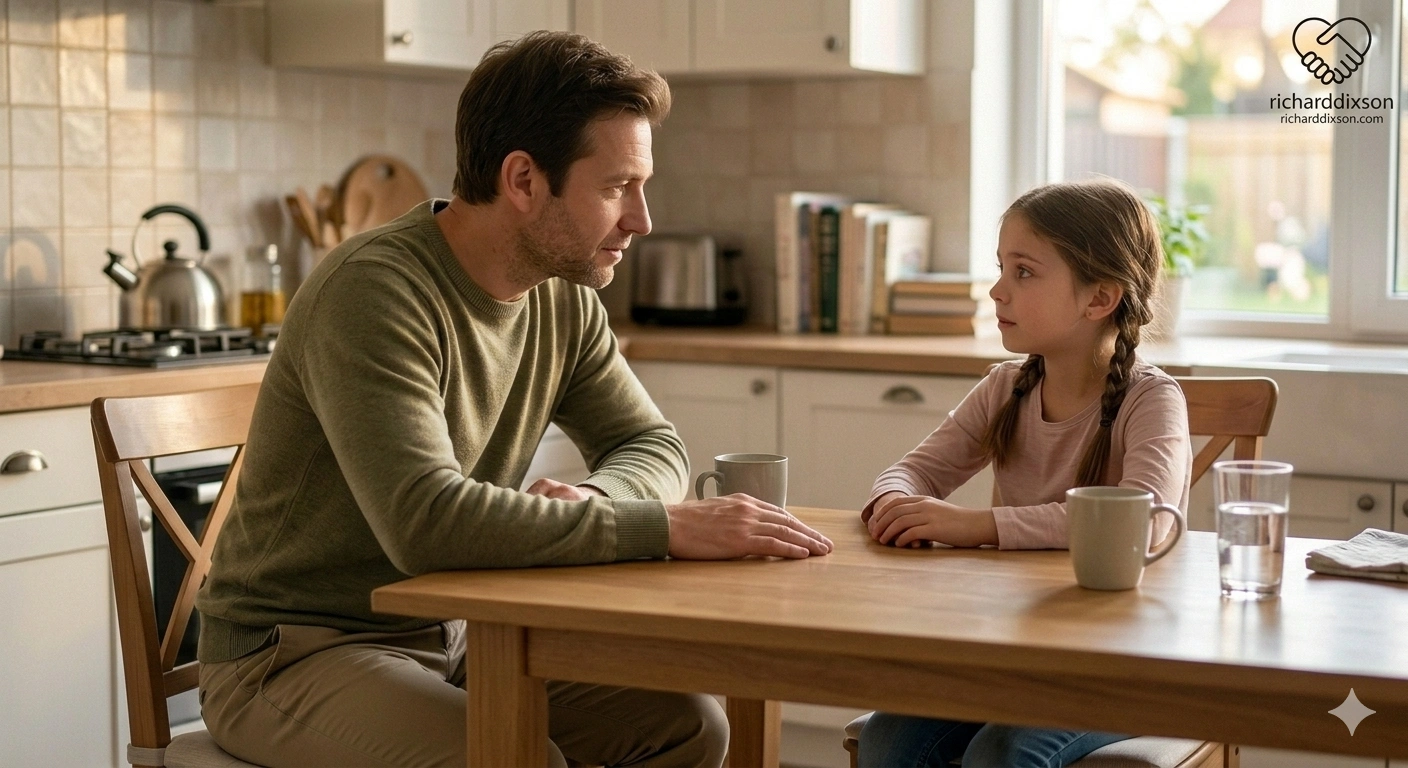
Foster parents, adoptive parents, and kinship caregivers often tell me the same thing: “Traditional parenting advice doesn’t seem to fit my child.”
That experience is incredibly common. Children who have experienced loss, instability, neglect, or other difficult experiences often respond differently to stress and correction.
This is one reason trauma-informed parenting has become such an important approach for kinship caregivers and foster parents.
Many trauma-informed approaches, including principles found in TBRI (Trust-Based Relational Intervention), emphasize the importance of connection, emotional safety, and healthy attachment relationships.
Rather than asking “How do I gain control?” They encourage parents to ask “How do I build enough safety and trust for learning to happen?”
That small shift often creates big changes over time.
What About Parents Carrying Their Own Trauma?
Parenting can activate old wounds. A child’s behavior may trigger memories, fears, or emotions you did not expect. That does not make you a bad parent. It makes you human.
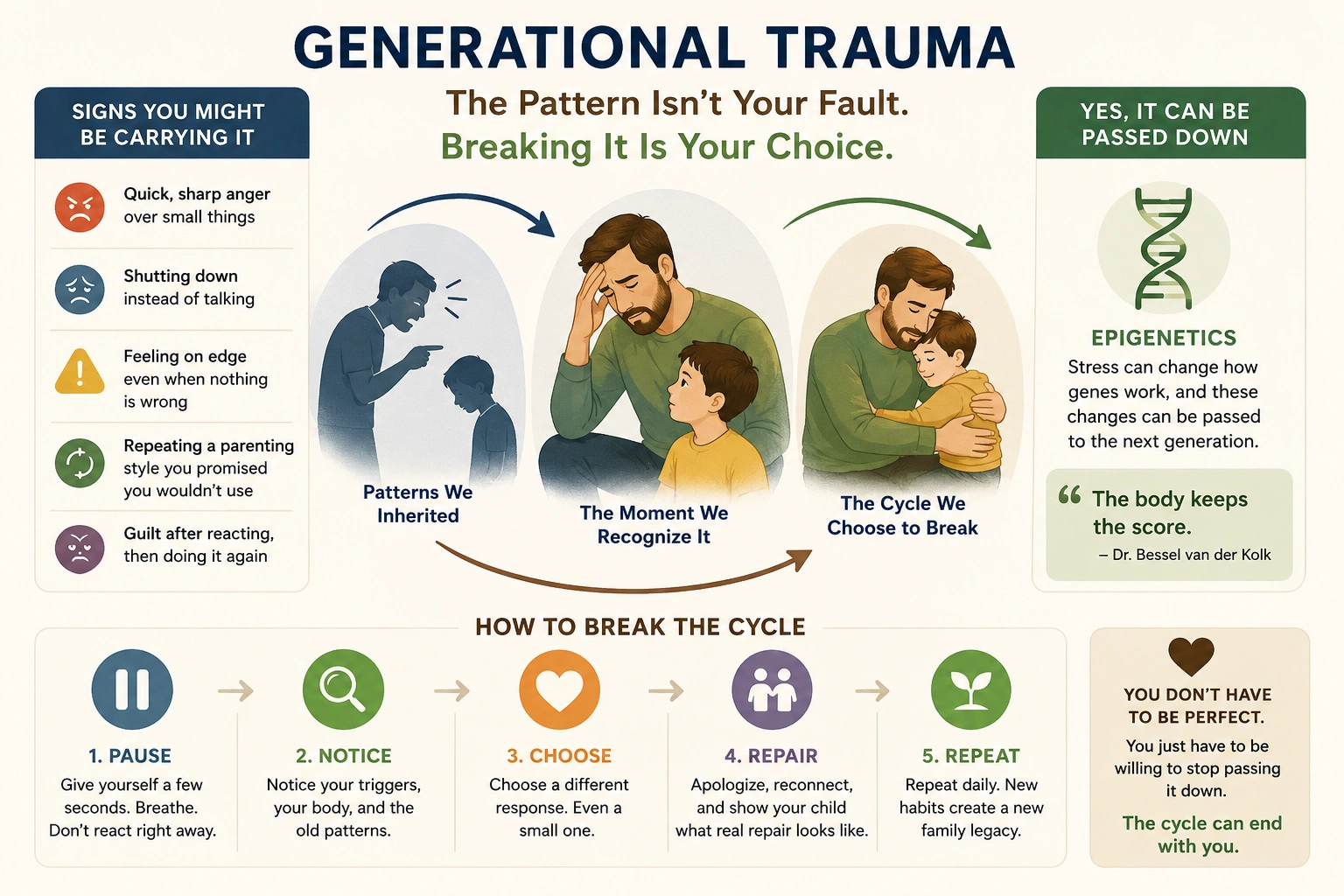
Many parents discover that healing generational patterns is part of helping their children heal too. If you’ve noticed yourself repeating patterns from your own upbringing, our guide on how generational trauma affects your parenting style is a helpful place to start followed by our practical guide on how to break generational trauma.
When this happens, parent emotional regulation becomes just as important as child emotional regulation. Children often look to the adults around them for signs of safety.
The calmer and more regulated we can remain, the easier it becomes to support our children through difficult moments.
Some families also find ongoing support through Parents Hub, where they can continue learning and practicing trauma-informed parenting in everyday life.
Key Takeaways
- Traditional discipline often assumes a child can stay regulated under stress.
- Trauma can interfere with learning, reasoning, and self-control.
- Punishment may increase feelings of threat and dysregulation.
- Connection and emotional safety support learning.
- Co-regulation helps children develop emotional regulation skills.
- Discipline is most effective when it focuses on teaching, not controlling.
- Long-term change happens through relationships, practice, and skill building.
Frequently Asked Questions
Why does traditional discipline fail with trauma-affected children?
Traditional discipline often assumes a child can think clearly and learn from consequences in stressful moments. Trauma can make those moments feel unsafe, causing the nervous system to focus on survival instead of learning.
Why does my child keep repeating the same behavior after consequences?
Many children know the rules but struggle to access self-control when overwhelmed. Repeated behavior is often a sign that more support and skill-building are needed.
How should you discipline a child with trauma?
Focus on emotional safety, co-regulation, connection, clear boundaries, and teaching skills. Accountability still matters, but it works best when paired with support.
What is trauma-informed parenting?
Trauma-informed parenting recognizes that past experiences can affect behavior, emotional regulation, and relationships. It focuses on understanding what is driving behavior rather than only reacting to the behavior itself.
What should I do during a trauma-triggered meltdown?
Prioritize safety and regulation first. A child who is overwhelmed is usually not ready for problem-solving or consequences until they have calmed down.
Does trauma-informed parenting mean no consequences?
No. Trauma-informed parenting still includes boundaries and accountability. The difference is that consequences are used to teach and guide rather than shame or control.
Why do trauma-affected children struggle with consequences?
Trauma can affect a child’s ability to stay regulated during stressful moments. When a child is overwhelmed, they may struggle to connect their behavior with the consequence, making learning more difficult.
You Don’t Have to Figure This Out Alone
If traditional discipline has not been working, that does not mean your child is broken and it does not mean you have failed.
Often, it means your child needs something different: a different understanding, a different approach, and sometimes a different set of tools.
Start by reading the free chapter of The Drama-Free Parent and discover practical ways to build connection, emotional safety, and cooperation at home.
If you’re ready for deeper support, Parents Hub can help you continue the journey with guidance, encouragement, and trauma-informed parenting resources designed for real families.