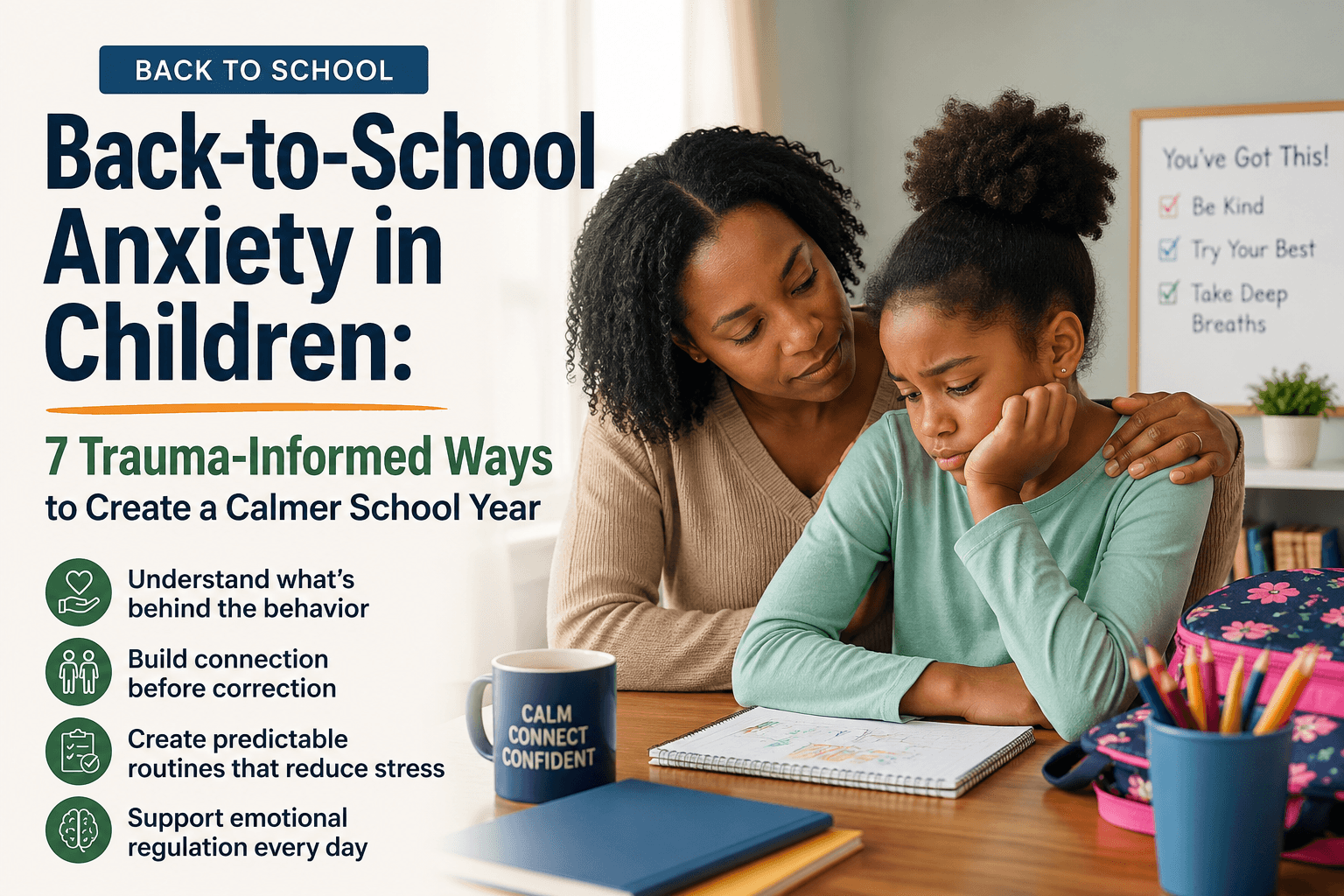
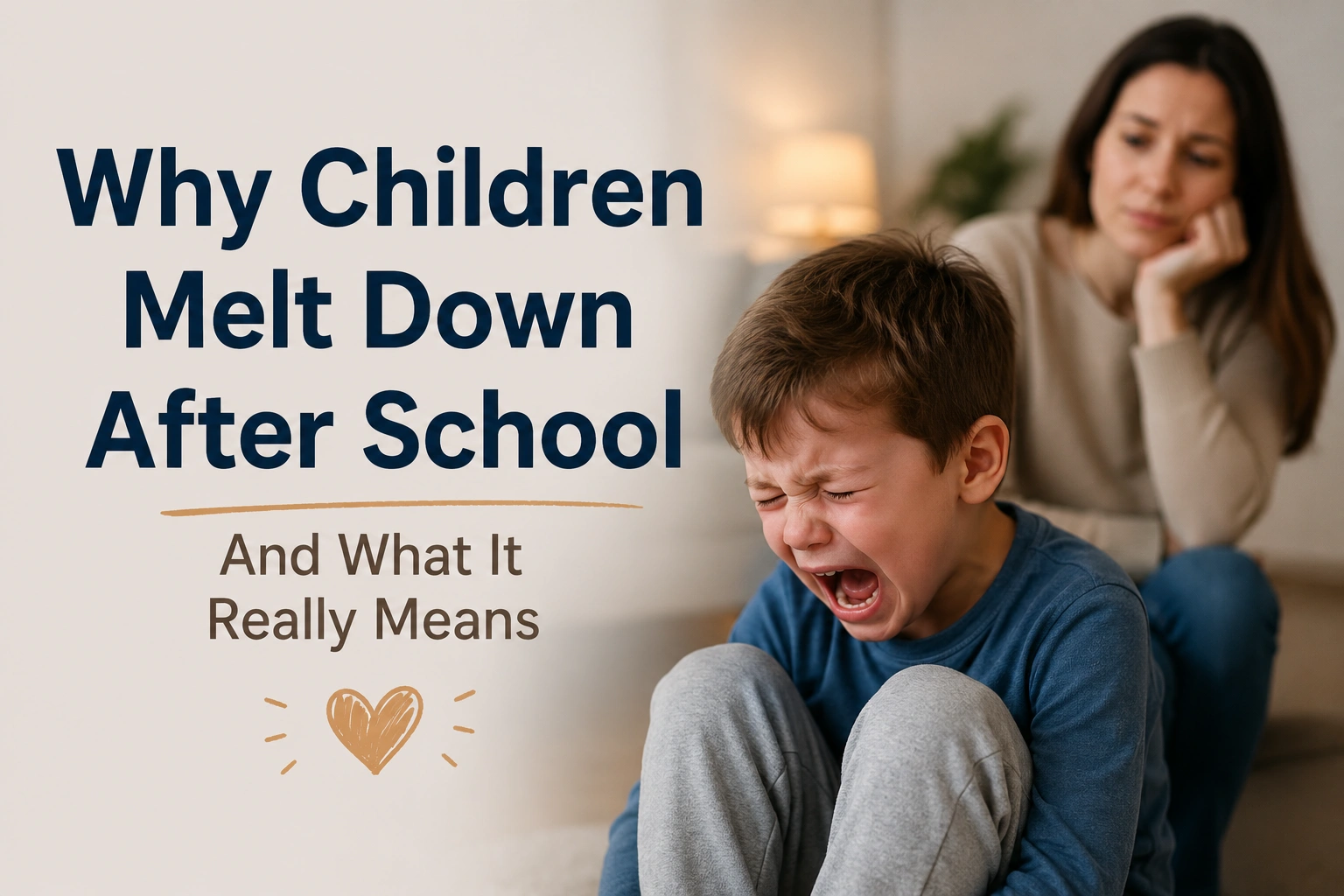
Your child seems completely fine at school… but falls apart the moment they get home.
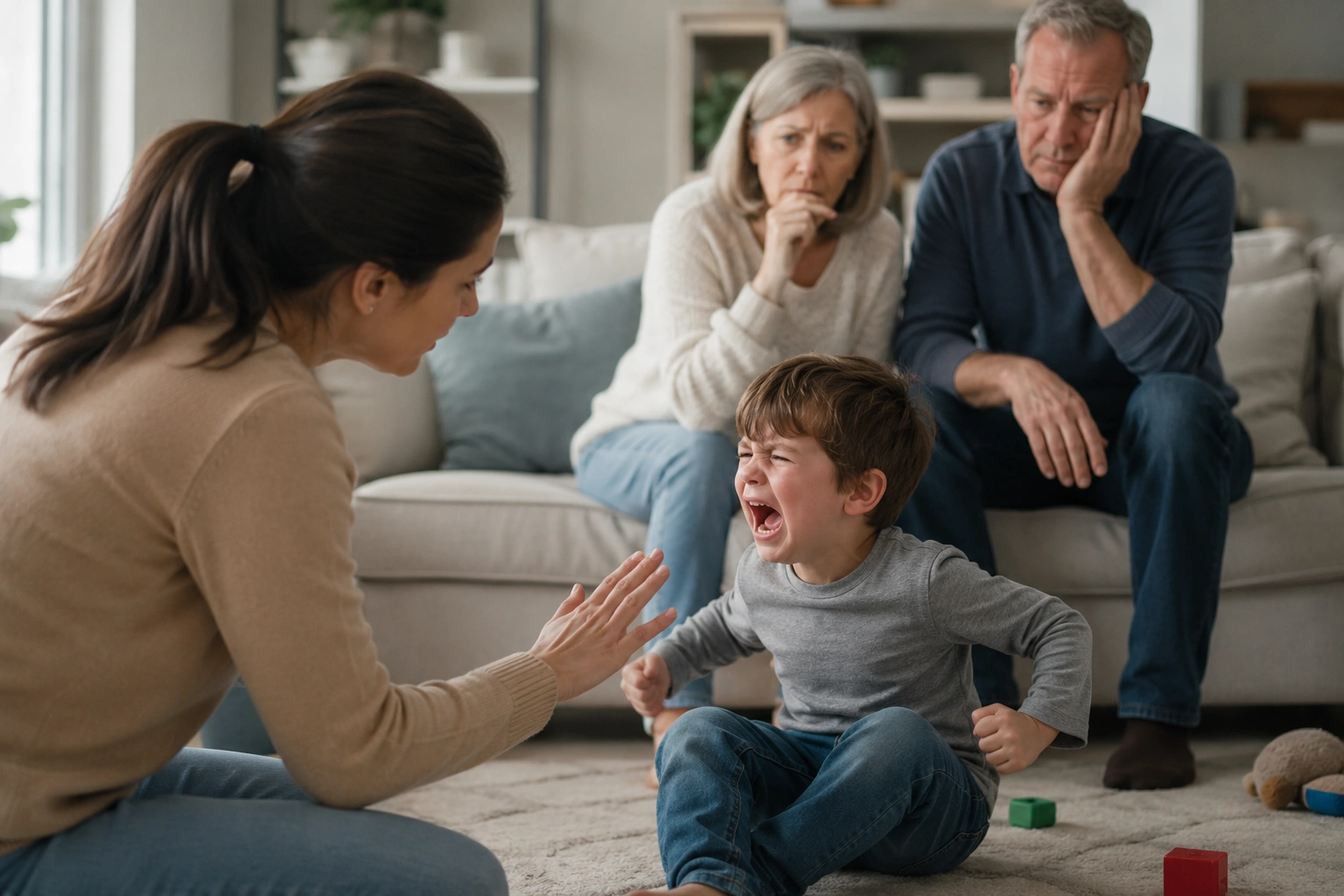
Maybe they start crying over something small. Maybe they yell, shut down, slam doors, or suddenly seem angry and overwhelmed for no obvious reason. And as a parent, it can be hard to understand when teachers say they had a “great day.”
In many cases, children melt down after school because they have spent the entire day holding in stress, emotions, sensory overload, and pressure. Once they finally get home and feel emotionally safe, their nervous system releases all of that built-up overwhelm.
That doesn’t imply you’re doing something wrong. In fact, it often means your child feels safest with you.
Why Children Often Fall Apart After School
Most children spend the school day constantly regulating themselves.
They are following instructions, managing emotions, handling transitions, staying focused, and trying to meet expectations around them. Even children who look calm on the outside can feel emotionally exhausted internally.
For some kids, especially highly sensitive or stressed children, that pressure keeps building throughout the day.
Then they get home… and their nervous system finally lets go.
This is one reason why children can seem “fine at school but different at home.” Home often feels safe enough for emotions to come out.
Sometimes what appears to be bad behavior is actually emotional overload.
That is why understanding (what behavior is communicating) matters so much during these moments.
And instead of immediately reacting to the behavior itself, many parents find it more helpful to focus on (connection before correction) first.
Home Is Often the Safe Place
Children do not always release emotions where they feel stressed.
They usually release them where they feel safest.
That is why some children save their biggest reactions for home. They may spend the entire day masking stress, holding back frustration, or trying to stay regulated around teachers, classmates, noise, pressure, and constant stimulation.
If you have ever wondered why your child only seems to fall apart with you, this is often exactly why.
By the end of the day, even small things can trigger huge reactions.
What After-School Overwhelm Can Actually Look Like
After-school dysregulation does not always look the same.
For some children, it looks loud and explosive. For others, it looks quiet and withdrawn.
You might notice:
- crying over small things
- irritability after pickup
- yelling or emotional outbursts
- refusing to talk about school
- hyperactivity at home
- aggressive reactions toward siblings
- shutting down emotionally
- getting upset very quickly
These reactions are often signs of an overwhelmed nervous system, not manipulation.
When kids are mentally overloaded, they may not be able to control how they act. Their brain is focused on stress and emotional release, not calm problem-solving.
That is why understanding the overwhelmed nervous system can completely change the way parents respond to these moments.
And instead of expecting children to calm themselves down immediately, many parents find it more helpful to focus on helping children regulate first.
One of the most effective ways to help children regulate consistently is by building predictable parenting routines because when children know what to expect, their nervous system feels safer before the overwhelm even begins.
What Actually Helps After-School Meltdowns
Most overwhelmed children do not need harsher discipline after school. They typically require assistance, control, and downtime. Even a few small changes can help calm an overwhelmed nervous system.
1- Give Them Time to Transition
Many children need emotional breathing room after school. Instead of jumping straight into homework, questions, or corrections, it often helps to create a calmer transition home.
Quiet time, snacks, movement, music, or outdoor play can help children decompress and regulate more easily.
2- Reduce Questions and Pressure
Parents naturally want to connect after school.
But questions like:
- “How was school?”
- “What happened today?”
- “Did you finish everything?”
can sometimes feel overwhelming to an emotionally exhausted child. For many kids, calmer evenings begin with fewer immediate demands.
3- Focus on Regulation Before Correction
Children usually struggle to listen well when they feel emotionally overloaded. That is why your own calmness matters too.
Children frequently borrow calm from the adults around them. In difficult moments, (staying calm during meltdowns) can help de-escalate emotions much faster than reacting emotionally.
And for children who regularly struggle with overwhelm, some families also find supportive meltdown responses helpful during stressful moments.
A Different Way to See After-School Meltdowns
It is easy to look at after-school meltdowns and assume something is wrong.
But very often, these moments are signs of emotional overload, stress, and a nervous system that has been working hard all day to stay regulated.
Sometimes the children who fall apart most at home are the same children who worked hardest all day to keep it together somewhere else.
When we start seeing those reactions through the lens of emotional safety instead of “bad behavior,” our responses begin to change too. And in many homes, that shift from control to connection is where calmer evenings finally begin.
If your child seems overwhelmed after school, emotionally reactive at home, or unable to calm down alone, small regulation-focused changes can make a bigger difference than more consequences ever did.
That is exactly why many parents start with the Free Guide or the 21 Days to a Drama-Free Home, simple tools designed to help overwhelmed children feel safer, calmer, and more emotionally regulated at home.