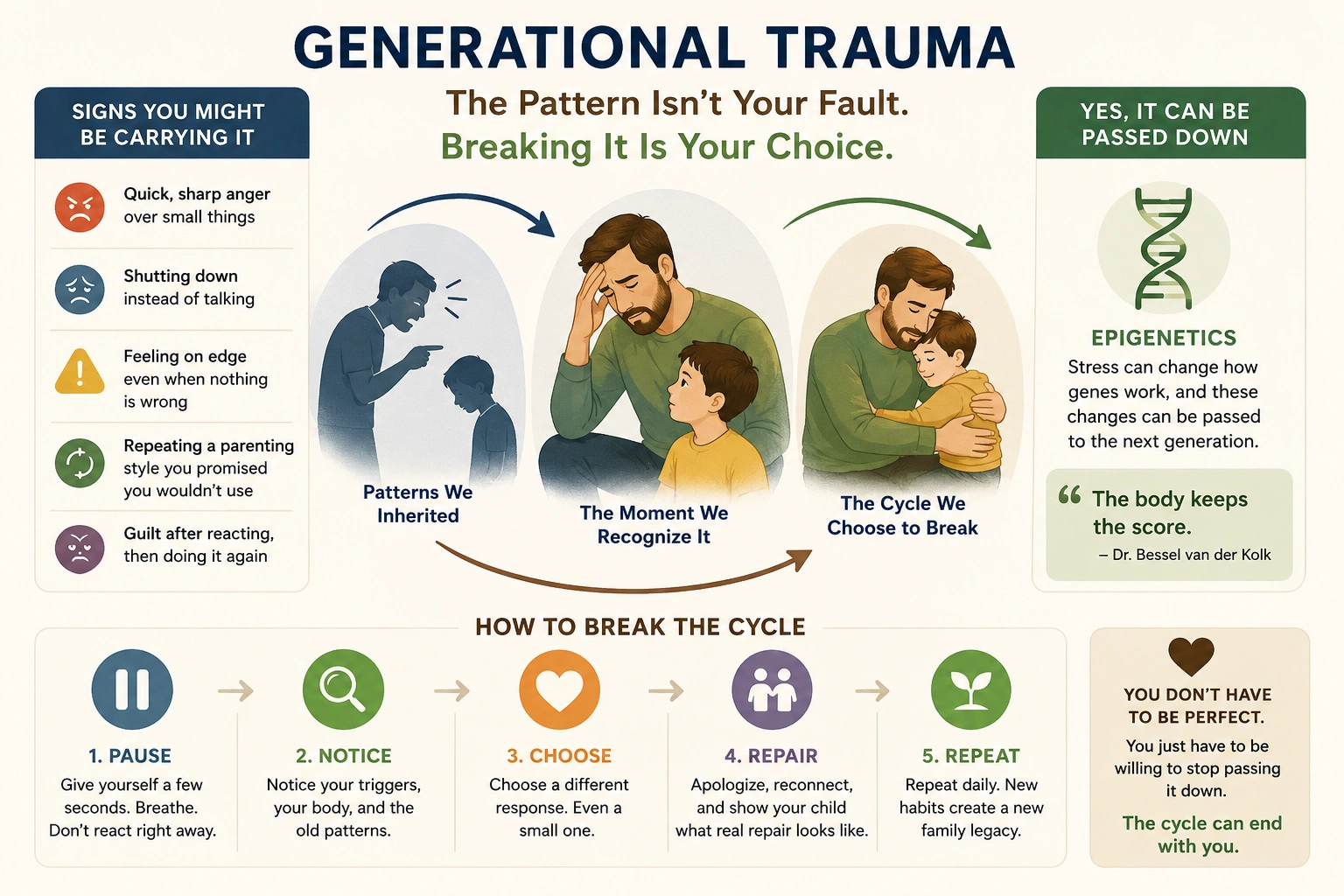

Most days, it can feel like your child is pushing every button you have. The tantrum in the grocery store. The sudden shutdown when you ask them to do something simple. The endless arguing, or the quiet withdrawal that leaves you wondering what you did wrong.
I used to see these moments the way most parents do. As bad behavior that needed to be fixed, redirected, or stopped.
Until I learned something that changed the way I parent, the way I coach, and the way I show up in my own home with my grandchildren today.
Your child’s behavior is not the problem. It is information.
Children do not yet have the words or the nervous system maturity to say, “Dad, I feel overwhelmed right now.” Or “Mom, I am scared and I need to feel safe with you.” So, they show us instead. Through their actions, their tone, their meltdowns, and their silence. Every behavior is a message, sent by a nervous system that is either feeling safe or not.
According to the American Academy of Pediatrics, a child’s emotional and behavioral responses are deeply connected to how safe and supported their nervous system feels.
As a grandparent currently raising my grandchildren, and as someone who has spent years breaking generations of reactive parenting in my own family, I have watched this truth play out again and again. The behavior is rarely the problem. It is almost always the signal.
What the behavior is usually saying
When a child melts down, shuts down, or acts out, their nervous system is often communicating one of these four things:
- I am overwhelmed and my nervous system is in fight or flight
- I need connection more than correction right now
- I do not feel safe enough to listen or learn
- I am carrying emotions I do not have the words or tools to release
Dr. Daniel Siegel, one of the leading researchers in interpersonal neurobiology, puts it clearly: what is not brought to awareness cannot be healed. When we focus only on stopping the behavior without understanding the message underneath it, we miss the real opportunity. Not just to redirect the moment, but to build connection that actually lasts.
This is also why traditional discipline often fails with trauma-affected children, because it targets the behavior without ever addressing the message underneath it.
The shift that changes everything
Instead of asking, “How do I make this stop?” try asking a different question: “What is my child trying to tell me right now?”
When my grandchildren would melt down in the early days of raising them, my old pattern was to get bigger and louder. To match their energy with control. What actually worked was something different and, at first, counterintuitive.
Regulate myself first. Then move toward them with calm presence.
That single shift changed everything. When I regulated my own nervous system, they had something to co-regulate with. They felt safe enough to come back into connection. And from connection, behavior actually changed. Not because I demanded it, but because the conditions for it were finally present.
This is the foundation of everything I write about in The Drama-Free Parent, and it is the same principle behind the Sophie the Unicorn children’s series. Tools and stories that help both parent and child understand what is happening in the body, not just in the mind.
A practical next step for today
The next time your child shows a big behavior, try this before you respond.
Pause for three seconds. Breathe once. Then ask yourself quietly: what is my child’s nervous system asking for right now? Safety? Connection? Rest?
Then lead with calm instead of control. You do not have to be perfect. You just have to be present and steady enough to give them something to come back to.
Calm is not something you demand from your child. It is something you practice first and then pass on.
If you are in a season of repeated reactions and power struggles, you are not failing. You are parenting without the tools you deserved to have. That changes today.
Start with understanding the nervous system. Everything gets clearer from there.
Have you noticed a behavior in your home that keeps repeating? Drop a comment below and share what you think your child might be communicating. Richard reads everyone.
Ready to go deeper into the nervous system approach?