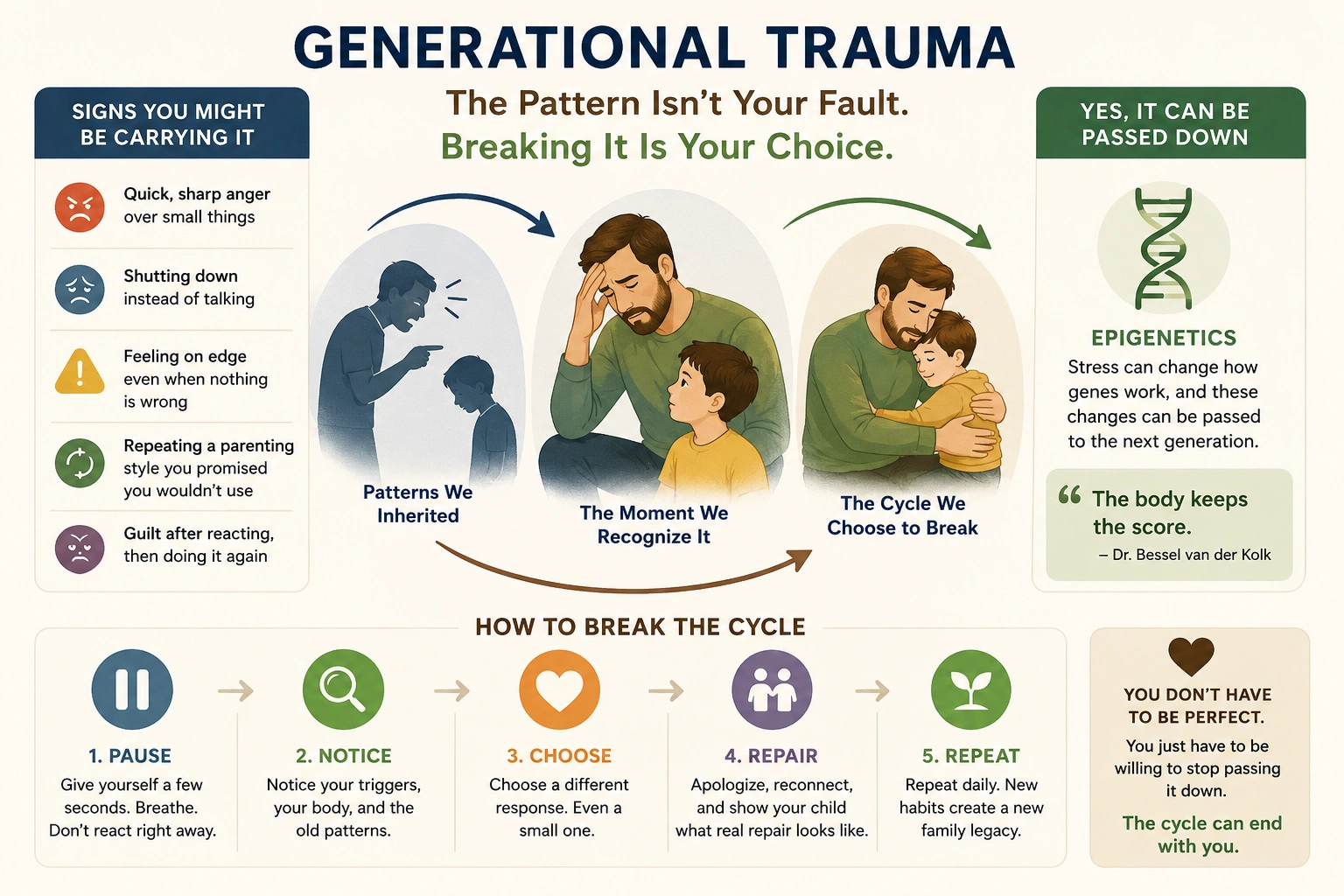

Most parenting advice tells you what to say. It rarely tells you why your body won’t let you say it.
The Gap Between Knowing and Doing
You’ve read the books. You’ve saved the Instagram graphics. You understand that “behavior is communication” and that your child is struggling, not just misbehaving.
Then Monday morning happens.
The milk spills, the shoes aren’t on, the screaming starts—and before you can reach for a “gentle parenting” script, you’ve already reacted. You’ve yelled. You’ve clamped down. You’ve felt that heat rise in your chest that you promised would never come back.
Here is the truth: You aren’t a bad parent. You have a nervous system.
As someone raising my grandchildren, I lived in this gap for a long time. I thought “trying harder” was the solution. It wasn’t. Understanding the mechanism was.
1. Your Body Responds in 90 Milliseconds
Your brain’s survival center (the amygdala) scans for threats every second. To a stressed nervous system, a child’s scream or defiance doesn’t feel like a “parenting moment.” It feels like a predator.
Your body reacts in about 90 milliseconds. Your logical brain—the part that remembers the parenting books—takes about 250 milliseconds to “turn on.”
You are reacting before you are even thinking.
To understand what’s really behind this, explore generational trauma patterns.
2. Regulation Must Precede Reasoning
We often try to “talk” our way out of a blowout. We try to explain to our child why they should be calm, or we try to talk ourselves into being calmer.
But you cannot reason with a brain that is “offline.”
If your child is dysregulated, they cannot hear you.
If you are dysregulated, you cannot lead them.
This is why “scripts” fail in the heat of the moment. A script requires willpower. Regulation requires a skill.
3. The 90-Second Rule
When a stress response hits your body, a flush of chemicals goes through your system. It takes exactly 90 seconds (rule) for those chemicals to dissipate, unless you keep the cycle going with your thoughts.
The work isn’t about never getting angry. It’s about noticing the 90-second flush and choosing not to feed the fire.
How to Interrupt the Cycle Today
If your home feels loud and you feel like you’re failing, start here:
Audit your “Body Budget”: Are you running on empty? You cannot co-regulate a child from a depleted nervous system. (One of the most effective ways to protect that body budget is structure. Predictable parenting routines reduce the number of daily stress triggers your nervous system has to manage — so you’re not starting every moment already overwhelmed.)
Notice the “Flicker”: Before the yell, there is a flicker of heat in the chest or a tightening in the jaw. Notice it. Name it. (“My body feels unsafe right now.”)
Prioritize Repair over Perfection: If you reacted poorly this morning, the day isn’t lost. The healing happens in the repair after the rupture.
But if you want a complete plan, don’t skip these 7 proven steps.
Ready to move from reaction to regulation?
If you’re tired of the “trying harder” cycle, I’ve put together a short, grounding guide to help you find your footing. No fixing. No pressure. Just calm you can actually feel.