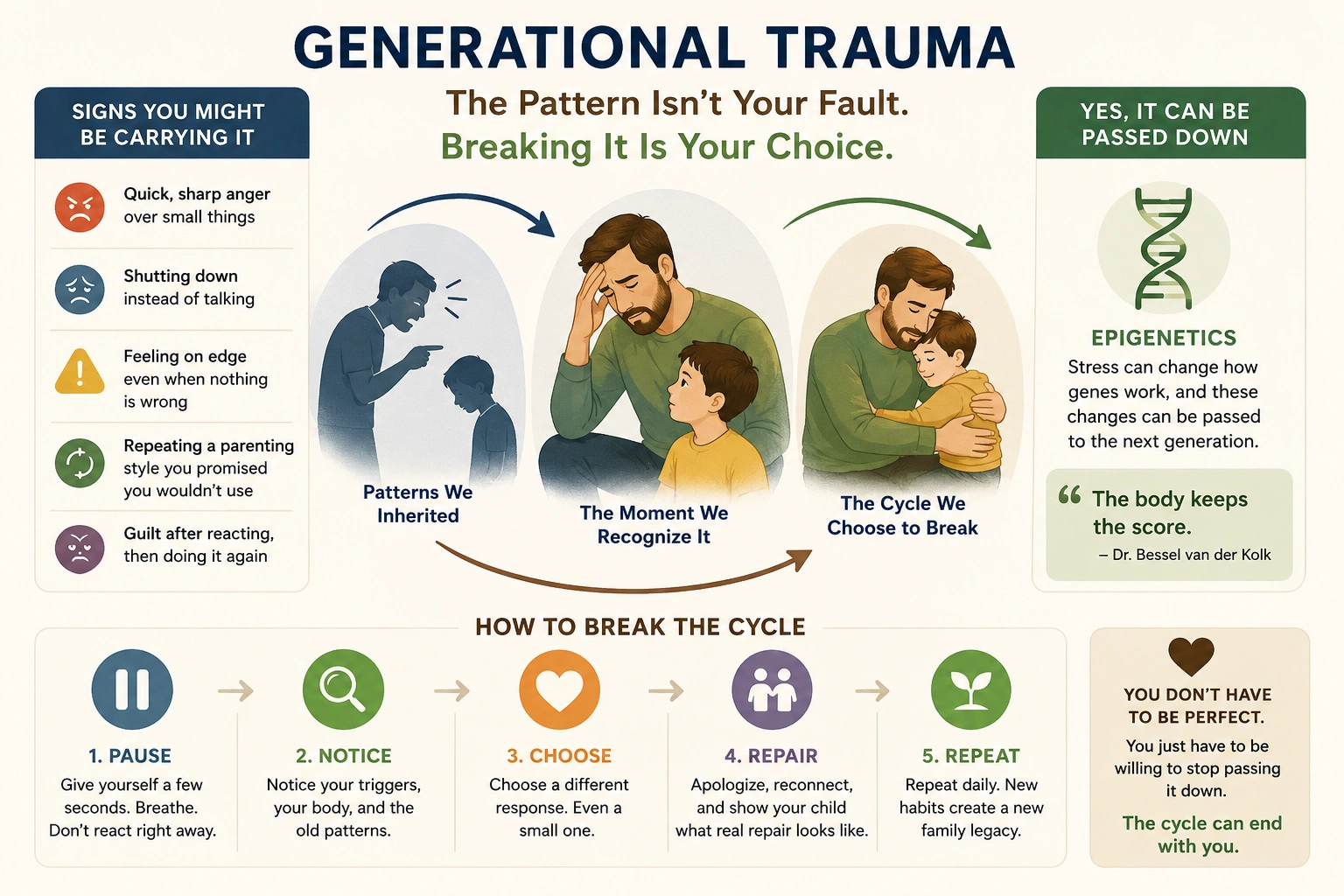

You prepare the room, remember the favorite snack, offer help, and try to make the child feel welcome. The response may be distance, suspicion, rejection, testing, or no visible response at all.
For foster, adopted, and kinship children who have experienced separation, disrupted care, broken promises, or frightening relationships, kindness may not immediately feel safe. Trust is not a debt the child owes because an adult is trying hard. It grows through repeated experiences that show the child what this relationship does over time.
If you are learning how to build trust with a foster child, focus less on convincing the child to trust and more on becoming predictable, honest, respectful, and repairable. This is also a practical expression of drama-free parenting: the adult leads with steadiness instead of demanding that fear disappear on command.
At a Glance
Trust grows when caregivers:
- Tell the truth in age-appropriate language
- Make small promises they can keep
- Explain departures and returns
- Respect privacy, belongings, culture, and important relationships
- Respond to rejection without withdrawing care
- Use predictable boundaries rather than surprise punishment
- Repair mistakes without asking the child to protect the adult’s feelings
- Let closeness develop at the child’s pace
Safety and connection are built through patterns, not speeches.
Why Care Can Feel Risky
A child may have learned that adults leave, promises change, affection has conditions, or closeness creates another opportunity for loss. New care can activate hope and fear at the same time.
The child may test the relationship by rejecting help, hiding food, controlling small details, lying about something that appears obvious, refusing affection, or behaving differently after a good day. These behaviors do not prove that the child is incapable of attachment or that your care is failing.
Ask, “What might this behavior be protecting?” Then keep necessary boundaries while responding to the need beneath the behavior. Richard’s article What Your Child’s Behavior Is Communicating offers a helpful foundation.
Do Not Demand Trust
Statements such as “You can trust me” or “I am not like the other adults” ask the child to accept a conclusion before enough evidence exists.
Try:
“You do not have to trust me quickly. I will work on being honest and predictable.”
“It makes sense that you want to see what I do, not only hear what I say.”
This removes the pressure to perform gratitude or closeness.
Start With Small Promises

Grand promises can sound comforting to adults and dangerous to children.
Avoid promising:
- That the child will never move again
- That a placement or adoption outcome is certain
- That family contact will happen when you do not control it
- That you will never become angry or make a mistake
Make promises that belong to you:
- “I will tell you when I know the plan.”
- “I will knock before entering your room unless there is an emergency.”
- “I will pick you up at three. If something changes, I will contact the school.”
- “I will not share your story without a reason and without explaining it when I can.”
Small kept promises create stronger evidence than dramatic reassurance.
Explain Leaving and Returning
Ordinary departures can carry unusual emotional weight. Say where you are going, who will remain, and when you expect to return in language the child can understand.
“I am going to the store. Maya will stay here. I expect to be back before dinner. If I am delayed, I will call.”
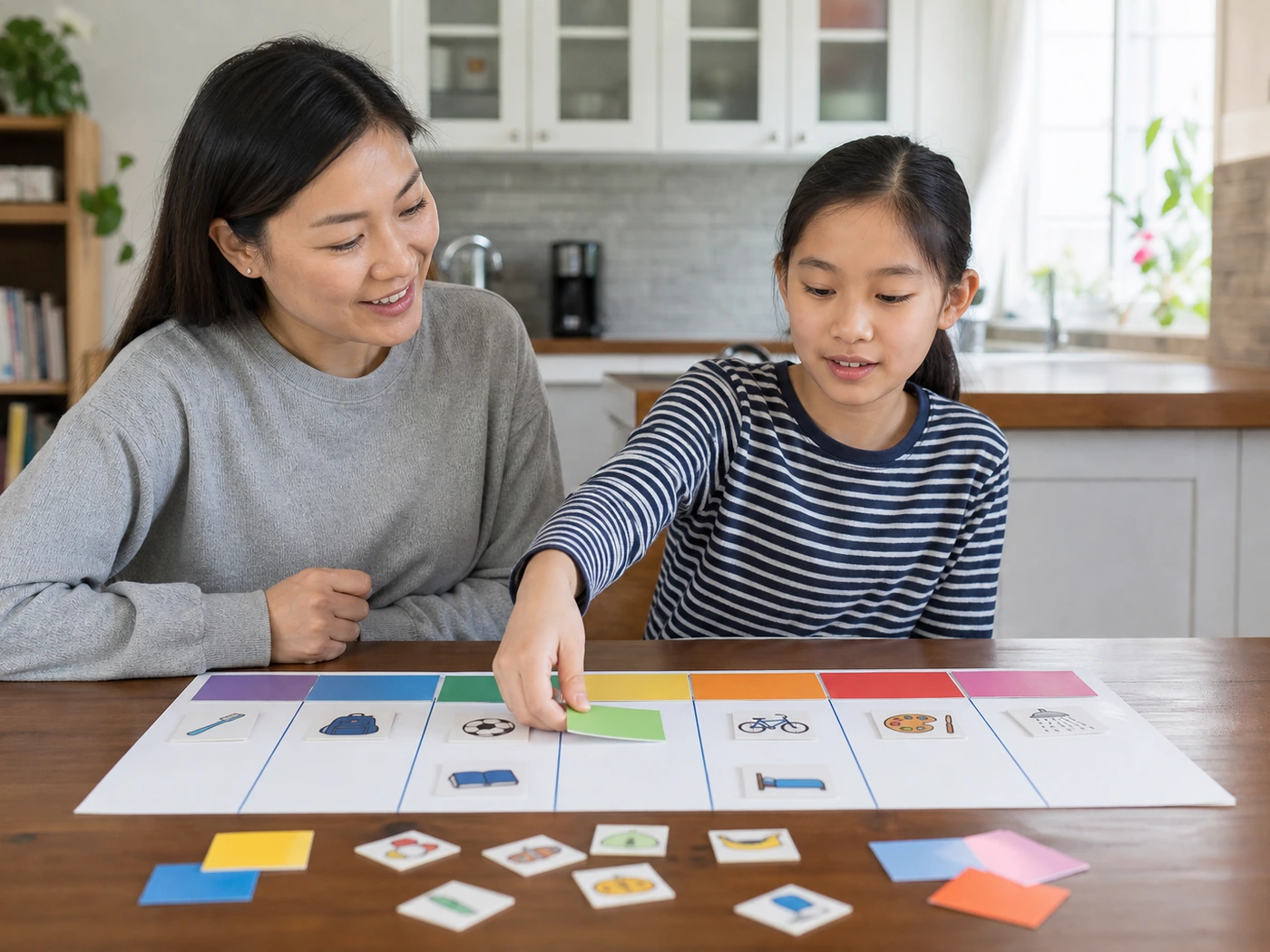
Use visual schedules or written plans when helpful. Return when promised whenever possible. If the plan changes, name it instead of pretending it did not matter.
“I said I would be home before dinner, and I was late. You deserved an update. I am sorry. Next time I will call sooner.”
Repair is one of the clearest forms of reliability.
Respect Space Without Withdrawing Connection
A child may need control over distance, eye contact, touch, conversation, and belongings. Do not force hugs or emotional disclosure to prove family connection.
Offer choices:
- “Wave, fist bump, or no touch?”
- “Door open a little or closed?”
- “Talk now, write it, or check back later?”
- “Sit with us or bring your plate to the nearby table?”
Respecting space does not mean disappearing.
“You can have quiet time. I will be in the kitchen, and I will check back at seven.”
For more on keeping connection available without forcing words, read Why Does My Child Only Melt Down With Me?.
Create Predictable Care Around Basic Needs
Food, sleep, clothing, transportation, medicine, school, and personal belongings carry deep meaning. Make these routines as dependable as possible.
- Keep regular meal and snack access
- Explain household food rules without shaming food insecurity behavior
- Ask before moving personal belongings when possible
- Prepare the child for appointments and transportation changes
- Post the daily sequence in a visible place
- Provide night lights, comfort objects, and predictable check-ins when helpful
A child who hides food may need reassurance through reliable access and professional guidance, not ridicule or punishment. A child who guards possessions may need evidence that belongings will not disappear.
Predictable routines can reduce uncertainty. See Why Predictable Parenting Routines Help Reduce Meltdowns.
Use Boundaries That Do Not Threaten Belonging
Children need limits, but avoid using removal of relationship as leverage.
Do not say:
- “Maybe you do not belong in this family.”
- “No one else would put up with this.”
- “If you keep acting like this, you will have to leave.”
Try:
“I will not let you hurt anyone. I am staying with the safety plan. This conflict does not decide whether you deserve care.”
“The device is resting because it was used unsafely. You are not being sent away from the family.”
Use related, predictable consequences and explain what happens next. Richard’s guide to TBRI for Foster Parents provides additional relationship-based context.
Respond to Rejection Without Making the Child Responsible for You
Caregivers can feel deeply hurt when love is rejected. The child may say, “You are not my real parent,” refuse a family activity, or direct affection toward someone who has not been safe.
Do not require the child to repair your identity.
“You are right that I am not your first parent. Your relationship with your family matters. My job is to care for you today.”
“You do not have to call me Mom or Dad. We can choose a name that feels respectful and comfortable.”
Caregivers need their own adult support for grief, frustration, jealousy, and exhaustion. The child should not become the caregiver’s therapist.
Protect the Child’s Story
Trust is damaged when private history becomes public content. Do not share placement details, diagnoses, family history, photographs, or painful stories simply because other adults are curious.
Before sharing, ask:
- Does this person need the information to care for or protect the child?
- Am I sharing for the child’s benefit or for attention and reassurance?
- Can the child participate in deciding what is shared?
- Could this follow the child online or in the community?
Follow agency, court, legal, and professional requirements. When disclosure is necessary, explain it to the child in age-appropriate language whenever possible.
Honor Important Relationships and Culture
Trust with you should not require betrayal of someone else. Avoid insulting birth family, previous caregivers, community, religion, language, race, or culture.
A child can love, miss, fear, and feel angry with the same person. Loyalty conflicts become heavier when the caregiver demands a simple story.
Try:
“You can miss your family here. You do not have to choose between caring about them and being cared for by us.”
Support safe contact and cultural continuity according to the child’s plan and professional guidance.
Let Play and Ordinary Life Do Some of the Work
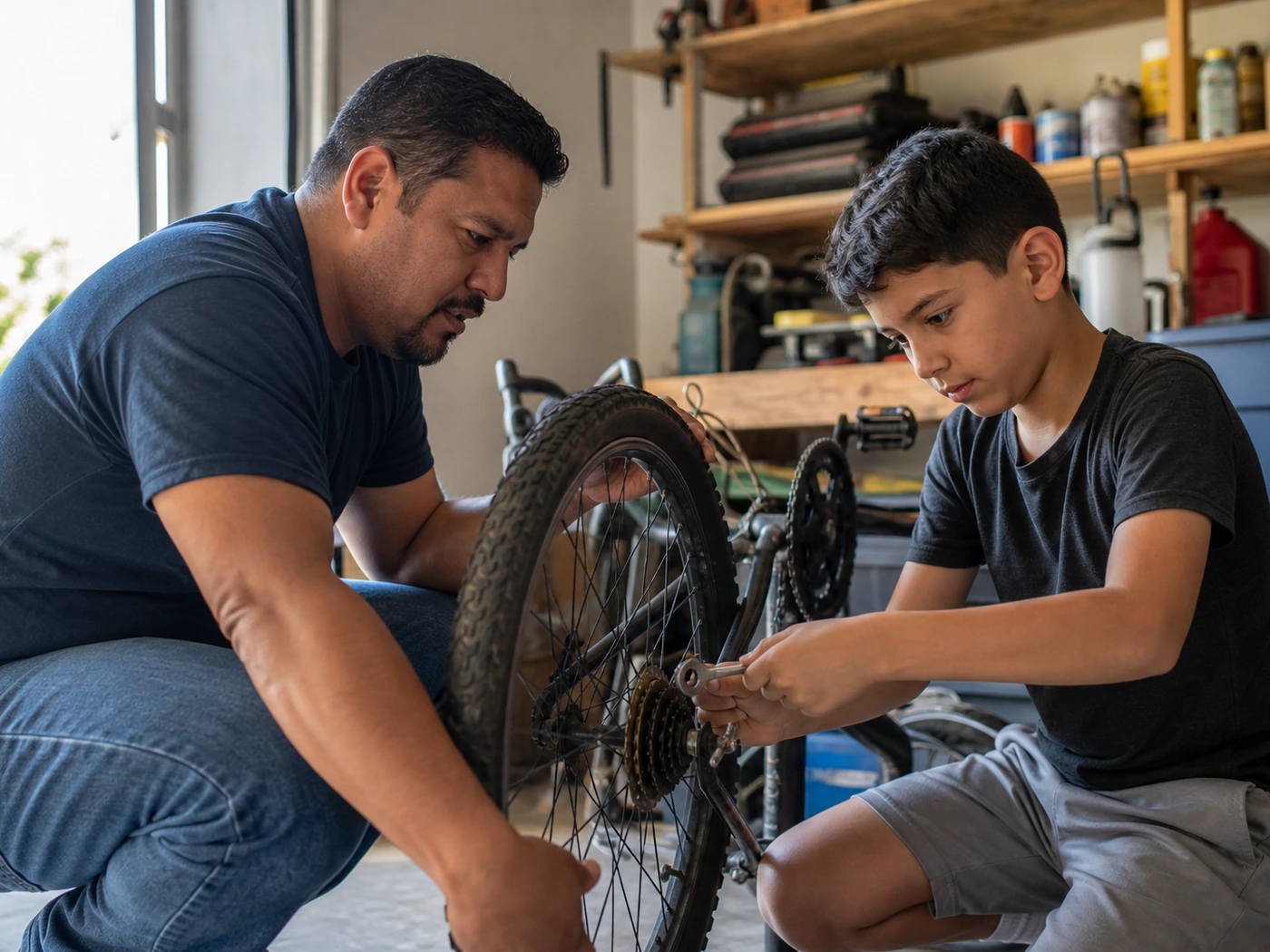
Trust often grows sideways. Cooking, driving, fixing something, walking, drawing, gaming, and shared routines may feel safer than a formal conversation about attachment.
Follow the child’s interests without turning every activity into therapy. Reliable ordinary moments show that the relationship can contain pleasure, boredom, disagreement, and return.
Repair Your Mistakes Clearly
You will misread behavior, forget something, become impatient, or make a decision the child dislikes. Trust does not require never making mistakes. It requires that authority can tell the truth afterward.
“I assumed you were lying before I checked the facts. That was unfair. I am sorry. Next time I will ask what happened before deciding.”
“I raised my voice. You did not cause my yelling. The safety rule still matters, and I will explain it again calmly.”
If yelling has occurred, use the five-step repair process.
Measure Trust in Small Signs
Trust may not look like hugs or personal disclosures. It may look like:
- Asking for a snack instead of hiding food
- Showing anger without running away
- Leaving an item in a shared space
- Accepting help with homework
- Telling a small truth after a mistake
- Checking whether you returned when promised
- Allowing comfort for a few seconds
Do not announce every sign or demand more. Notice quietly and keep showing up.
When Trust Building Needs Professional Support
Seek help from the child’s team when there is serious aggression, self-harm, sexualized behavior, dangerous running, severe food or sleep concerns, persistent withdrawal, substance use, exploitation risk, or major disruption at home or school.
Use professionals who understand foster care, adoption, trauma, attachment, development, race and culture, and the child’s specific history. Coordinate with caseworkers, therapists, medical providers, schools, attorneys, and family connections according to your role and the child’s plan.
Do not attempt to force attachment through coercive holding, humiliation, food control, isolation, or unlicensed practices.
A Thirty-Day Trust Practice
Choose five actions you can repeat:
- Keep one small daily promise.
- Give clear notice before transitions and departures.
- Respect one area of privacy or control.
- Share one ordinary positive activity without demanding disclosure.
- Repair quickly when you make a mistake.
At the end of thirty days, ask whether your behavior became more predictable. Do not grade the child on how much affection you received.
Frequently Asked Questions
How long does it take a foster child to trust?
There is no universal timeline. History, age, current safety, placement stability, relationships, development, and caregiver consistency all matter.
Should I tell the child this is their forever home?
Use only language supported by the child’s legal and permanency situation. Do not promise an outcome you do not control.
What if the child lies about small things?
Respond to safety and accountability while asking what truth may cost the child. Avoid public humiliation. Make honest disclosure safer and consequences predictable.
Should I force family activities?
Some participation may be expected, but compulsory closeness can backfire. Offer gradual, low-pressure ways to belong and respect reasonable need for space.
Can boundaries damage trust?
Unpredictable, threatening, or humiliating boundaries can. Calm, transparent safety limits often strengthen trust because the child learns what the adult will do.
Become the Evidence
You cannot argue a child into trust. You can become evidence that this adult tells the truth, returns, protects privacy, keeps reasonable limits, and repairs harm.
Let trust grow at the speed of repeated safety. The child does not need to perform belonging before receiving care.
For Richard Dixson’s broader framework for calm, trauma-aware parenting decisions, explore The Drama-Free Parent and read the available free chapter.
Sources and Further Reading
- AdoptUSKids: How Parents Can Build Trust
- Families Rising: How to Bond With a Child in Foster Care or Adoption
- National Child Traumatic Stress Network: Families and Trauma
This article provides general educational information and is not a substitute for the child’s case plan or individualized medical, mental health, legal, placement, or emergency guidance.