
You may have tried the advice people usually give.
Be consistent. Give a consequence. Take something away. Send the child to their room.
Use a reward chart. Ignore the behavior. Be stricter. Do not let them win.
And still, the behavior continues.
Maybe the child becomes louder. Maybe they shut down. Maybe they say, “I don’t care.”
Maybe they lie when the truth would have been easier. Maybe every correction turns into a bigger battle.
If you have wondered why traditional parenting advice for children with trauma does not always work, you are not alone.
And you are not automatically doing something wrong. Sometimes the problem is not that you need more control.
Sometimes the child needs a different kind of safety before they can receive correction.
At a Glance
- Traditional parenting advice may fall short when it assumes a child feels safe enough to think clearly.
- For children with trauma, correction can feel like rejection, shame, or threat.
- Fear can look like defiance, and overwhelm can look like disrespect.
- Connection before correction does not remove boundaries; it prepares the child to learn.
- Caregivers need a better lens, not more shame.
- Calm leadership combines safety, structure, correction, and repair.
Quick Answer: Why Traditional Parenting Advice May Not Work for Children With Trauma
Traditional parenting advice may not work for children with trauma because it often assumes the child feels safe, connected, and able to think clearly in the moment. This is exactly why traditional discipline fails trauma-affected children the approach misreads fear as defiance.
But a child who has experienced trauma, loss, neglect, instability, or repeated stress may experience correction differently.
A limit may feel like rejection. A consequence may feel like abandonment. A raised voice may feel like danger.
A lecture may feel overwhelming instead of helpful.
This does not mean the child should not have boundaries. It means correction often works better after safety, regulation, and connection.
Children still need structure. They still need limits. They still need guidance.
But for children impacted by trauma, the path to learning often begins with emotional safety before teaching.
A Source-Backed Lens
Trauma-informed parenting approaches recognize that children who have experienced adversity may respond to correction through fear, stress, or survival patterns before they can respond through reflection.
TBRI-informed caregiving, developed through the Karyn Purvis Institute of Child Development at Texas Christian University, also emphasizes safety, connection, regulation, and correction that protects dignity while still guiding behavior.
This matters because children do not learn best when they feel threatened.
They learn best when they feel safe enough to receive guidance.
Why Common Parenting Advice Can Fall Short
Traditional parenting advice is not always wrong.
Many strategies are built around structure, consistency, consequences, routines, and clear expectations. Those things can matter.
The problem is that some advice assumes the child is starting from a place of felt safety.
It assumes the child can pause, think, connect cause and effect, reflect on the consequence, and choose differently next time.
But children who have experienced trauma may not always respond from that place.
- They may respond from fear.
- They may respond from shame.
- They may respond from survival.
They may respond from a nervous system that has learned to protect first and trust later.
So when someone says, “Just give a consequence,” the advice may sound simple.
But in the home, it may not be simple at all.
- The child may explode.
- They may run away.
- They may say they do not care.
- They may become more controlling.
- They may collapse into tears.
- They may act as if the relationship itself is now unsafe.
- That does not mean consequences never matter.
It means consequences alone may not reach the deeper need.
“They Need to Learn Respect” May Be Incomplete Advice
Respect matters.
Children need to learn how to speak, listen, repair, and live safely with others.
But if a child is operating from fear or shame, demanding respect in the middle of escalation may create more resistance.
A child may not hear:
“I am teaching you.”
They may hear:
“I am against you.”
They may not experience correction as guidance. They may experience it as threat.
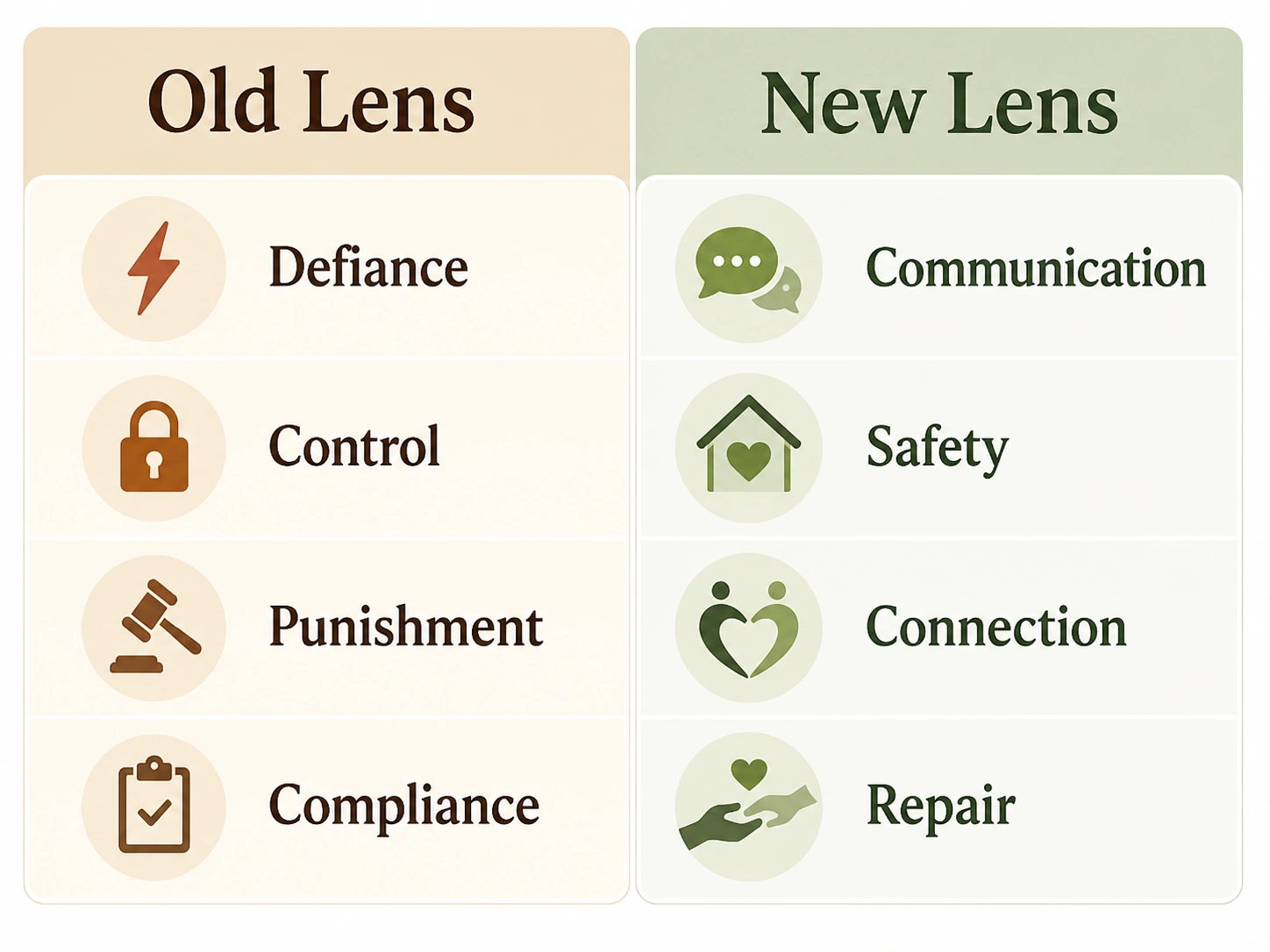
That is why trauma-informed parenting asks a different question.
Not:
“How do I make this child obey right now?”
But:
“What does this child need in order to feel safe enough to learn?”
That question does not remove boundaries. It changes the way boundaries are delivered.
A Different Lens: Behavior as Communication
One of the most important shifts in Richard Dixson’s parenting message is this:
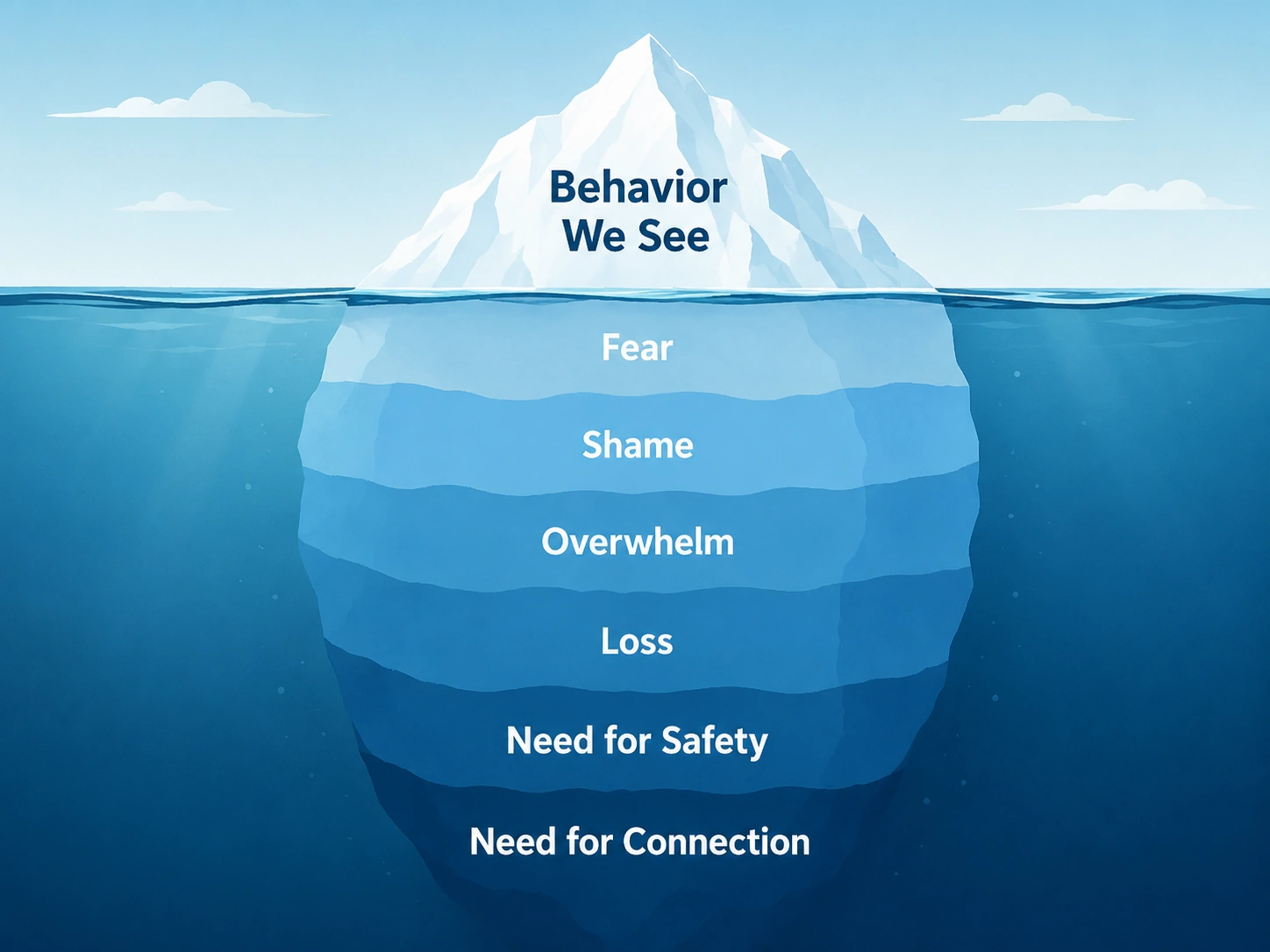
Behavior often communicates what words cannot.
A child may not say:
“I feel scared.”
So they try to control everything. A child may not say:
“I feel ashamed.”
So they lie. A child may not say:
“I feel overwhelmed.”
So they refuse. A child may not say:
“I am afraid you will leave too.”
So they push you away first. A child may not say:
“I do not know how to calm my body.”
So they explode.
From the outside, these behaviors can look like defiance. But often, they are signals.
That does not make the behavior okay. It makes the behavior worth understanding.
When you see only the behavior, the response can become control.
When you listen for what the behavior may be communicating, the response can become connection plus structure.
That is a different kind of leadership.
Why Correction Can Feel Like Threat
For many children, correction is just correction.
A parent says no.
A teacher gives feedback.
An adult explains what went wrong.
The child may not like it, but they can still receive it.
For children with trauma, correction may carry a different emotional weight.
Correction may remind the child of shame.
A firm voice may remind the child of danger.
A consequence may feel like rejection.
A closed door may feel like abandonment.
A disappointed look may feel like proof that the relationship is not safe.
This is why a child may react strongly to something that seems small.
The present moment may be small.
But the child’s body may not be responding only to the present moment.
It may be responding to a history of stress, loss, or fear.
This is not an excuse for harmful behavior.
It is an explanation that helps the adult respond with more wisdom.
Connection Before Correction Is Not Permissiveness
Connection before correction is often misunderstood.
It does not mean there are no limits. It does not mean the child gets to do whatever they want. It does not mean unsafe behavior is ignored.
It does not mean the caregiver becomes passive.
Connection before correction means the adult tries to lower the emotional threat before teaching the lesson.
It means the adult says, in words or tone:
“I am still with you, and this behavior still needs to change.”
Both parts matter.
Connection without correction can become unclear. Correction without connection can become frightening.
The goal is not to choose one. The goal is to bring them together.
A caregiver might say:
“You are safe. I am here. And I will not let you hit.”
Or:
“I can see this is hard. The answer is still no.”
Or:
“You are not bad. This behavior needs repair.”
That is not permissiveness. That is calm authority.
So What Should Caregivers Do Instead?
The answer is not to remove discipline. The answer is to change the order.
Start with safety. Move toward connection. Keep the boundary clear. Return later for repair.
That order gives the child a better chance to learn without turning correction into another threat.
Before Correcting, Ask These Five Questions
A thought leadership blog should still give you something practical to carry into the next hard moment.
Before correcting a child impacted by trauma, pause and ask:
- Is this child regulated enough to learn?
- Is this behavior communicating fear, shame, overwhelm, or control?
- What limit needs to stay clear?
- What connection can I offer before or after correction?
- What repair is needed later?
These questions do not make parenting easy.
But they can help you slow down. They can help you respond instead of react.
They can help you separate the child from the behavior. They can help you hold two truths at once:
“This behavior is not okay.”
And:
“This child still needs safety, connection, and guidance.”
Free Resource
If traditional parenting advice has left you feeling stuck, Richard Dixson’s free guide, 3 Days to a Peaceful Home, can help you begin with small, practical steps toward more calm, connection, and emotional safety.

A Real-Life Example: “I Don’t Care”
Imagine a child is told they cannot have more screen time.
They shout:
“I don’t care! I hate this house!”
Then they slam a door. Traditional advice might say:
“Take away screen time for the whole week.”
That may seem logical. The child broke a rule, so the child receives a consequence.
But if the child is already in a fear or shame state, the consequence may not create reflection.
It may create more panic, more rage, or more disconnection. A trauma-informed response might sound different.
First, the adult stays steady.
“You are angry. I hear you. I will not let you slam doors or speak hurtfully. We are going to pause.”
Then the adult keeps the limit.
“The screen time is still finished for today.”
Then the adult waits for calm before teaching.
Later, the adult returns to repair.
“Earlier, screen time ending felt really hard. It is okay to be angry. It is not okay to slam the door or say hurtful things. Next time, you can say, ‘I’m mad,’ or ask for a few minutes to calm down. We will practice that.”
Notice what changed.
The limit stayed. The relationship stayed. The child was not shamed. The behavior was still addressed.
That is the difference.
Traditional advice may focus only on the consequence.
Trauma-informed parenting also asks what the child needs in order to learn from the consequence.
Why “I Don’t Care” May Not Mean What It Sounds Like
When a child says, “I don’t care,” it can feel personal.
It can sound disrespectful. It can make the adult feel powerless. But sometimes “I don’t care” means:
“I care so much that I cannot show it.”
Or:
“I feel ashamed and need to protect myself.”
Or:
“I do not believe adults will stay connected anyway.”
Or:
“I do not know how to handle this feeling.”
Or:
“I would rather look tough than look hurt.”
Again, this does not excuse the behavior. But it gives the adult a better lens. Instead of escalating with:
“Oh, you don’t care? Then I’ll make the consequence bigger.”
The adult can stay grounded:
“You may not care right now. I still care about helping you learn. We will come back to this when your body is calmer.”
That response is not weak.
It is regulated.
The Caregiver Needs a New Lens, Not More Shame
Many foster, adoptive, kinship, and caregiving families are already carrying a lot.
They may be trying to help a child who pushes them away.
They may be doing their best while feeling judged by others.
They may be tired of advice that sounds simple but does not work in the real moment.
They may wonder:
“Am I failing?”
But sometimes you are not failing.
Sometimes you are using a framework that was not designed for the depth of what this child has lived through.
- You may not need more shame.
- You may need a better lens.
- You may need support.
- You may need tools that help you stay calm when the child cannot.
- You may need to understand that your nervous system matters too.
A dysregulated adult will struggle to help a dysregulated child.
That does not mean you must be perfect.
It means your steadiness matters.
Even one calmer response can begin changing the emotional pattern in the home.
What This Does Not Mean
Trauma-informed parenting can be misunderstood, so let’s be clear.
This does not mean children should not have consequences.
- It does not mean unsafe behavior is allowed.
- It does not mean caregivers should tolerate harm.
- It does not mean every behavior is caused by trauma.
- It does not mean the child is never responsible.
- It does not mean you should handle dangerous situations alone.
- It does not replace therapy, caseworker support, safety planning, medical care, or professional guidance when those are needed.
It also does not mean you must parent perfectly.
Trauma-informed parenting means you are learning to respond with awareness.
It means you are asking:
“What is happening beneath the behavior?”
And:
“How do I hold the boundary in a way that does not add fear or shame?”
That is a different kind of strength.
How Richard Dixson’s Work Reframes Parenting
Richard Dixson’s work is built around helping families move from chaos toward calm, connection, and emotional safety.
His message is not:
“Let children do whatever they want.”
And it is not:
“Control children until they comply.”
It is something deeper.
It is the belief that a calmer home is created through safety, structure, connection, repair, and repeated moments of choosing a different response.
In The Drama-Free Parent, Richard’s work points families toward a way of parenting that does not rely on shame as the teacher.
- It invites caregivers to see behavior through a different lens.
- It asks parents and caregivers to pause before reacting.
- It reminds them that calm is not weakness.
- It reminds them that connection is not permissiveness.
- It reminds them that correction can happen without fear.
And it reminds them that breaking cycles often begins with one adult choosing a different pattern.
Not perfectly. Repeatedly.
For a Deeper Approach
For a deeper approach to calm, trauma-informed parenting, explore Richard Dixson’s book, The Drama-Free Parent.

Key Takeaways
Traditional parenting advice may not work for children with trauma because the child may not be responding from a place of felt safety.
Remember:
- Traditional advice may fail when it assumes the child feels safe enough to think clearly.
- Fear can look like defiance.
- Shame can look like lying or avoidance.
- Overwhelm can look like disrespect.
- Behavior can communicate an unmet need.
- Connection prepares the child for correction.
- Boundaries still matter.
- Repair helps rebuild trust.
- Caregivers need support too.
The goal is not to remove structure.
The goal is to bring structure through safety, connection, and calm leadership.
FAQ
Why does traditional discipline not work with trauma?
Traditional discipline may not work with trauma because it often assumes the child can think clearly, reflect, and respond logically in the moment. A child impacted by trauma may react from fear, stress, shame, or survival before they can respond through reflection.
Does trauma-informed parenting mean no consequences?
No. Trauma-informed parenting does not remove consequences or boundaries. It changes how correction happens. The goal is to correct behavior while protecting safety, connection, and the child’s ability to learn.
Why does my child say they do not care about consequences?
Sometimes “I don’t care” is a protective response. The child may feel ashamed, overwhelmed, rejected, or afraid of showing vulnerability. It does not always mean they truly do not care.
Is connection before correction permissive?
No. Connection before correction does not mean connection instead of correction. It means connection helps lower fear so the child can better receive correction. Boundaries still matter.
What should I do before correcting a child with trauma?
Before correcting, pause and ask whether the child is regulated enough to learn. Then offer a brief moment of connection, keep the limit clear, and return later for repair if needed.
Is this different for foster, adoptive, or kinship caregivers?
Yes. Foster, adoptive, and kinship caregivers may be parenting children who have experienced loss, separation, instability, or difficult early experiences. According to the Centers for Disease Control and Prevention, more than 64% of adults report experiencing at least one adverse childhood experience — underscoring how common trauma-related responses are in children today.
This does not mean every behavior is caused by trauma, but it does mean caregivers may need a more trauma-informed lens that combines safety, connection, structure, and repair.
What if the behavior is unsafe?
If behavior becomes unsafe, safety comes first. Move others away if needed, follow the child’s safety plan, contact the appropriate support team, caseworker, therapist, or emergency services if there is immediate danger.
How do I know if I need more support?
If the behavior is frequent, escalating, unsafe, or overwhelming for the family, it may be time to involve the child’s caseworker, therapist, school support team, or other qualified professionals. Asking for help is not failure.
Can children with trauma learn boundaries?
Yes. Children with trauma can learn boundaries, but they may need repeated experiences of safety, connection, structure, and repair. The goal is not instant change. The goal is a safer pattern over time.
Final Next Step
If traditional parenting advice has left you feeling stuck, start with one small shift.
Richard Dixson’s free guide, 3 Days to a Peaceful Home, can help you begin creating more calm, connection, and emotional safety at home.