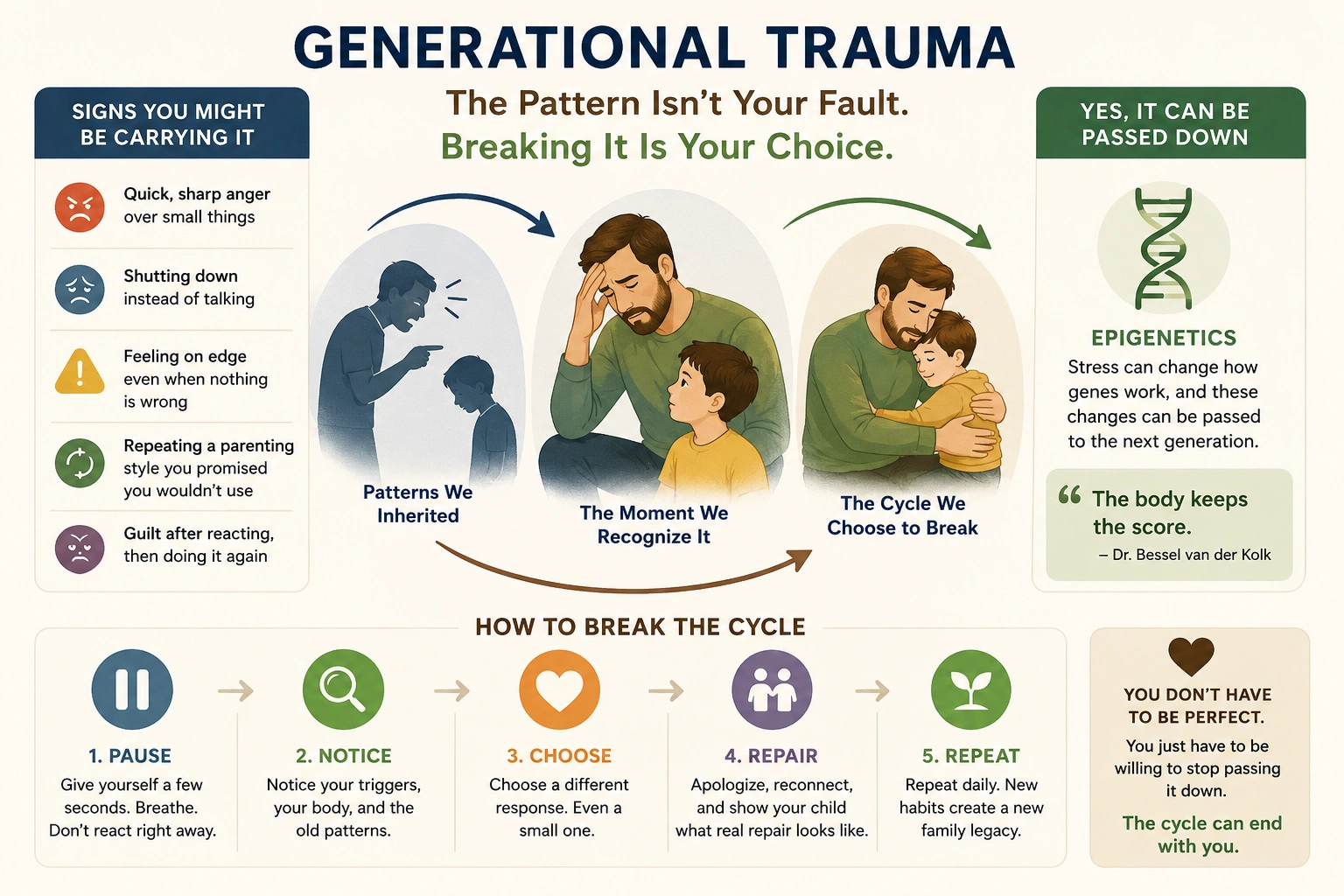
You tell yourself you’ll stay calm next time.
But then your child starts screaming, ignoring you, fighting bedtime, or melting down over something small, and suddenly your whole body reacts before you can think clearly. Your voice changes. Your chest tightens. And afterward, the guilt shows up again.
Many parents think this means they are failing at calm parenting. But often, it’s a nervous system response happening before the logical brain has time to slow things down.
Your nervous system is your body’s internal safety system. And when parenting feels stressful, loud, emotionally intense, or overwhelming, your body can move into survival mode before your logical brain catches up.
That’s why understanding the calm parenting nervous system connection changes everything. It helps parents stop seeing themselves or their child as “the problem” and finally understand what’s really happening underneath the reactions, tantrums, shutdowns, and emotional overwhelm.
Your Nervous System Is Trying to Protect You
Most parents hear terms like “fight-or-flight,” “emotional regulation,” or “nervous system dysregulation” and immediately tune out.
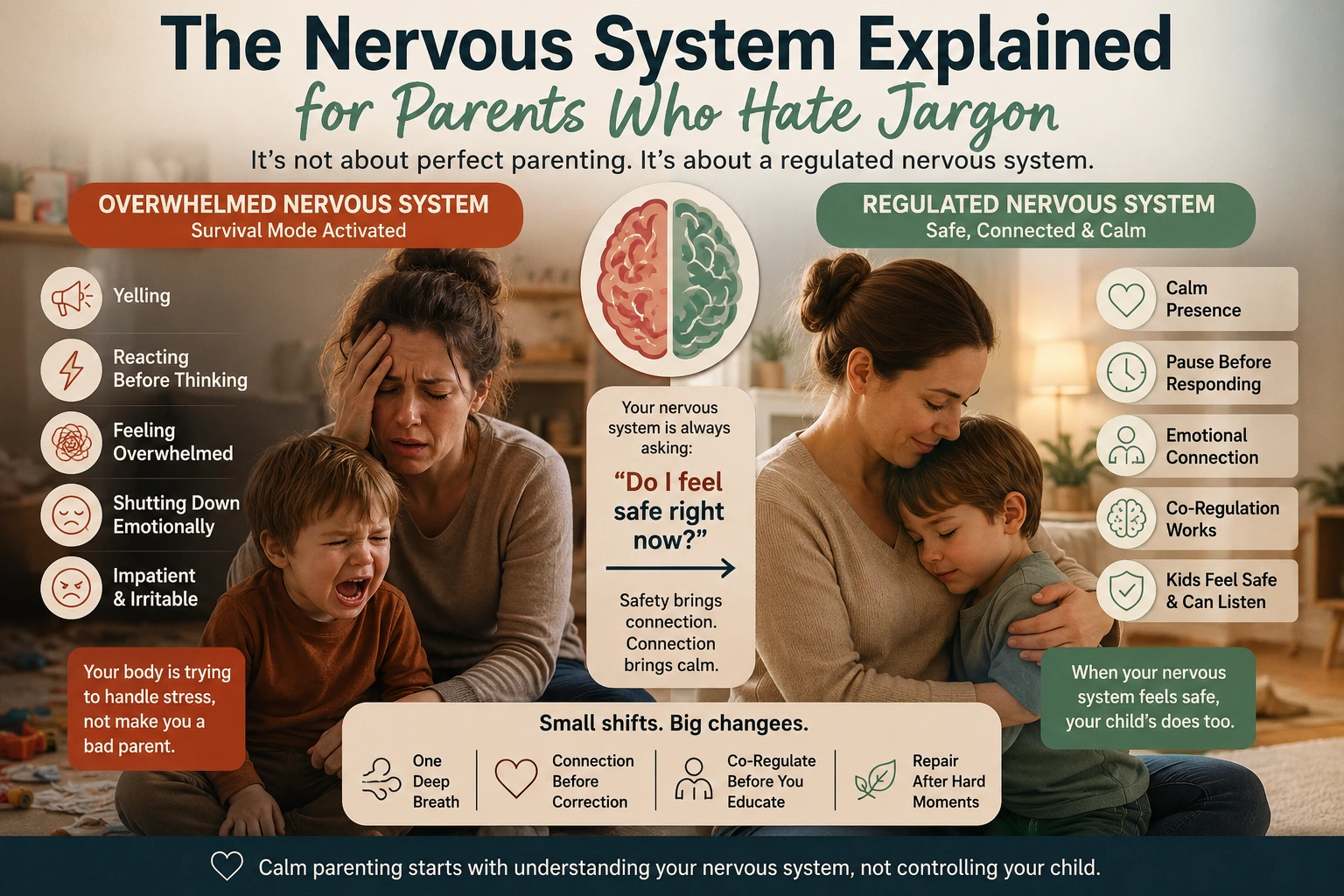
But the nervous system is actually simple. Its job is to constantly ask:
“Do I feel safe right now?”
When parenting becomes chaotic, emotionally exhausting, loud, or unpredictable, your nervous system reacts automatically. That reaction can look like:
- yelling faster than you intended
- feeling overstimulated by noise
- shutting down emotionally
- becoming impatient quickly
- reacting before thinking clearly
This is why many parents overreact even when they deeply love their children.
Your body is trying to respond to stress — not turn you into a bad parent.
And if yelling already happened, here’s how to repair it afterward without shame or blame
Why Parenting Feels So Triggering Sometimes
Parenting triggers are usually deeper than behavior.
A child refusing to listen may not only feel frustrating, but also, to an overwhelmed nervous system, it can feel like:
- loss of control
- emotional disrespect
- chaos
- pressure
- failure
- constant stress
That is why many parents [react before thinking clearly] during stressful parenting moments.
Your Brain Thinks Later. Your Nervous System Reacts First.
This is one of the biggest shifts parents need to understand.
When your nervous system feels overwhelmed, the emotional part of the brain, what the National Institute of Mental Health describes as the brain’s threat-detection system, becomes louder than the logical part.
That’s why calm parenting can feel impossible during stressful moments even when you want to stay connected.
Understanding this removes a huge amount of shame for parents.
Because now the question becomes:
“How do I regulate my nervous system?”
instead of “What’s wrong with me?”
Your Child’s Behavior May Be Stress, Not Defiance
This is where many parents finally feel relief.
Children also experience nervous system overwhelm. And because their emotional regulation skills are still developing, that overwhelm often comes out as behavior. According to the Centers for Disease Control and Prevention, adverse childhood experiences directly affect how children’s stress response systems develop — making emotional regulation harder without consistent adult support.
Nervous System Dysregulation Can Look Like:
- tantrums
- whining
- aggression
- shutting down
- refusing instructions
- emotional meltdowns
- crying over small things
That does not mean boundaries disappear or behavior becomes acceptable.
It simply means behavior makes more sense when parents understand [what behavior is communicating] underneath the surface.
Many children are not trying to create a hard time. They are having a hard time.
And when parents understand this, they often stop taking behavior so personally.
Calm Parenting Starts With Regulation
A lot of parenting advice focuses on behavior control. But calm parenting starts with nervous system regulation first.
Children rely on adults to provide emotional protection. This is also why your child may only fall apart with you — you are their safest person, and safety is where the nervous system finally lets go.
When children are emotionally overwhelmed, they frequently seek comfort from the neurological system of an adult nearby. This is called co-regulation.
Your tone, facial expression, body language, and emotional presence all affect your child’s nervous system.
That’s why [connection before correction] often works better than pressure.
When children feel emotionally safe, their nervous system can calm down enough to:
- listen
- think clearly
- cooperate
- recover emotionally
This is one reason trauma-informed parenting focuses so heavily on emotional safety and connection instead of fear-based control alone.
Why Pressure Usually Makes Things Worse
When parents become overwhelmed, the instinct is often to push harder:
- louder voice
- stronger consequences
- more pressure
- faster demands
But pressure usually increases nervous system stress for both the parent and child.
And overwhelmed nervous systems rarely learn well.
That’s why many parents notice behavior improves more through:
- calm presence
- emotional connection
- predictability
- feeling understood
- safe boundaries
Children usually learn emotional regulation through safe relationships before they can regulate independently.
Small Nervous System Shifts That Actually Hel
Many parents think emotional regulation requires huge changes. Usually, it starts much smaller than that.
Small Regulation Tools Parents Can Use Daily
- pause for five seconds before responding
- lower your voice
- move physically closer
- slow the interaction down
- reduce overstimulation
- take one deep breath
- repair after hard moments
- focus on connection before correction
When anger escalates quickly, having a clear plan for how to calm an angry child without making it worse puts these small shifts into immediate action.
These small shifts help the nervous system feel safer again.
And over time, those moments change the emotional direction of the relationship.
You Do Not Need to Become a Perfectly Calm Parent
Most parents are not looking for perfection. They just want parenting to stop feeling so emotionally overwhelming all the time.
And honestly, understanding the nervous system explains so many confusing parenting moments. Why children melt down after stressful days. Why exhausted parents react faster. Why emotional safety and calm connection change behavior more effectively than pressure or fear.
You do not need to stay perfectly calm every second. You simply need enough awareness to recognize when a nervous system — yours or your child’s — is asking for regulation, safety, and connection instead of more stress.
That is exactly why drama-free parenting begins with the nervous system — not behavior control.
Most parenting advice focuses on controlling behavior first. But Richard Dixson wrote The Drama-Free Parent to help parents understand what stress, emotional overwhelm, nervous system dysregulation, and emotional safety are actually doing underneath the behavior.
If this blog made your child’s reactions — or your own — finally start making sense, don’t stop here. Read the first chapter of The Drama-Free Parent free now and see why so many overwhelmed parents realize they were trying to fix behavior without first understanding the nervous system behind it.