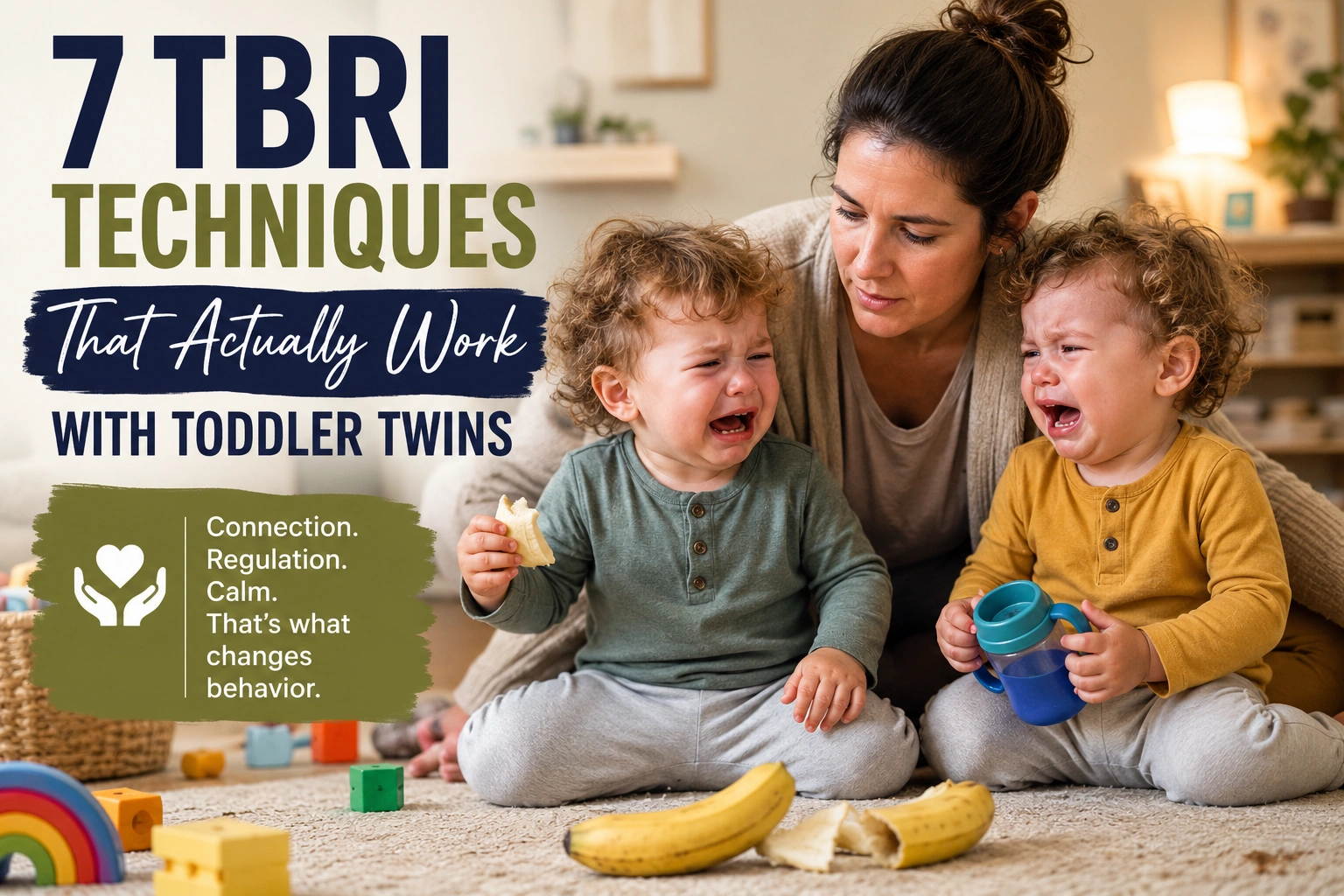
One toddler is crying because the banana broke in half.
The other starts screaming because they wanted the same cup.
Now both toddlers are melting down at the same time, and you can already feel yourself getting overwhelmed.
This is why so many parents realize traditional discipline stops working with twins. Repeating commands, yelling, or sending toddlers away usually makes the chaos bigger not smaller.
That’s where TBRI techniques can completely change how you handle hard parenting moments.
The TBRI parenting approach focuses on connection, emotional safety, and regulation before correction. And when you’re raising twin toddlers, that shift matters fast.
Why Twin Toddlers Escalate Each Other So Fast
Twin toddlers constantly mirror each other’s emotions.
If one becomes overwhelmed, the other often follows within seconds. Their nervous systems are still developing, which means emotional regulation is hard, especially during transitions, overstimulation, hunger, or exhaustion.
That’s why many parents feel like they’re always reacting instead of staying calm.
The good news is this: most toddler behavior improves when children feel emotionally safe and regulated first. That’s one reason trust-based relational intervention techniques are becoming so popular with overwhelmed parents.
1. Connect Before You Correct During Twin Tantrums
One of the most effective TBRI techniques for toddlers is learning to connect before correcting behavior.
Instead of:
- “Stop screaming.”
- “Enough.”
- “Go sit down.”
Try:
- “You’re both having a hard time.”
- “I’m here.”
- “We’ll calm down together.”
Sometimes connection looks simple:
- kneeling beside them
- lowering your voice
- rubbing their back
- making eye contact
This helps toddlers regulate first before expecting them to listen.
If this parenting shift feels unfamiliar, read more about how to naturally connect before you correct during emotional moments.
2. Calm One Twin First Instead of Managing Both at Once
Many parents try stopping both meltdowns at the same time.
That usually overwhelms everyone faster.
Instead, regulate the more escalated child first.
Why does this work?
Because toddler emotions spread quickly. When one nervous system settles, the entire room often becomes calmer.
“That’s one reason understanding co-regulation first can be so helpful.”
This is a huge part of behavior regulation in toddlers: you regulate the environment before expecting self-control.
Need More Calm in the Moment?
If daily meltdowns, power struggles, and emotional overwhelm are becoming part of your routine, the Free Guide shares simple trauma-informed strategies that can help you respond more calmly and create more connection at home.
3. Make Transitions Predictable to Prevent Double Meltdowns
Most twin toddler tantrums happen during transitions:
- bedtime
- leaving the park
- stopping playtime
- getting in the car
And when those emotional meltdowns happen outside the house, many parents panic faster because public tantrums feel impossible to manage calmly. Public tantrums feel especially during public meltdowns because parents are already overstimulated themselves.
Instead of:
“Let’s go right now.”
Try:
- “Five more minutes.”
- “After this book, it’s bath time.”
- “First pajamas, then cuddles.”
Predictability helps children feel safe, which lowers emotional overload dramatically.
This is one of the most practical TBRI strategies for tantrums parents can start using immediately.
Bedtime routines become especially easier when parents focus on moving from bedtime chaos to calm instead of rushing toddlers emotionally.
4. Use Playfulness Instead of Repeating Commands All Day
By the end of the day, many parents feel like they’ve repeated the same sentence 50 times without being heard once.
But toddlers respond far better to playful engagement than pressure.
Instead of:
“Put your shoes on.”
Try:
- “Can your shoes jump onto your feet?”
- “Let’s race to the door!”
- “I think your socks are hiding.”
This connection-based parenting style lowers power struggles before they turn into full meltdowns.
And honestly, it usually lowers stress for parents too.
Looking for a Deeper Approach?
These techniques are only one part of connection-based parenting. In The Drama-Free Parent, Richard Dixson explores how emotional safety, regulation, and connection help create lasting change without relying on fear or constant correction.
5. Watch for Overstimulation Before Behavior Explodes
Sometimes the meltdown is not really about the toy.
Twin toddlers become overwhelmed faster because:
- noise is constant
- stimulation never stops
- sibling conflict happens all day
- personal space is limited
Watch for early signs:
- whining
- clinginess
- rough behavior
- crying over tiny things
- suddenly “not listening”
This is a major part of trauma-informed parenting for toddlers. Often, behavior makes more sense once parents understand what their child’s behavior is actually communicating underneath the emotional reaction.
Sometimes calming twin toddlers starts with:
- snacks
- quiet time
- slowing the environment
- reducing noise
- reconnecting emotionally
6. Give Small Choices to Reduce Power Struggles
Twin toddlers hear “no” constantly.
Small choices help children feel safe and included instead of controlled.
Simple examples:
- “Blue pajamas or green?”
- “Hop to the car or walk?”
- “Story first or brushing teeth first?”
This is one of the easiest TBRI techniques to start using daily because it reduces emotional battles before they begin.
7. Stay Close During Big Emotions Instead of Sending Them Away
Many adults were raised hearing:
- “Go calm down.”
- “Stop crying.”
- “Go to your room.”
But toddlers usually cannot regulate big emotions alone.
One of the most powerful trust-based relational intervention techniques is staying calm and physically present while your child settles.
That can look like:
- sitting nearby
- speaking softly
- holding boundaries calmly
- helping them breathe
- reminding them they’re safe
Children learn emotional regulation through repeated co-regulation with calm adults. Here are some practical co-regulation strategies you can start using right away.
That’s why connection-based parenting matters so much during the toddler years.
The Goal Isn’t Perfect Parenting; It’s Safer, Calmer Responses
Most parents of toddler twins already feel exhausted before the day even starts.
You do not need perfect reactions every time. But small changes in how you respond can completely change the emotional tone inside your home over time.
And when emotional overwhelm keeps building every day, staying calm becomes harder even for deeply loving parents.
Instead of waiting until daily tantrums, yelling, and emotional exhaustion become your family’s normal, start changing the pattern now.
Because toddlers do not learn emotional regulation from punishment first, they learn it from regulated, emotionally safe connections with the adults raising them.
Ready to Go Deeper?
Read a free chapter of The Drama-Free Parent and discover how calm, connection, and understanding can change the way your family responds to difficult moments.
Parenting Was Never Meant to Be Done Alone
You can understand the principles of connection, co-regulation, and emotional safety and still find it difficult to apply them in the middle of a hard day.
The Parents Hub is a practice space for caregivers who want support turning these ideas into everyday habits. Through practical tools, shared wisdom, and ongoing encouragement, you’ll find help creating a calmer and more connected home.