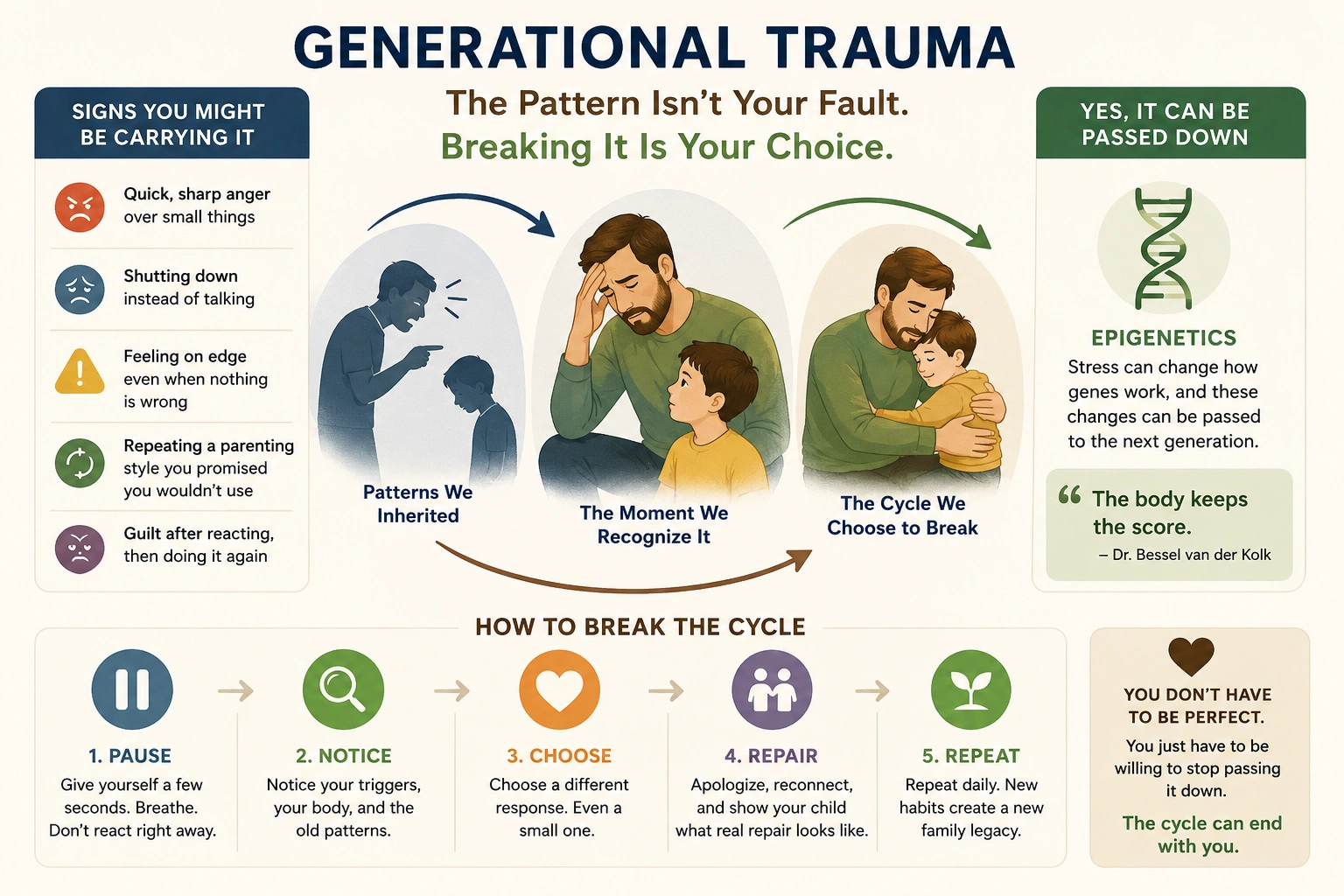

You’re in the thick of a difficult parenting situation. Maybe your child is refusing to listen, things are getting louder, and inside you can feel that familiar rise of frustration, pressure, and the urge to react instantly. You already know what you should do… but at that exact moment, it doesn’t feel possible. Maybe you’re already dreading the yelling that’s about to happen again.
So how do you actually become a calmer parent on hard days?
You become a calmer parent by slowing your reaction cycle. Instead of trying to “control your emotions,” you pause your body first, regulate your nervous system, and then respond intentionally. Calm parenting is not about being perfect, never feeling angry, or never losing your temper, it’s about creating a small gap between what happens and how you respond.
Looking for practical tools you can use during difficult parenting moments?
Get Richard Dixson’s free guide and learn simple trauma-informed strategies to respond with more calm, connection, and confidence.
Quick Takeaways
If you only have two minutes, here’s the short version:
- Yelling and snapping at your child usually isn’t a character flaw, it’s your nervous system going into a stress response faster than your thinking brain can catch up.
- Calm parenting doesn’t mean never getting frustrated. It means noticing the reaction faster and pausing before it takes over.
- The fastest way to stop yourself from yelling in the moment is a 2–5 second pause + one slow breath this alone interrupts most reaction cycles.
- Sleep, alone time, and basic self-care aren’t optional extras; they directly affect how quickly you get triggered.
- If you do lose your temper, repair matters more than perfection. A short, honest apology rebuilds trust faster than trying to “never let it happen again.”
- This is learnable. It’s a practice, not a personality trait.
Why You React Before You Can Calm Yourself Down
Most parents think they are “losing control,” but what’s actually happening is much simpler.
In stressful parenting moments, your brain shifts into a survival response, a stress reaction pattern documented by the American Psychological Association showing how chronic stress overrides the brain’s rational thinking centers.
Psychologists sometimes call this an amygdala hijacking your emotional brain (the amygdala) fires off a fight-or-flight response before your thinking brain (the prefrontal cortex) has a chance to weigh in. That’s why you react before you can even process what’s happening and why yelling can feel like it “just happened” rather than something you chose.
This is not a personality issue or a lack of willpower; it is a psychological system response.
When parenting stress builds up, especially on hard days, your system is already overloaded. Small triggers then feel bigger than they are, which leads to shouting, snapping, or shutting down.
This is where concepts like emotional regulation in parenting and nervous system regulation become important, because calm doesn’t start with behavior, it starts with the body.
Calm Parenting Doesn’t Mean Staying Calm All the Time
Calm parenting is often misunderstood and confused with gentle parenting or mindful parenting, which are related but not identical ideas.
It does NOT mean:
- never getting frustrated
- staying calm all the time
- suppressing emotions
- never raising your voice, ever
It actually means:
👉 You notice your reaction faster 👉 You pause before reacting 👉 You respond instead of explode
This shift is what builds calm parenting techniques that actually work in real life, not just in theory and it’s the same foundation that anger management for parents and mindfulness-based parenting programs are built on.
6 Quick Tips to Stop Yourself From Yelling in the Moment
Before the full 5-step reset below, here are the fast, in-the-moment tools you can use the next time you feel yourself about to snap:
- Name your trigger. Tired, hungry, overstimulated, running late knowing what’s actually setting you off makes it easier to catch before it escalates.
- Pause for 2–5 seconds before you speak. Don’t correct instantly. This tiny gap is where the reaction cycle breaks.
- Lower your voice instead of raising it. A quieter, slower voice often lands harder than a loud one and it keeps you regulated too.
- Give yourself a mini time-out. Step into another room for a minute if it’s safe to. Coming back calmer beats “winning” the moment.
- Protect your sleep and your own downtime. A short-tempered day is very often a tired, touched-out, or overloaded day. Guarding even small pockets of rest and adult time changes how easily you get triggered.
- Repair afterward if you do lose it. Losing your temper occasionally doesn’t undo your parenting.
These aren’t a replacement for the deeper work below, they’re the tools you reach for in the moment, while the 5-step reset is what you practice so the moment gets easier over time.
A Simple 5-Step Reset for Hard Parenting Moments
You don’t need a long strategy. You need something you can use at the moment.
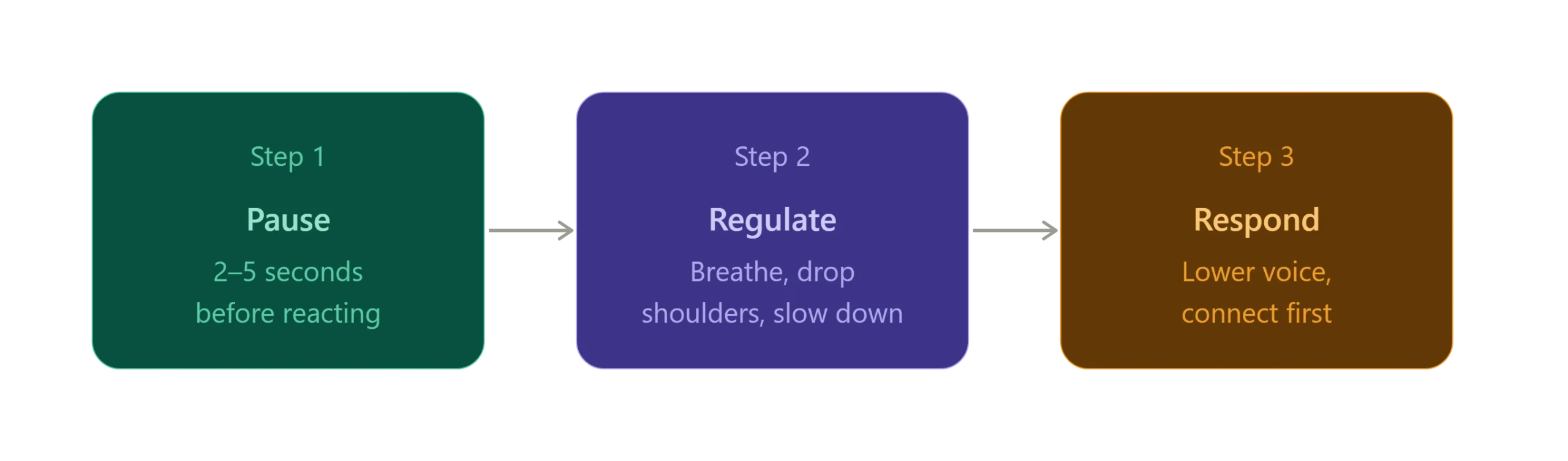
Step 1: Pause the Reaction
When you feel triggered, pause for a second. Don’t speak immediately. Don’t correct instantly.
Even a 2–5 second pause interrupts the reaction cycle the same principle behind the “count to ten” advice you’ve probably heard before, just applied more intentionally.
This small gap is where change begins.
Step 2: Regulate Your Body First
Before working to “think positive,” concentrate on your body.
- Take a slow breath in and out
- Drop your shoulders
- Relax your jaw
This activates your nervous system regulation, helping your brain shift out of stress mode.
Without this step, calm parenting and stopping yourself from yelling becomes almost impossible.
This becomes especially true for foster parents, adoptive parents, kinship caregivers, and grandparents raising grandchildren who are already carrying significant emotional demands before the day even starts.
Step 3: Respond With Intention (Not Emotion)
Now you can respond, but differently.
Instead of reacting emotionally, you:
- lower your voice
- speak slowly
- focus on connection first
This is where co-regulation with children happens your calm helps your child calm down too.
Step 4: Reconnect After the Moment
Once emotions have settled, focus on reconnecting with your child.
This might look like:
- Sitting together quietly
- Offering reassurance
- Listening before giving advice
- Reminding your child that the relationship is still safe
For children who have experienced trauma, connection after conflict is often just as important as what happened during the conflict itself. The Harvard Center on the Developing Child confirms that consistent repair and responsive relationships are among the most powerful factors in helping children rebuild emotional safety after stressful moments.
Step 5: Repair When Needed
Every parent reacts in ways they later wish they could change every parent yells sometimes, even the ones who look calm on the outside.
Repair means coming back after the moment and acknowledging what happened.
You might say:
“I was frustrated, and I raised my voice. I’m sorry. Let’s try again.”
Repair does not weaken authority. It strengthens trust and teaches children that mistakes can be acknowledged and relationships can recover.
What Does This Look Like in a Real Parenting Moment
Let’s make it simple.
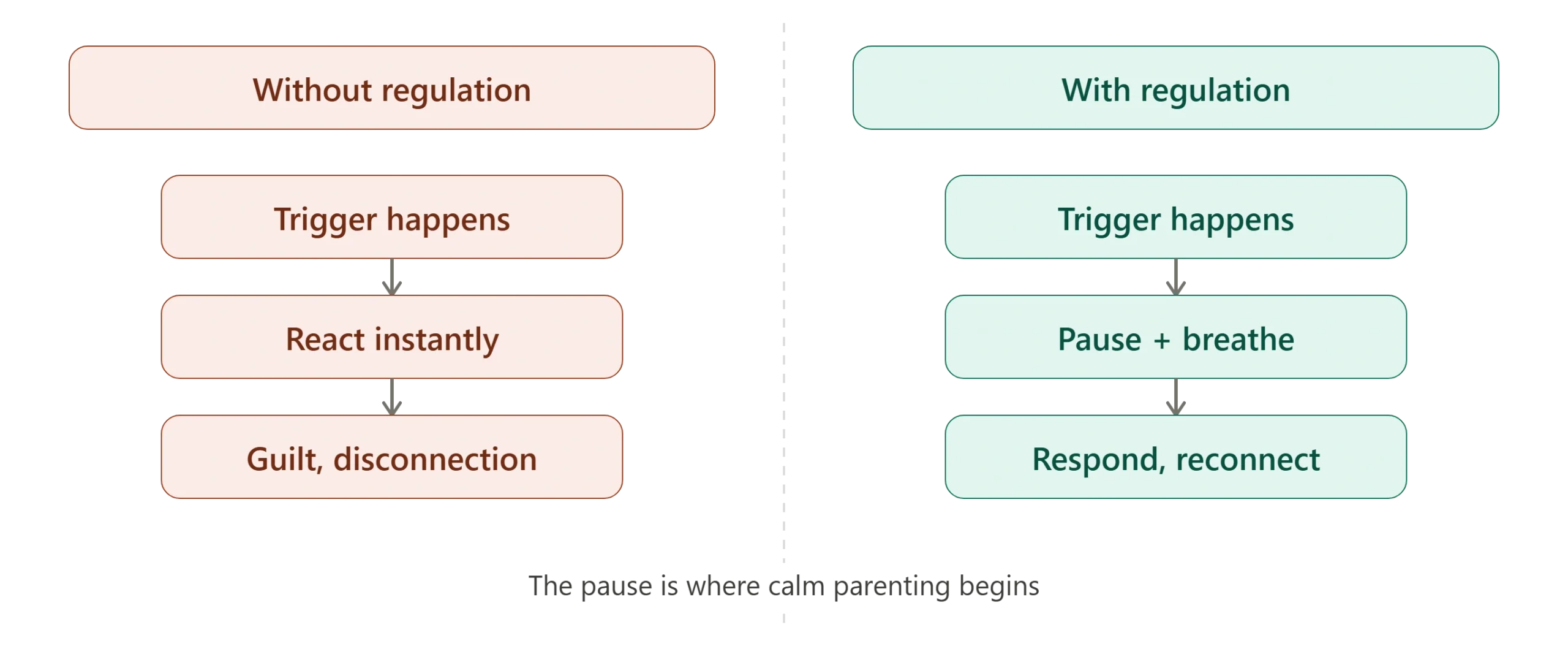
Before: Your child refuses to listen, and you immediately raise your voice out of frustration.
After: You notice the trigger → pause for a few seconds → take a breath → then calmly give direction.
Nothing magical changed; only your reaction speed changed.
That’s the real difference in how to stay calm with kids during emotionally overwhelming moments.
Why This Helps You Respond More Calmly
This method works because it interrupts the automatic stress loop.
When you pause and regulate your body first:
- your emotional brain slows down
- your thinking brain comes back online
- your response becomes intentional
This is also the foundation of trauma-informed parenting, understanding that behavior is often a nervous system response, not just “bad behavior.”
This approach is closely aligned with the TBRI parenting approach (trust-based parenting system), which focuses on safety, connection, and regulation before correction. It also overlaps with what’s often taught under mindful parenting and gentle parenting frameworks the label matters less than the practice.
These same principles are explored in greater depth throughout The Drama-Free Parent, where Richard Dixson explains how regulation, connection, and understanding can transform difficult parenting moments.
The Hard Days Don’t Make You a Bad Parent
Hard parenting days will happen; that’s normal. The goal is not to never feel triggered, but to recover faster each time.
Even a small pause instead of reacting is real progress in parenting stress management. Over time, this pause helps your nervous system feel safer, and your reactions naturally become less intense.
Becoming a calmer parent is not about learning more information; it’s about practicing one shift in real moments:
👉 From reaction → regulation 👉 From impulse → intention 👉 From control → connection
This is where real change happens. This is the foundation of drama-free parenting, not perfect reactions, but intentional ones.
The most important thing to remember is simple:
“You don’t become a calmer parent by trying harder in the moment; you become calmer by slowing your system before you respond.”
That small pause is where everything starts to change.
Frequently Asked Questions
Why do I yell at my child even when I don’t want to?
Yelling is usually a stress response, not a lack of love or willpower. When you’re tired, overwhelmed, or triggered, your nervous system reacts before your thinking brain can respond. Recognizing your triggers and pausing helps break the pattern.
How can I stop losing my temper with my kids?
Notice your triggers, pause for a few seconds before speaking, and lower your voice instead of raising it. Over time, better sleep, stress management, and regular self-care make calm responses easier.
How long does it take to become a calmer parent?
There’s no set timeline. Many parents notice small improvements within a few weeks of consistent practice, while lasting changes develop over months as calmer responses become a habit.
What’s the fastest way to calm down when I’m angry at my child?
Pause, take one slow breath, and relax your shoulders before speaking. This quick reset helps your thinking brain regain control so you can respond calmly instead of reacting.
Is it normal to feel triggered by your child’s behavior?
Yes. Most parents feel triggered at times, especially under stress. The goal isn’t to avoid every trigger but to recognize it early, respond more calmly, and repair it if you overreact.
Key Takeaways
- Losing your temper with your kids sometimes doesn’t make you a bad parent, it makes you human.
- The tools that work fastest are physical: pause, breathe, lower your voice.
- Sleep and self-care aren’t indulgent; they’re part of nervous system regulation.
- Repair after a hard moment matters more than never having one.
- Calm parenting is a practice you build over time, not a personality trait you either have or don’t.
Want to Start Becoming a Calmer Parent Today?
This practical framework is something Richard Dixson teaches throughout The Drama-Free Parent, a simple approach focused on emotional regulation, nervous system responses, and breaking reactive parenting patterns in real-life moments.
And if you want something you can apply immediately, start with the free practical guide.
If you’re looking for ongoing support, practical parenting resources, and encouragement as you build these skills, explore The Parents Hub.
It’s designed for foster, adoptive, kinship, and caregiving families who want to parent with more calm, connection, and confidence.