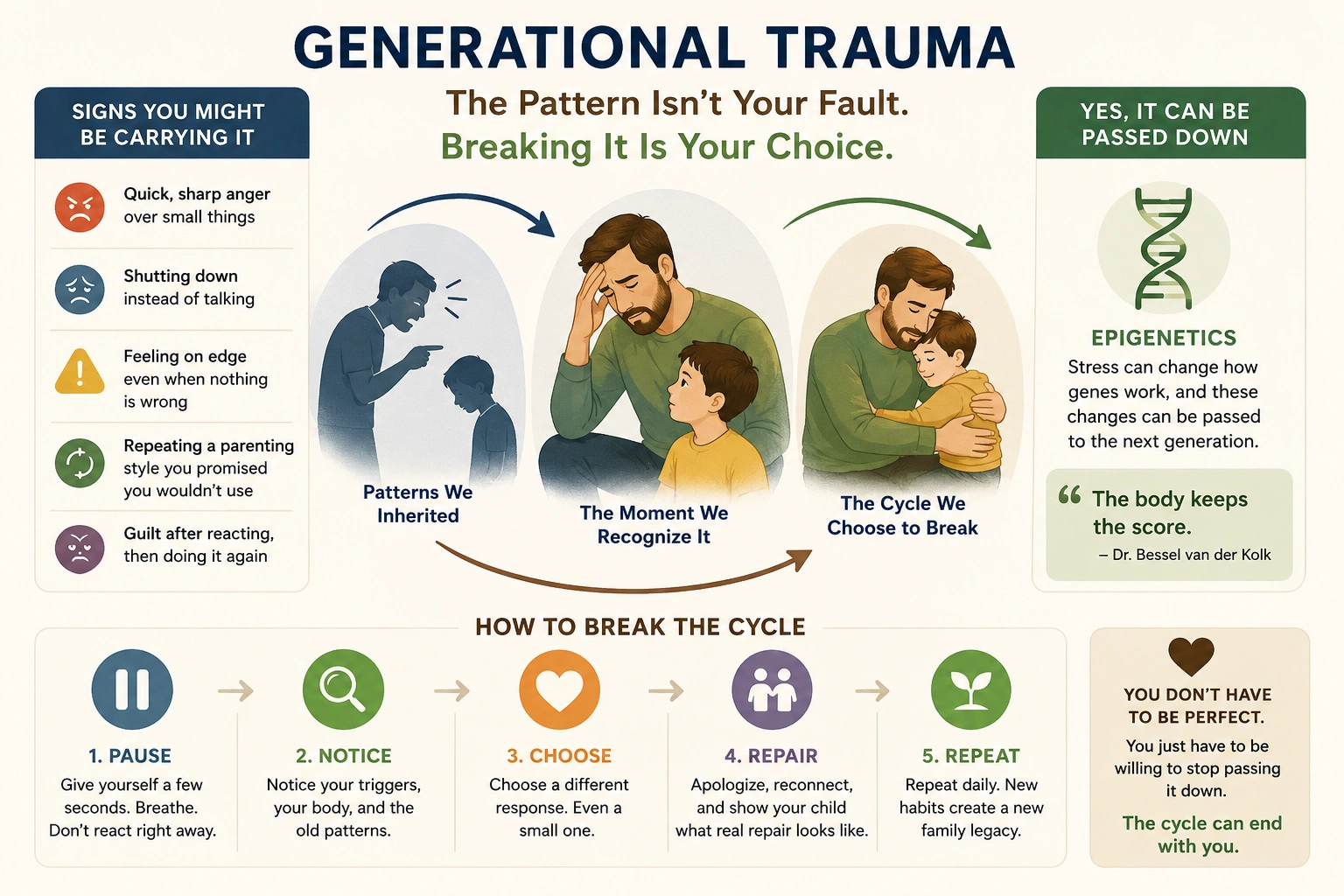

You didn’t expect to be here.
Maybe it started with a “temporary” situation. A few days turned into weeks and then months. Now you’re the one packing lunches, handling emotions, and trying to stay calm when things get overwhelming.
But there’s something else happening underneath it all.
You tell them to calm down… But your voice rises too. You promise yourself you’ll respond differently… but in the moment, something takes over. And later, when everything is quiet, the guilt feels heavier than the situation itself.
Because it’s not just about them.
It’s about you, too. The emotional exhaustion builds quietly, through reactions you didn’t plan, guilt you didn’t expect, and responsibility that never feels fully visible.
So how do you heal your own past… when you’re raising children who aren’t even yours?
This is what generational trauma looks like when it shows up in everyday parenting behavior, not as a theory but as lived experience.
Why Healing Feels Impossible When You Don’t Have Space
On paper, healing sounds like something you do in quiet moments, reflection, awareness, and maybe even growth over time.
But real life doesn’t pause for that.
There are meals to make, arguments to manage, and emotions, both yours and theirs, happening all at once. And in the middle of all this, you’re expected to “break the cycle.” That’s not just hard. It’s exhausting.
Because healing isn’t happening in isolation anymore, it’s happening in real time, inside stress, noise, and responsibility.
You might already understand why you react the way you do. You’ve read about it. You’ve thought about it.
But knowing and doing are two very different things, especially when there’s no space to reset.
You’re not the only one who has felt this way.
👉 I’ve seen this pattern show up repeatedly in caregivers under emotional stress. It’s not a lack of patience; it’s an overload of invisible emotional history.
👉 When emotional memory is already stored in the nervous system, the body reacts faster than logic can respond.
When Your Past Reacts to Their Behavior
👉 A small moment can carry more emotional weight than it deserves.
Not because of what happened… but because of what it reminds you of. One of the hardest parts about this role is this: When your past reacts, you’re holding theirs too.
What This Can Look Like in Real Life
A small moment turns into a big reaction. Not because of now… but because of before.
- resistance
- silence
- anger over small things
And somehow… it hits something in you. You try to stay calm, but your reaction shows up first. That’s not failure. That’s two stories… colliding in one moment.
👉 It’s never just about the situation in front of you. It’s what it touches underneath.

Why Raising Someone Else’s Child Feels Emotionally Heavy
There’s also something else that makes this harder: This isn’t a role you trained for. You’re showing up as a parent…
👉 But for many people in this situation, there’s often a deeper question underneath, what no one really talks about in What No One Tells Grandparents Raising Grandchildren.
You make decisions but sometimes question if they’re yours to make. You set boundaries but wonder if you’re being too much or not enough.
There’s no clear blueprint for this. If you’re still figuring out your legal role and rights in this situation, it helps to start by understanding what custodial grandparents are and what support is available to them.
And that uncertainty can create a quiet kind of pressure. You want to do right by them. But you’re also trying to figure out what “right” even looks like in this situation.
That tension, between responsibility and doubt, is something many people carry silently.
Why Healing Doesn’t Look the Way You Thought It Would
Most advice about healing assumes you have time, space, and emotional distance. But that’s not reality here.
Your healing is happening in between everything else. In small moments. In imperfect attempts.
How healing looks in real life, day to day
It might look like this:
- catching yourself before reacting (even if it’s not perfect)
- Even when you’re tired, pick a softer tone.
- noticing a pattern… even if you don’t fully change it yet
That counts; even small progress matters more than perfection.
And this is where many people miss the real shift, because breaking emotional cycles isn’t about effort alone; it’s about small, repeatable changes explained in “Simple Cycle-Breaking Steps That Actually Work.”
Because healing in this kind of situation isn’t about getting it right every time. It’s about slowly changing what happens next. Even small shifts matter more than perfect responses.
Why You Feel Drained Even When Nothing Looks Wrong
There’s a kind of tiredness that doesn’t come from doing more; it comes from carrying more. The constant self-awareness, the pressure to respond differently, and the effort to not repeat inherited patterns. And often, it goes unseen by others.
People may see you managing things well. But internally, there’s second-guessing, guilt after reactions, and pressure to be better than what you experienced.
That weight doesn’t always show, but it builds.
And if you’ve felt it, even a little, this emotional weight is often linked to what’s called secondary trauma (in caregivers), something most caregivers don’t immediately recognize, but it often shows up through hidden (generational) trauma signs most caregivers miss without realizing.
What Actually Helps When You’re Overwhelmed and Still Showing Up
Fixing some things at a time is fine. In fact, trying to do that usually makes things heavier. What helps more is something simpler and more realistic.
Small Shifts That Make This Easier
- pausing, even briefly, before reacting
- choosing connection in small moments
- letting progress be uneven instead of perfect
These small shifts may seem simple, but they often connect back to something deeper, learning how to connect before you correct, especially in emotionally charged moments. You don’t need a full transformation overnight.
You need space to respond just a little differently than before. And sometimes, that starts with noticing, not fixing.
Small daily resets often create more emotional stability than trying to change everything at once.
👉 This is exactly the kind of pattern most people never get explained; they just keep repeating it without understanding why. What you’re experiencing is not random; it’s a behavioral response shaped by emotional memory, not just present-day stress.
This is what generational trauma looks like when it shows up in real-time caregiving, not as memory but as behavior.

How You Can Break the Cycle: Even in a Role You Didn’t Choose
You didn’t choose this role. But you’re showing up in it. And that’s more important than you think.
Because healing generational trauma doesn’t happen in one big moment. It happens in small decisions… repeated over time.
In the way you pause. In that way, you try again. In the way you stay, especially when it’s hard.
👉 If this feels familiar, it usually means you’re not dealing with a surface reaction—you’re dealing with a deeper pattern shaped over time.
That’s exactly what The Drama-Free Parent breaks down, how these reactions form, why they repeat, and how they can actually be changed in real life.
👉 If you want to understand what’s happening beneath your reactions, you can start with the free chapter of drama free parent.
Because even now… you’re already changing something.
And that change, no matter how small it feels, can reach further than you think.