Many parents quietly ask this question:
“Why does my child seem fine at school, with friends, or with other caregivers, but completely falls apart with me?”
If you’ve ever wondered that, you’re not alone.
And the answer may actually be more encouraging than it feels in the moment.
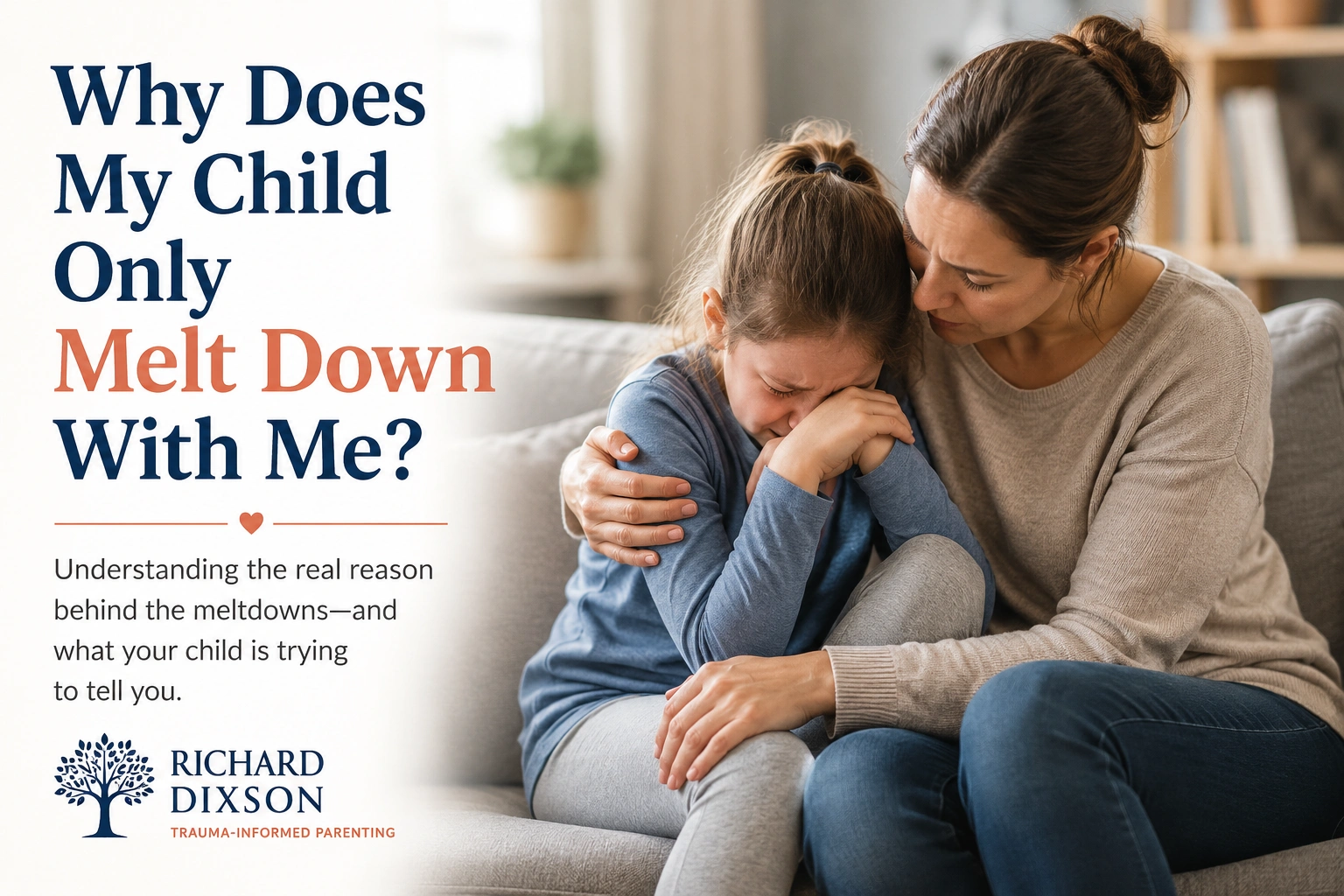
Why Does My Child Only Melt Down With Me?
Your child may melt down with you because you are the person they feel safest with.
That does not mean you are causing the behavior.
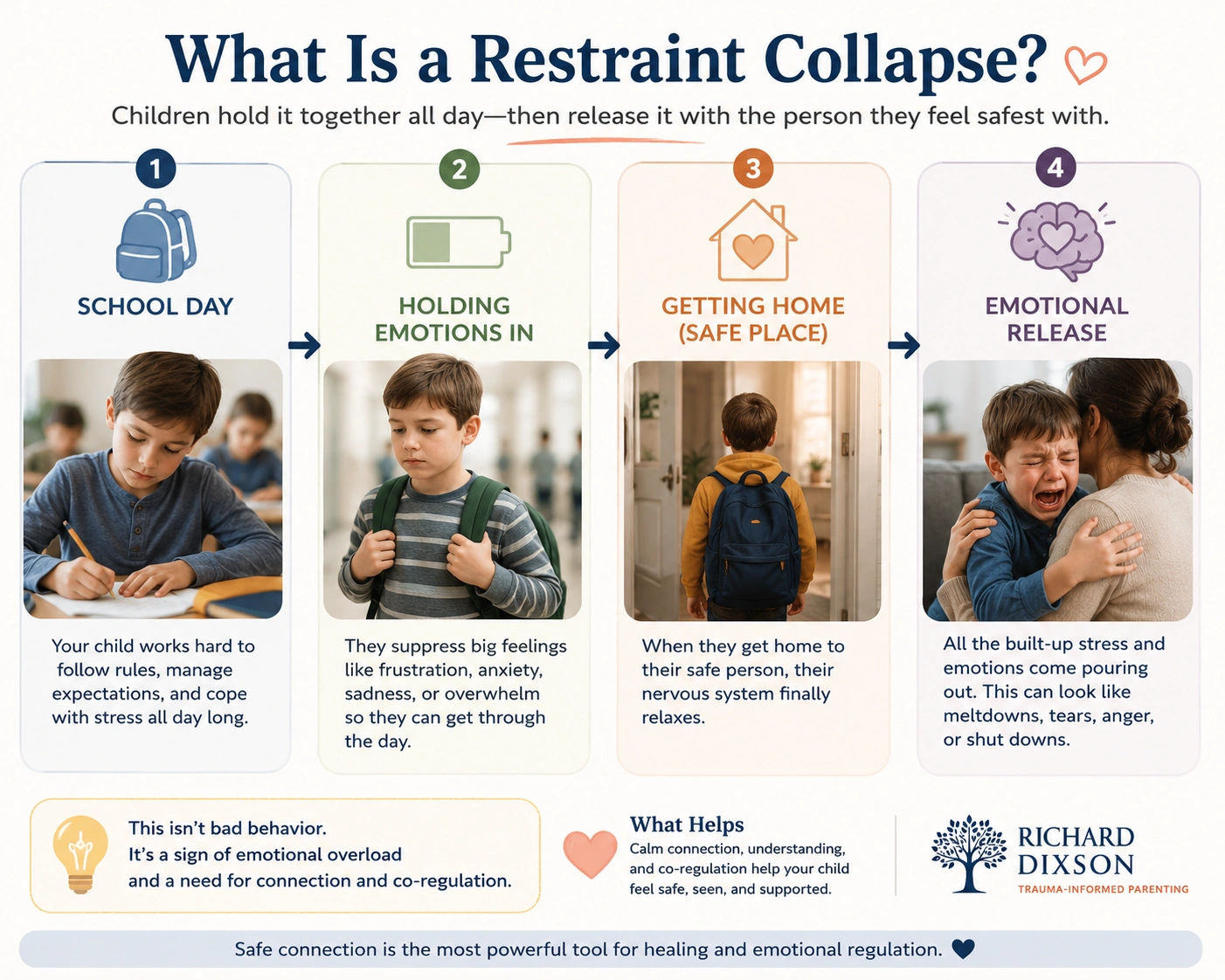
In many cases, children work incredibly hard to hold themselves together throughout the day. They manage expectations at school, follow rules, navigate social situations, and suppress big emotions. When they finally return to the person they trust most, all of that stored-up stress comes pouring out.
This is especially common in children who have experienced trauma, loss, attachment disruptions, anxiety, sensory challenges, or significant life changes.
While it can feel deeply personal, your child’s meltdown is often less about you and more about where they feel safe enough to let their guard down.
“They’re Perfect for Everyone Else”
Many parents tell me:
“The teacher says they had a great day.”
“Grandma never sees these behaviors.”
“Other people think I’m exaggerating.”
And that can leave you feeling frustrated, embarrassed, and even guilty.
You may start wondering:
- Am I doing something wrong?
- Why don’t they behave this way with anyone else?
- Why am I getting the worst version of my child?
The truth is that behavior often reflects where a child feels safest expressing what is happening inside, not where they feel happiest or most regulated.
A child who appears calm all day may be carrying stress, disappointment, worry, overwhelm, or emotional exhaustion beneath the surface.
When they get home, those emotions finally have somewhere to go.
If you’re looking for practical tools to respond more calmly during these difficult moments, download our Free Parenting Guide. You’ll learn simple strategies that help you stay grounded when your child’s emotions feel overwhelming.
What Is a Restraint Collapse?
Some experts use the term restraint collapse to describe what happens when children release emotions they have been holding in throughout the day.
Imagine carrying a heavy backpack for hours. Eventually, your shoulders need relief.
Children’s nervous systems work similarly.
They may spend the day:
- Following directions
- Managing social expectations
- Coping with sensory input
- Hiding anxiety
- Trying not to make mistakes
- Working hard to stay in control
By the time they get home, they are exhausted.
What looks like a sudden meltdown may actually be the release of emotional pressure that has been building all day.
When Trauma or Stress Makes This Even Bigger
For children impacted by trauma, foster care, adoption, or significant loss, the pattern can become even more intense.
A child’s nervous system is constantly asking:
“Am I safe?”
“Can I trust the people around me?”
“What happens when I make mistakes?”
“Will someone still care about me when I’m struggling?”
When children have experienced uncertainty in relationships, they may become highly sensitive to stress.
Their reactions can seem disproportionate to the situation because the nervous system is responding to perceived threat rather than the actual event in front of them.
This is where trauma-informed parenting shifts the conversation. Understanding what trauma-informed parenting looks like in everyday family life can help you see behavior through a completely different lens.
Instead of asking:
“What’s wrong with my child?”
We begin asking:
“What is my child communicating through this behavior?”
The Hidden Message Beneath the Meltdown
Most meltdowns are not about the thing that appears to trigger them.
The broken cracker.
The wrong cup.
The request to start homework.
The reminder to take a shower.
Those moments are often just the final drop in an already full bucket.
Underneath the behavior, children may be communicating:
- “I’m overwhelmed.”
- “I’m exhausted.”
- “I don’t know how to handle these feelings.”
- “I need help regulating.”
- “I need connection before correction.”
- “I don’t feel understood right now.”
When we focus only on stopping the behavior, we often miss the message. Learning what your child’s behavior is actually communicating can help you respond more effectively beneath the surface behavior.
The Mistake Many Loving Parents Make
When your child melts down after you’ve spent all day caring for them, it’s natural to become frustrated.
Many parents immediately move into problem-solving mode:
- Lecturing
- Threatening consequences
- Arguing
- Trying to reason during the meltdown
- Demanding explanations
The problem is that a dysregulated child often cannot access logical thinking in that moment.
Their nervous system is in survival mode.
Trying to teach, correct, or reason during peak distress is like trying to have a meaningful conversation with someone who is actively drowning.
The child first needs regulation before they can access reflection.
If this pattern feels familiar, you may find the free chapter of The Drama-Free Parent helpful. It offers practical guidance for staying calm, connected, and confident when your child’s emotions become difficult to manage.
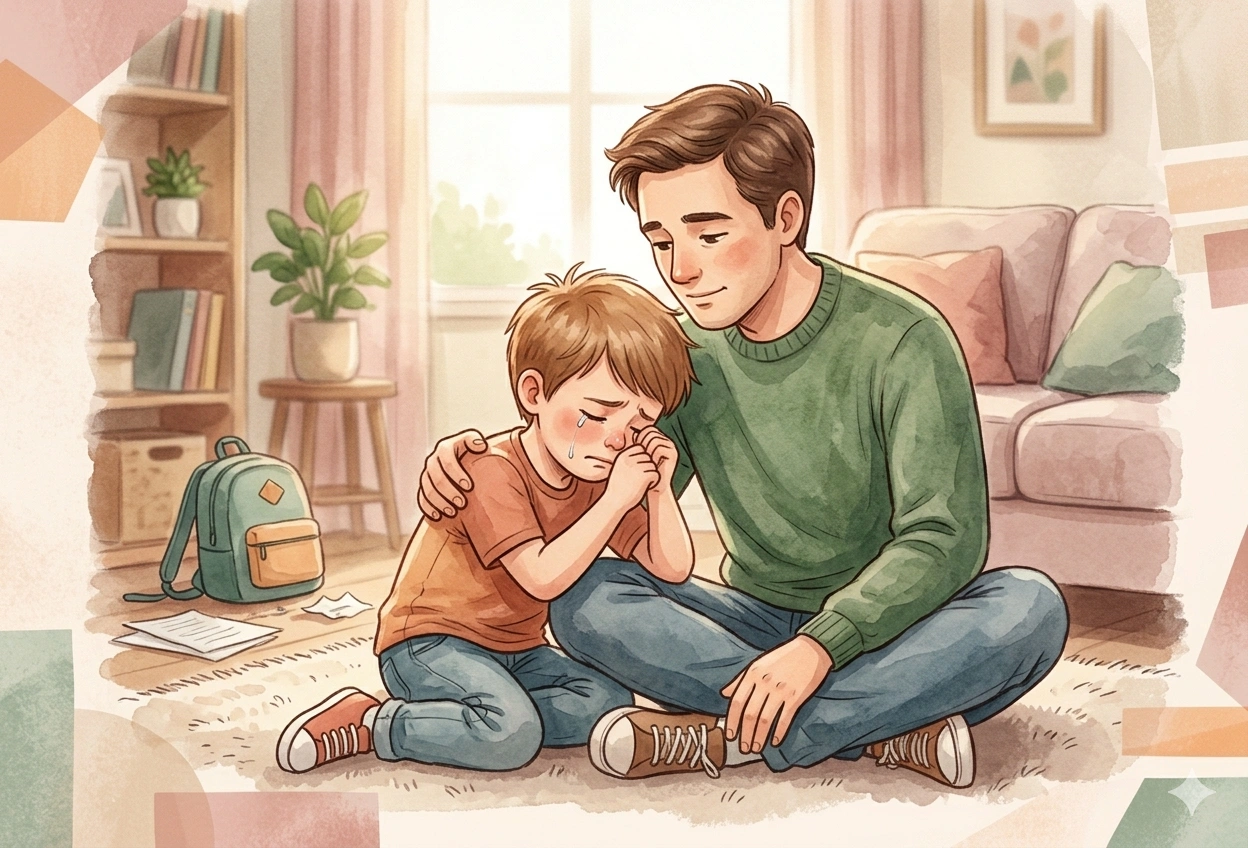
What Your Child Needs Most in That Moment
When emotions are running high, your presence often matters more than your words.
That doesn’t mean allowing harmful behavior.
It means becoming a source of calm while maintaining healthy boundaries.
Some helpful steps include:
1. Regulate Yourself First
Children borrow regulation from the adults around them.
Before responding, notice:
- Your breathing
- Your body tension
- Your voice tone
- Your emotional state
Your calm nervous system can help settle theirs.
2. Reduce Demands Temporarily
Immediately after school or stressful situations, many children need decompression time.
Consider:
- A snack
- Quiet time
- Movement
- Outdoor play
- Connection before responsibilities
A small transition period can prevent many evening meltdowns.
3. Connect Before Correcting
Instead of jumping straight to discipline, try connection first.
You might say:
“Looks like today took a lot out of you.”
“I’m here with you.”
“That was a really big feeling.”
Connection does not remove accountability. In fact, understanding the difference between co-regulation and self-regulation can help parents support emotional growth while still maintaining healthy boundaries.
It simply creates safety first.
4. Save Teaching for Later
Once your child is calm, you can talk about:
- Better choices
- Problem-solving
- Repairing relationships
- Handling similar situations differently next time
The best teaching often happens after regulation returns.
A Real-Life Example
Imagine an eight-year-old who spends the entire school day trying to stay focused.
They worry about making mistakes. They work hard to follow directions. They feel overwhelmed by noise but never say anything.
The moment they get home, a parent asks:
“How was your day?”
The child snaps.
They yell.
They throw their backpack. The parent sees disrespect.
But underneath the behavior may be emotional exhaustion.
When the parent responds with calm curiosity instead of immediate punishment, they begin addressing the real issue rather than just the symptom.
What Attachment Research Helps Us Understand
Healthy attachment is not about children being perfectly behaved.
It is about children knowing they can bring their biggest emotions into a relationship and still be accepted.
Secure relationships create emotional safety.
Paradoxically, this means children often reveal their most difficult emotions with the people they trust most.
That does not make the behavior acceptable.
But it can help explain why it happens.
Your child’s meltdown may be evidence that they trust you enough to show what they have been carrying all day.
Signs Your Child May Be Releasing Stress Rather Than “Acting Out”
Your child may be experiencing emotional overload if:
- Meltdowns happen primarily at home, especially when children experience after-school emotional overload
- Behavior worsens after school
- Outbursts happen after highly structured environments
- Emotional reactions seem bigger than the trigger
- They calm more quickly when connection is offered
- They struggle to explain why they are upset
These signs suggest the behavior may be connected to regulation rather than simple defiance.
Key Takeaways
- Children often melt down with the people they feel safest with.
- A meltdown is frequently a sign of emotional overload, not manipulation.
- School-day stress can build up and emerge at home.
- Trauma, anxiety, attachment challenges, and nervous system dysregulation can intensify this pattern.
- Connection and co-regulation are often more effective than immediate correction.
- Teaching works best after a child has returned to a calmer state.
- Your child’s behavior may be communicating a need rather than a refusal.
Frequently Asked Questions
Is it normal for my child to only melt down with me?
Yes. Many children release emotions with their primary attachment figure because that relationship feels safest. This pattern is especially common after school or stressful experiences.
Does this mean I’m too soft as a parent?
Not necessarily. A child melting down with you is not automatically a sign that your boundaries are weak. Often it reflects emotional safety and trust rather than ineffective parenting.
Should there still be consequences for inappropriate behavior?
Yes. Children need accountability. However, regulation should come before correction. Consequences are generally more effective after a child has calmed down and can think clearly.
Why does my child seem completely different at school?
Many children expend enormous energy managing expectations throughout the day. Home becomes the place where accumulated stress and emotions are finally released.
Is this more common in foster or adoptive children?
It can be. Children who have experienced trauma, loss, attachment disruptions, or uncertainty may have more sensitive stress-response systems, which can lead to stronger emotional reactions in safe relationships.
How can I reduce after-school meltdowns?
Focus on transition time. Offer connection, snacks, movement, rest, and lower demands before jumping into homework, chores, or difficult conversations.
You’re Not Getting the Worst Version of Your Child
If your child only seems to melt down with you, it can feel exhausting and deeply unfair.
But before you assume you’re failing, consider another possibility.
You may be the person they trust most.
That doesn’t make the meltdowns easy.
But it changes how you understand them.
When you learn to see behavior through the lens of emotional safety, attachment, and nervous system regulation, you can respond with greater confidence and less guilt.
And that shift often becomes the first step toward calmer, more connected parenting.
Next Step: You Don’t Have to Figure This Out Alone
If your child seems to save their biggest emotions for you, it can be exhausting. But understanding what’s happening beneath the behavior is the first step toward creating calmer, more connected interactions.
Start by downloading our Free Parenting Guide for practical strategies you can use right away.
If you’re working on your own emotional reactions and want deeper insight into calmer parenting, explore The Drama-Free Parent or read the free book chapter.
And if you’re ready for ongoing support, training, and a community of like-minded parents, explore Parents Hub, where you’ll find practical tools, expert guidance, and encouragement for the journey ahead.