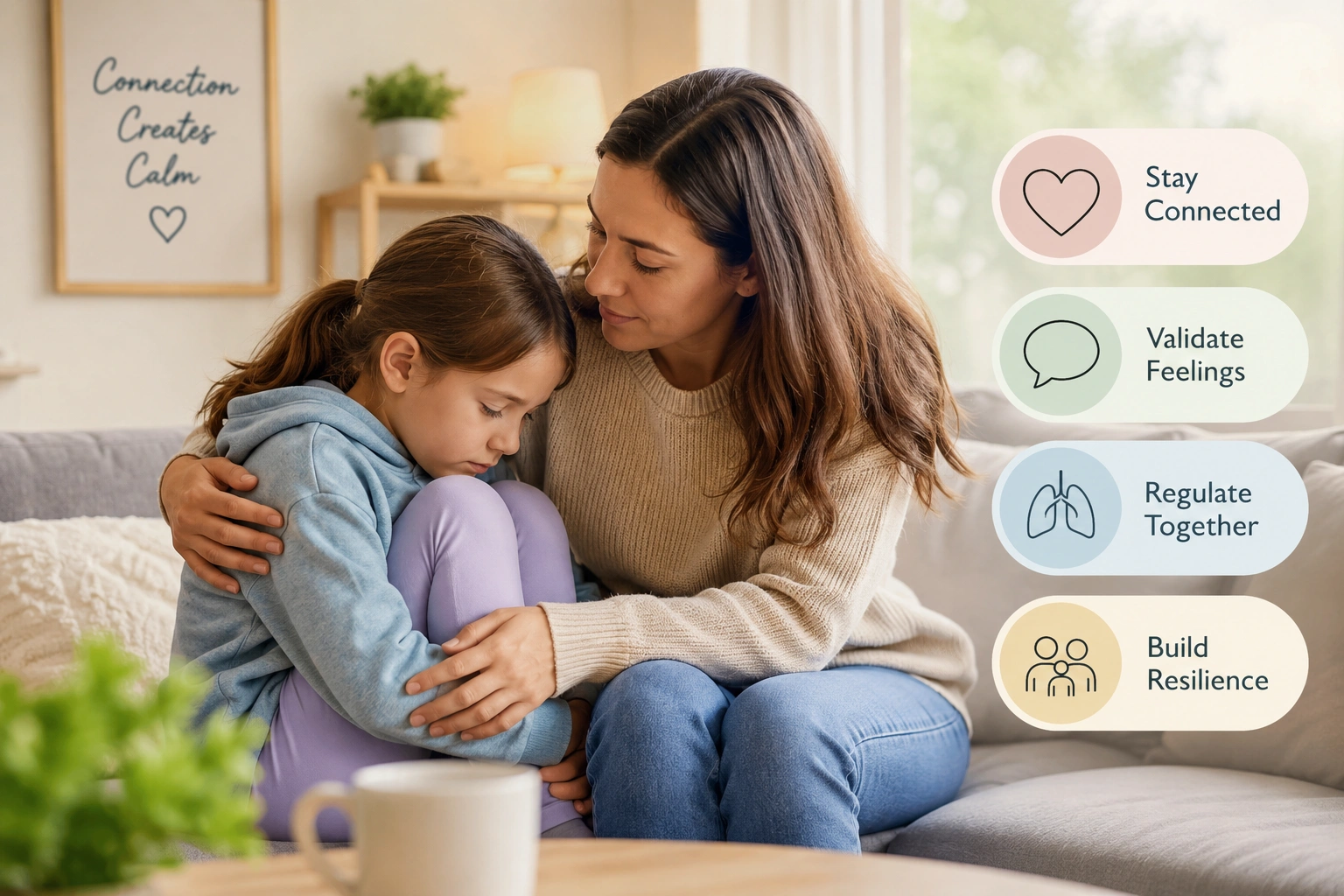
Co-regulation is the process of helping a child calm big emotions through the presence of a calm, supportive adult. When a child is crying, yelling, or shutting down, strategies like regulating yourself first, staying physically close, naming the emotion, lowering your voice, and creating emotional safety before correcting behavior help settle their nervous system. Practiced consistently, these everyday moments are how children gradually develop self-regulation and emotional resilience of their own.
Through his work with parents, grandparents, foster families, and caregivers, Richard Dixson emphasizes that emotional safety and connection are the foundation of lasting behavior change.
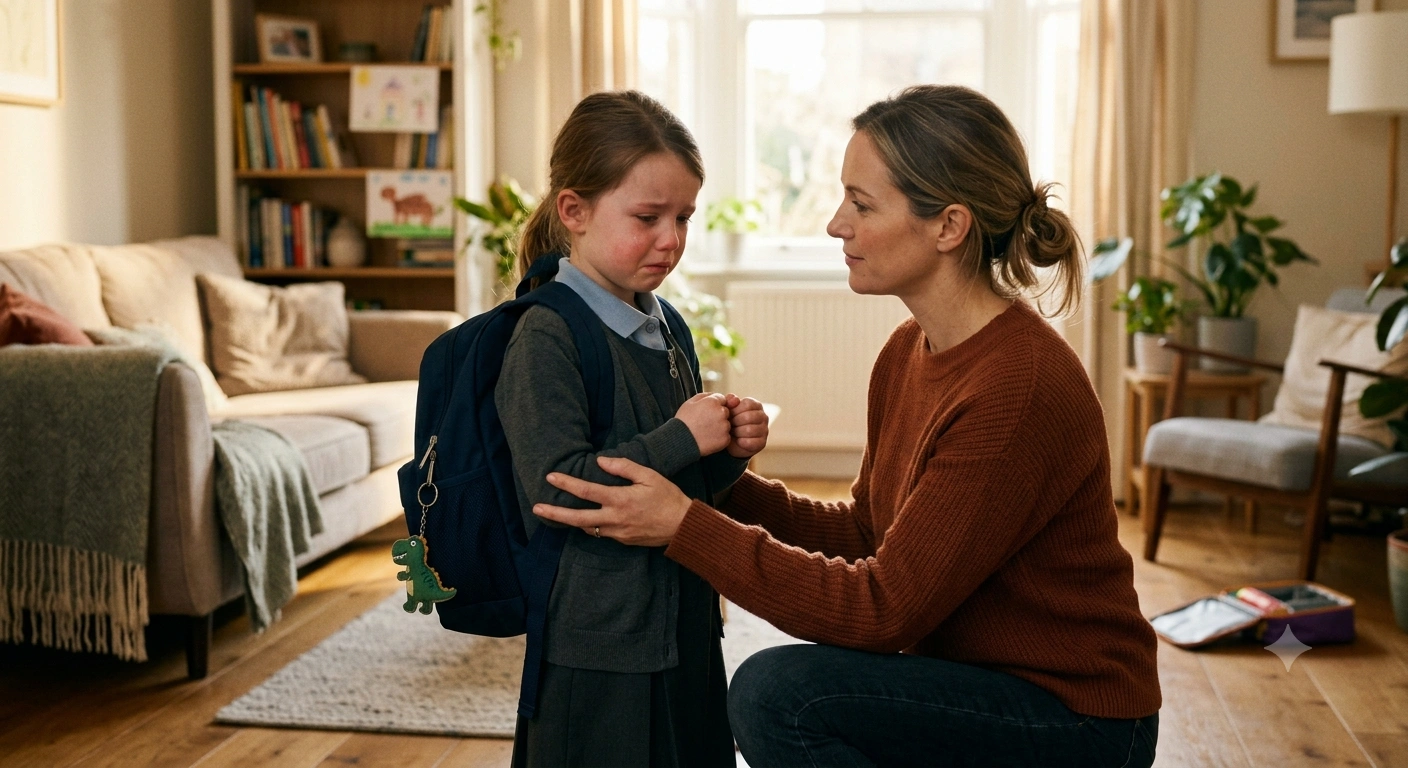
Your child is crying. Or yelling. Or completely shutting down.
You try explaining. You try reasoning. You may even try consequences. Nothing seems to help.
In moments like these, most children aren’t choosing difficult behavior; they’re emotionally overwhelmed. And an overwhelmed nervous system can’t be reasoned with. It needs to be calmed first.
What Is Co-Regulation?
Co-regulation is the process of helping a child feel calm, safe, and connected through an adult’s presence, tone, and actions. It’s how a child “borrows” regulation from a trusted adult until their own nervous system can settle. Over time, repeated co-regulation experiences are what teach a child to self-regulate independently.
Why Co-Regulation Works
When a child is dysregulated, their brain shifts into a stress response fight, flight, or freeze and the thinking part of the brain temporarily goes offline. Logic and lectures can’t reach a nervous system that doesn’t yet feel safe. A calm, connected adult signal feels safe, which allows the child’s nervous system to downshift out of that stress response. This is the same principle behind affect regulation in Trust-Based Relational Intervention (TBRI®): connection has to come before correction, because a child can’t learn or problem-solve until they feel safe.
According to the Center on the Developing Child at Harvard University, a child’s brain reaches roughly 90% of its adult size by age five, with over a million new neural connections forming every second in the earliest years and responsive, back-and-forth interactions with caregivers are what shape that architecture. The Child Mind Institute describes co-regulation in similar terms: a caregiver’s calm presence, more than any single technique, is what helps a dysregulated child’s nervous system settle.
Looking for Practical Ways to Apply This?
Understanding why co-regulation works is the first step. Applying it during real-life meltdowns, bedtime struggles, and power battles is where parents often need the most support.
Richard Dixson’s 3-Day Calm Home Guide walks you through simple trauma-informed techniques you can begin using today to create more connection and fewer daily conflicts.
Why Co-Regulation Builds Self-Regulation
Self-regulation isn’t something children are simply born with. Each time a trusted adult helps a child move through a hard moment calmly, the child’s brain rehearses that pattern. Repeated enough times, the child starts running it on their own. That’s why co-regulation isn’t a workaround for self-regulation, it’s the foundation it’s built on.
Signs Your Child Needs Co-Regulation
Not every meltdown looks the same. Watch for:
- Crying or yelling that escalates instead of easing
- Shutting down or going silent
- Refusing directions or freezing in place
- Hiding or trying to escape the situation
- Aggression (hitting, throwing, biting)
- Panic, rapid breathing, or visible overwhelm
If you notice these signs, your child likely needs connection before any conversation about behavior.
Why Can’t My Child Calm Down When They’re Upset?
When children are emotionally overwhelmed, their nervous system is focused on safety, not logical thinking. That’s why reminders, lectures, and even good advice often go nowhere. The behavior you’re seeing is usually a sign of stress, fear, exhaustion, or overload not a lack of caring.
When a child is corrected before they’re calm, the lesson rarely lands. The thinking brain is still offline, so the child absorbs the tone (fear, shame) more than the lesson itself. That’s often why the same conflict repeats. Helping a child feel safe and connected first, then addressing behavior, is what makes correction effective.
10 Co-Regulation Strategies for Parents
1. Regulate Yourself Before Helping Your Child
Many parents ask: “How can I help my child calm down when I’m upset too?”
Children often borrow regulation from the adults around them. If your voice gets louder, your child’s stress may increase. If your body becomes calmer, your child often begins to feel that shift too.
Before responding, try: taking one slow breath, relaxing your shoulders, lowering your voice, slowing your movements. You don’t need to be perfectly calm, you just need to move toward it.
2. Lower Your Voice Instead of Raising It
When emotions run high, many adults naturally raise their voices. Unfortunately, children often experience this as a threat rather than support. A calm voice sends a different message: “You’re safe. I’m here. We’ll get through this together.” A quieter voice often helps a child’s nervous system settle faster than a louder one.
3. Focus on Connection Before Correction
When behavior is difficult, it’s tempting to jump straight to consequences or lectures. But children learn best when they feel connected first; this doesn’t mean ignoring boundaries. It means helping your child feel understood before teaching the lesson. Connection first, correction second. This shift is one of the foundational ideas behind trauma-informed parenting models such as TBRI® start there if you’re new to the concept. It also tends to reduce power struggles and matters most when consequences stop working and behavior continues despite repeated punishment.
Want to See This Approach in Everyday Parenting?
Learning the idea of “connection before correction” is one thing. Using it during tantrums, sibling conflict, bedtime struggles, or after-school meltdowns is another.
Richard Dixson’s The Drama-Free Parent shares practical examples that help parents apply these principles in everyday family life.
4. Name What You Think Your Child Is Feeling
Children can’t always explain what’s happening inside them. Sometimes they need help finding the words. Try: “You seem really frustrated.” “That felt disappointing.” “I wonder if you’re feeling overwhelmed.” You don’t have to be exactly right, the goal is to help your child feel seen. Over time, this builds the emotional awareness that self-regulation depends on.
5. Stay Close Instead of Walking Away During Big Emotions
Many children don’t need immediate solutions, they need support. This is especially common during after-school meltdowns, when a child has spent hours holding it together. Support can look like sitting nearby, staying available, listening quietly, or offering comfort if welcomed.
For children who’ve experienced stress, loss, trauma, or instability including generational patterns passed down in families your calm presence can be especially powerful. Predictable routines also reduce how often a child reaches that point of overwhelm in the first place.
A quick example: Marcus, age 7, comes home from school and melts down over a broken shoelace. His dad’s instinct is to fix the lace immediately. Instead, he sits down next to Marcus and says, “That was a hard day, huh.” No fixing, no lecture, just presence. Within two minutes, Marcus is calm enough to ask for help with the lace himself. The shoelace was never really the problem.

Need More Everyday Examples?
Every child responds differently. If you’re looking for more practical, trauma-informed parenting ideas you can use at home, explore Richard Dixson’s Parenting Hub, where you’ll find articles, tools, and guidance for parents, grandparents, foster parents, and caregivers.
6. Use Predictable, Simple Language
When children are dysregulated, long explanations make things harder. Keep words short and clear. Instead of “We’ve discussed this multiple times, and you’re aware of the appropriate course of action,” try: “I’m here.” “You’re safe.” “We’ll figure this out together.” Simple language is easier for an overwhelmed brain to process.
7. Create Safety Before Solving the Problem
Parents naturally want to fix things, but problem-solving works best after emotions settle, imagine trying to solve a math problem while panicking. Children experience something similar during emotional overwhelm. First help the child feel safe, then explore solutions together. This usually leads to better learning and fewer repeated struggles.
8. Use Simple Sensory Support to Help a Child’s Body Calm Down
Sometimes children need help calming their bodies before they can calm their emotions. Simple sensory supports may help: drinking water, taking a walk, stretching, deep breaths, a quiet corner, a favorite blanket. Every child is different. Pay attention to what helps yours feel more regulated and secure.
9. Let Your Child See Healthy Regulation in Action
Children learn more from what we do than what we say. Model it out loud: “I’m feeling frustrated, so I’m taking a deep breath.” “That was stressful for me. I’ll take a moment to slow down.” These small moments teach children that emotions are normal and manageable, and over time they start using the same skills themselves.
10. Repair After Difficult Moments
No parent gets it right every time. What matters most is what happens next. Repair might sound like: “I’m sorry I yelled.” “That was a hard moment for both of us.” “Let’s try again.” Research on healthy relationships consistently shows that repair not perfection is what builds trust. For many parents, learning to repair is also part of interrupting patterns passed down through generations. Children don’t need perfect parents. They need parents who reconnect after hard moments.
Common Co-Regulation Mistakes Parents Make
- Trying to teach or lecture during a meltdown, before the child is calm
- Raising their voice to be heard over a child’s big emotions
- Asking too many questions instead of offering presence
- Jumping to solve the problem before creating safety
- Expecting instant results instead of gradual change over time
Ready to Build Calmer Parenting Habits?
Changing parenting patterns doesn’t happen overnight, but small daily changes can create lasting results.
The 3-Day Calm Home Guide gives you simple daily actions to reduce power struggles and strengthen connection with your child.
Quick Co-Regulation Checklist
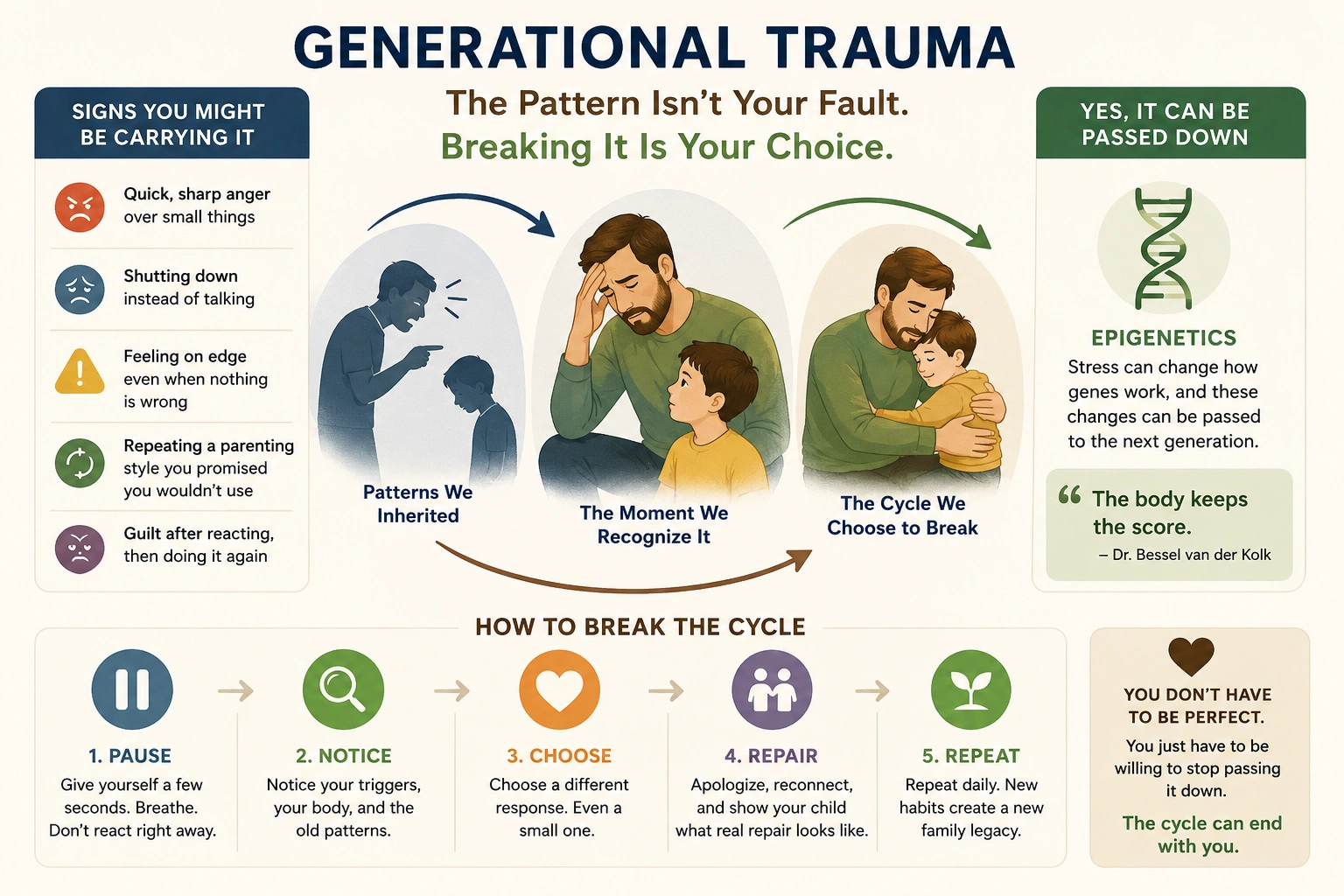
- Pause and regulate yourself first
- Lower your voice
- Stay close
- Name the emotion
- Offer sensory support if needed
- Address behavior after they’re calm
Co-Regulation vs. Self-Regulation
| Co-Regulation | Self-Regulation |
| An adult helps a child calm down | A child calms down independently |
| Builds emotional safety in the moment | Uses internalized coping skills |
| Happens first, especially in early childhood | Develops gradually over time, with practice |
| Relies on a trusted, regulated adult | Relies on skills the child has learned |
Children don’t outgrow co-regulation overnight. Even teenagers benefit from a calm, regulated adult during stressful situations
What Co-Regulation Is Not
| Co-Regulation Is Not | Co-Regulation Is |
| Giving in to every demand | Creating emotional safety |
| Removing boundaries | Supporting emotional regulation |
| Avoiding accountability | Teaching skills over time |
| Letting behavior go unchecked | Strengthening connection while holding limits |
| Rescuing children from every emotion | Helping children move through emotions safely |
Children still need limits. They simply learn best when those limits are delivered through connection rather than fear.
Benefits of Co-Regulation
- Reduces the frequency and intensity of tantrums and meltdowns
- Strengthens the parent-child attachment
- Builds a child’s long-term emotional regulation skills
- Lowers stress for both parent and child in the moment
- Builds resilience that carries into adolescence and adulthood
Frequently Asked Questions
What is co-regulation in parenting?
Co-regulation is when a calm, connected adult helps a child manage big emotions through presence, tone, and support rather than expecting the child to calm down alone.
Co-Regulation vs. Self-Regulation: What’s the Difference?
Co-regulation is an adult helping a child calm down; self-regulation is a child managing emotions independently. Self-regulation develops gradually, built on repeated experiences of co-regulation.
At what age do children learn self-regulation?
It develops gradually: toddlers and preschoolers rely almost entirely on an adult to co-regulate; school-age children start using some skills on their own but still need support in big moments; teens can self-regulate more often but still benefit from a calm adult during high stress.
Does co-regulation work during tantrums?
Yes. A calm, present adult can help shorten a tantrum by signaling safety to the child’s nervous system, though it won’t stop every tantrum instantly.
Does co-regulation mean giving in to my child?
No. Co-regulation supports emotional safety while boundaries stay in place. It changes how a limit is delivered, not whether the limit exists.
Is co-regulation the same as gentle parenting?
They overlap but aren’t identical. Gentle parenting is a broader philosophy; co-regulation is a specific nervous-system-based technique that fits within it and within trauma-informed approaches like TBRI®.
How long does co-regulation take to work?
In the moment, a calmer state can begin within minutes of consistent presence. Building lasting self-regulation skills, however, takes weeks to months of repeated practice not a single conversation.
Can co-regulation help children who’ve experienced trauma?
Yes. For children with trauma histories, consistent co-regulation helps rebuild a sense of safety and predictability, which is central to trauma-informed approaches like TBRI®.
Can co-regulation work with teenagers?
Yes, though it looks different less physical closeness, more calm tone, patience, and availability without pressure to talk immediately.
Are there times I shouldn’t use these strategies?
Yes. If a child is being unsafe or aggressive, or if anyone’s immediate safety is at risk, prioritize safety first physically separate or intervene as needed, then return to co-regulation once everyone is safe.
Key Takeaways
- Co-regulation helps children borrow calm from a trusted adult.
- Connection comes before correction.
- Emotional safety is what makes learning possible.
- Self-regulation develops gradually, through repeated co-regulation.
- Parents don’t need to be perfect, consistent repair is what matters.
Start With One Small Change Today
Co-regulation isn’t about preventing every difficult emotion, it’s about helping children feel safe enough to move through them with support. You don’t need to master all 10 strategies this week. Choose one, practice it consistently, and notice what changes.
If you’re trying to reduce meltdowns, strengthen connection, and better understand your child’s emotional needs, Richard Dixson’s book offers a practical, trauma-informed approach that parents, grandparents, foster parents, and caregivers can start using immediately. Explore the book or download the free guide for simple strategies to reduce power struggles and build stronger connections at home.
If you’re working through meltdowns, power struggles, or challenging behaviors more broadly, the Parenting Hub offers ongoing trauma-informed tools and guidance for caregivers.