You love your grandchildren more than anything. But lately, small things feel harder than they used to. The noise gets to you faster. You lose patience more quickly. And sometimes you react in ways that leave you feeling tired and guilty afterward.
That does not mean you are a bad grandparent.
Most of the time, it means your body and mind are overwhelmed. When you spend too long caring for everyone else without enough rest, staying calm becomes harder even with the people you love most.
Emotional exhaustion makes it harder for grandparents to stay calm because the brain and body stay stuck in stress mode too long. When caregivers become overwhelmed, small child behaviors can start triggering bigger emotional reactions.
So why does emotional exhaustion make loving grandparents feel so reactive sometimes?
Why Do I Feel So Overwhelmed Around My Grandchildren?
Grandchildren bring joy. But caregiving also takes emotional energy every single day.
You may feel overwhelmed because your body has been carrying stress for too long without enough recovery. Even normal child behavior can start feeling like “too much” when you are emotionally exhausted.
Signs You May Be Emotionally Exhausted
- noise bothers you faster
- you feel irritated more easily
- sibling fights feel overwhelming
- repeated questions wear you down
- you feel emotionally tense all day
Many grandparents helping raise grandchildren go through this quietly. They love their family deeply, but they are also tired in ways they do not always talk about.
Over time, I realized many grandparents were blaming themselves when they were actually emotionally overwhelmed.
If you already feel emotionally drained before the day even starts, your stress response stays active longer. That makes calm parenting much harder.
Why Emotional Exhaustion Makes Grandparents React Faster
When you are emotionally exhausted, your body stays in stress mode.
That means small behaviors can suddenly feel much bigger than they really are. Loud play, whining, messes, or arguing may start triggering reactions faster than before.
This does not mean you are failing.
It usually means your emotional load has become too heavy for too long.
Many grandparents think they need more patience. But often, they actually need more rest, support, and emotional recovery.
Sometimes the problem is not a lack of parenting knowledge. It is that your nervous system has been under stress for too long. That’s something I explored further in Why You Keep Reacting (Even When You Know Exactly What to Do).
What Emotional Overload Can Look Like
- snapping quickly
- feeling overstimulated
- wanting silence all the time
- feeling guilty after reacting
- struggling to calm down once upset
When your body feels overwhelmed, calm responses become harder to access.
Why Do I Snap at My Grandchildren Even When I Love Them Deeply?
Because love does not erase stress.
You can deeply love your grandchildren and still react emotionally when your body feels overloaded.
When people stay stressed too long, the brain moves into survival mode. Some grandparents become louder. Others shut down emotionally. Some feel irritated by small things that normally would not bother them.
That is very common in emotionally exhausted caregivers.
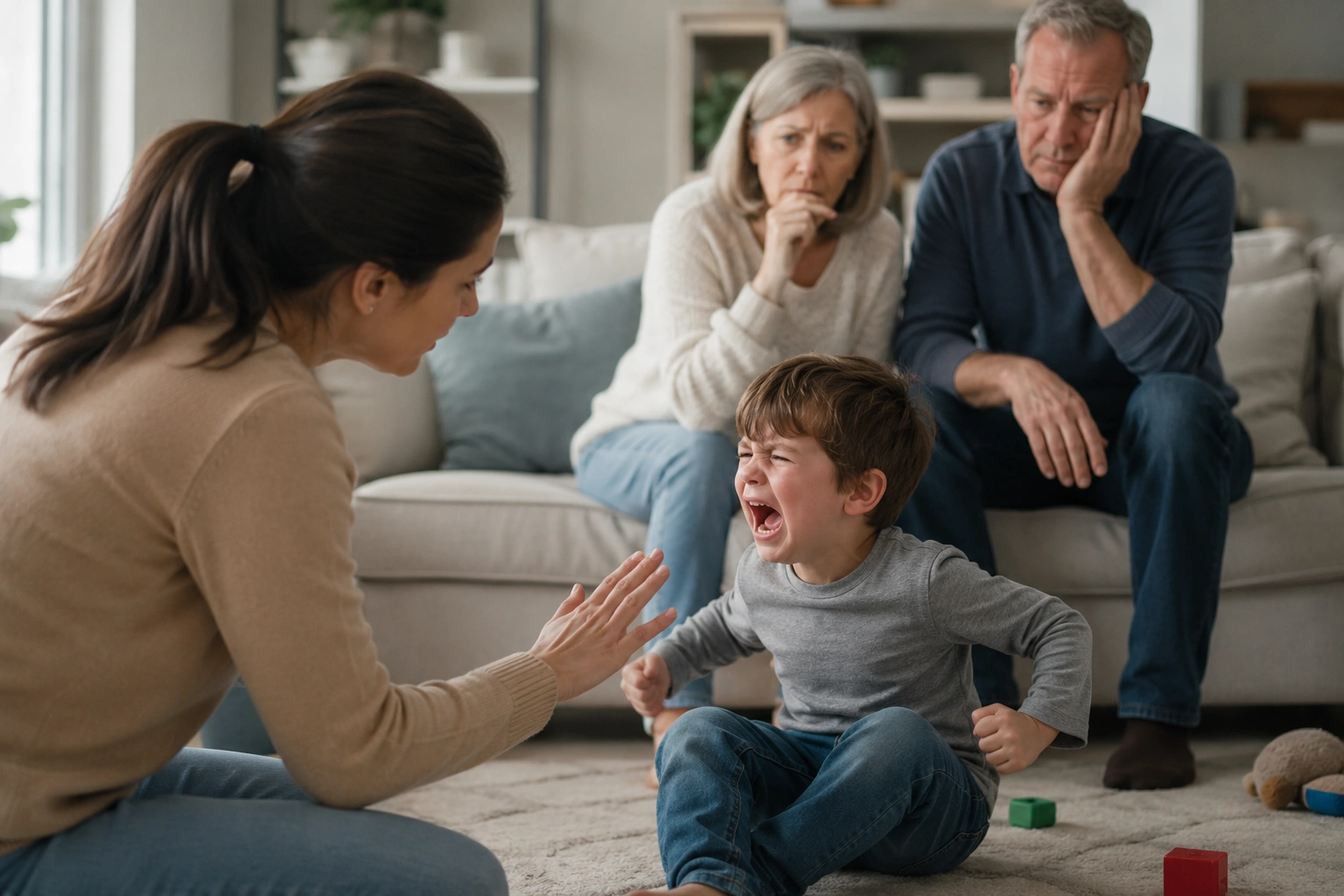
Children also pick up emotional energy from the adults around them. When you feel rushed, stressed, or emotionally tense, children often become more reactive too.
That cycle can leave everyone feeling upset afterward.
Sometimes the best thing you can do is calm yourself before trying to correct behavior.
If you have already been working on connection before correction inside your home, this is usually where that shift matters most.
What Should I Do Before I React Emotionally?
Start by slowing yourself down first.
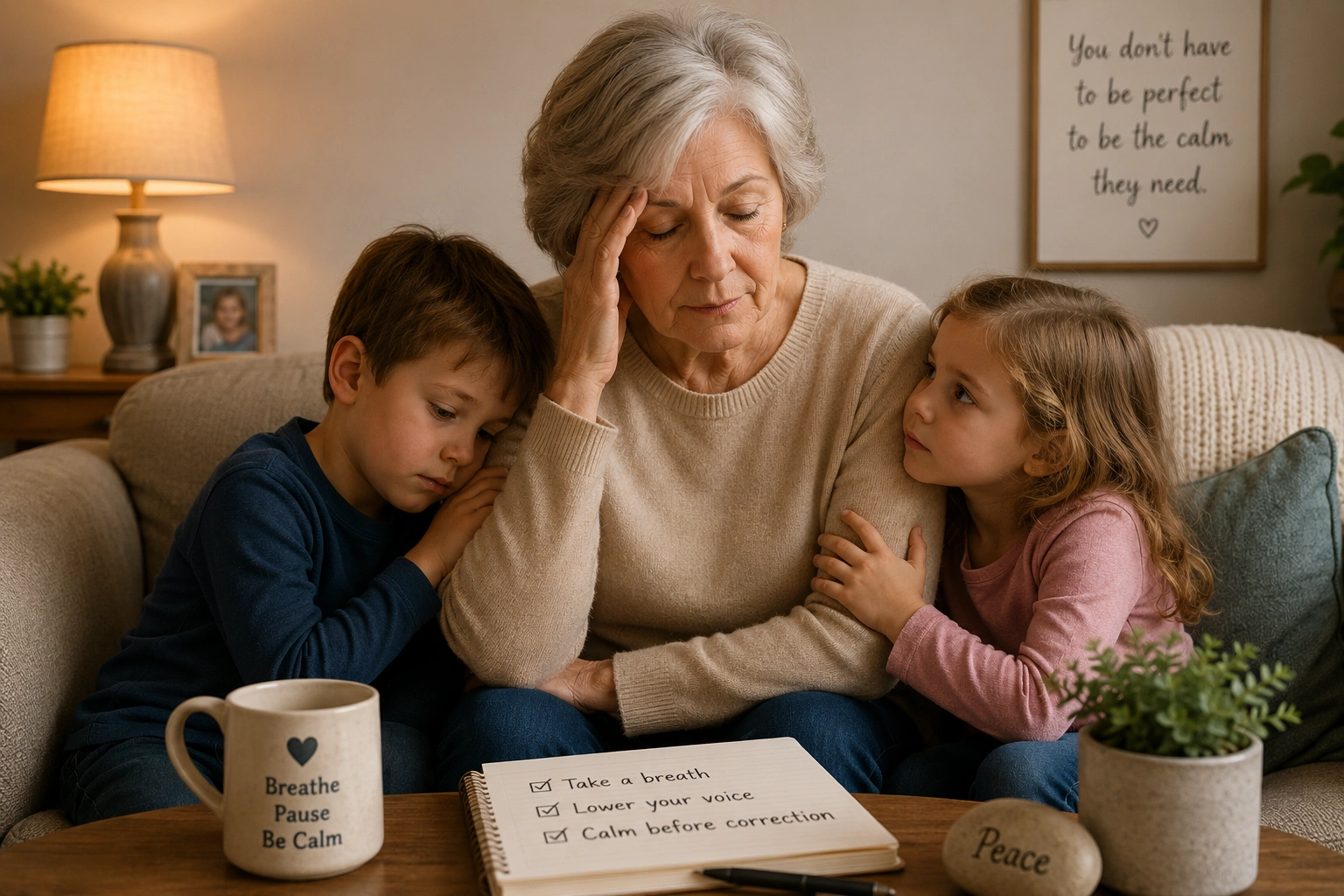
You do not need a perfect parenting script in hard moments. Your grandchildren need a calm adult more than a perfect one.
Try This in the Moment
Step 1: Pause before answering immediately.
Step 2: Lower your voice instead of raising it.
Step 3: Focus on calming yourself before correcting behavior.
Small Ways To Calm Yourself Before Reacting
- unclench your jaw
- Slow your breathing
- Soften your facial expression
- Move your body more slowly
- Give yourself a moment before responding
These small calming techniques help your body move out of stress mode before reactions take over.
Children feel safer around calm adults. Your presence affects their behavior more than you may realize.
And if you still react sometimes, repair matters more than perfection. A calm conversation after a hard moment can still build emotional safety.
Why Small Child Behaviors Feel Overwhelming When You’re Exhausted
Because emotional exhaustion shrinks your ability to handle stress calmly.
Things you normally ignore may suddenly feel overwhelming:
- loud playing
- constant talking
- whining
- sibling conflict
- repeated interruptions
This often happens when stress builds quietly over time.
Many grandparents think they are becoming “too sensitive.” In reality, their body is asking for rest and recovery.
That is why emotional regulation matters so much in trauma-informed caregiving. Calm responses become harder when caregivers stay emotionally overloaded for too long.
Understanding what happens inside the nervous system during stressful moments can make these reactions feel much less confusing.
If you are helping raise grandchildren full time, you may also relate to the emotional stress many grandparents carry silently while trying to hold everything together.
How Can Grandparents Calm Themselves Without Feeling Guilty?
A lot of grandparents feel guilty for needing space or rest.
But needing recovery does not make you selfish.
You cannot pour calm into children when your own body feels completely drained.
Healthy Emotional Recovery Can Look Like
- taking quiet breaks
- slowing down your schedule
- asking for help
- protecting your emotional energy
- giving yourself time to reset after stressful moments
Grandchildren do not need perfect grandparents.
They need grandparents who feel emotionally safe, emotionally present, and willing to reconnect after hard moments.
Looking for More Support?
If you’re trying to stay calm more consistently, reduce guilt after difficult moments, and build stronger relationships with the children in your care, The Drama-Free Parent offers practical guidance rooted in connection, emotional safety, and real-life caregiving challenges.
Staying Calm Starts With Taking Care of Yourself, Too
If you keep feeling emotionally reactive around your grandchildren, you probably do not need more shame or pressure.
You may simply need more support.
That is one reason so many families stay stuck in stressful patterns even when they love each other deeply. If you are trying to create a calmer grandparent-led home, you may also relate to how a simple 3-day reset helped our family slow things down and reconnect again.
You do not need to carry this stress alone.
Calm parenting does not grow through fear, guilt, or perfectionism. It grows through emotional safety, healthier reactions, and small changes repeated over time.
Start With One Small Step
If you’re feeling emotionally exhausted, you do not need to change everything overnight.
The Free Guide offers simple trauma-informed strategies that can help you create more calm, reduce emotional overwhelm, and strengthen connection with the children you love.
Parenting Can Feel Lonely. It Doesn’t Have to Stay That Way.
Many grandparents know what they want to do differently. The hard part is applying it consistently when stress, exhaustion, and everyday life get in the way.
The Parents Hub was created for caregivers who want ongoing support, practical tools, and a community of people who understand the realities of raising children through connection rather than control.