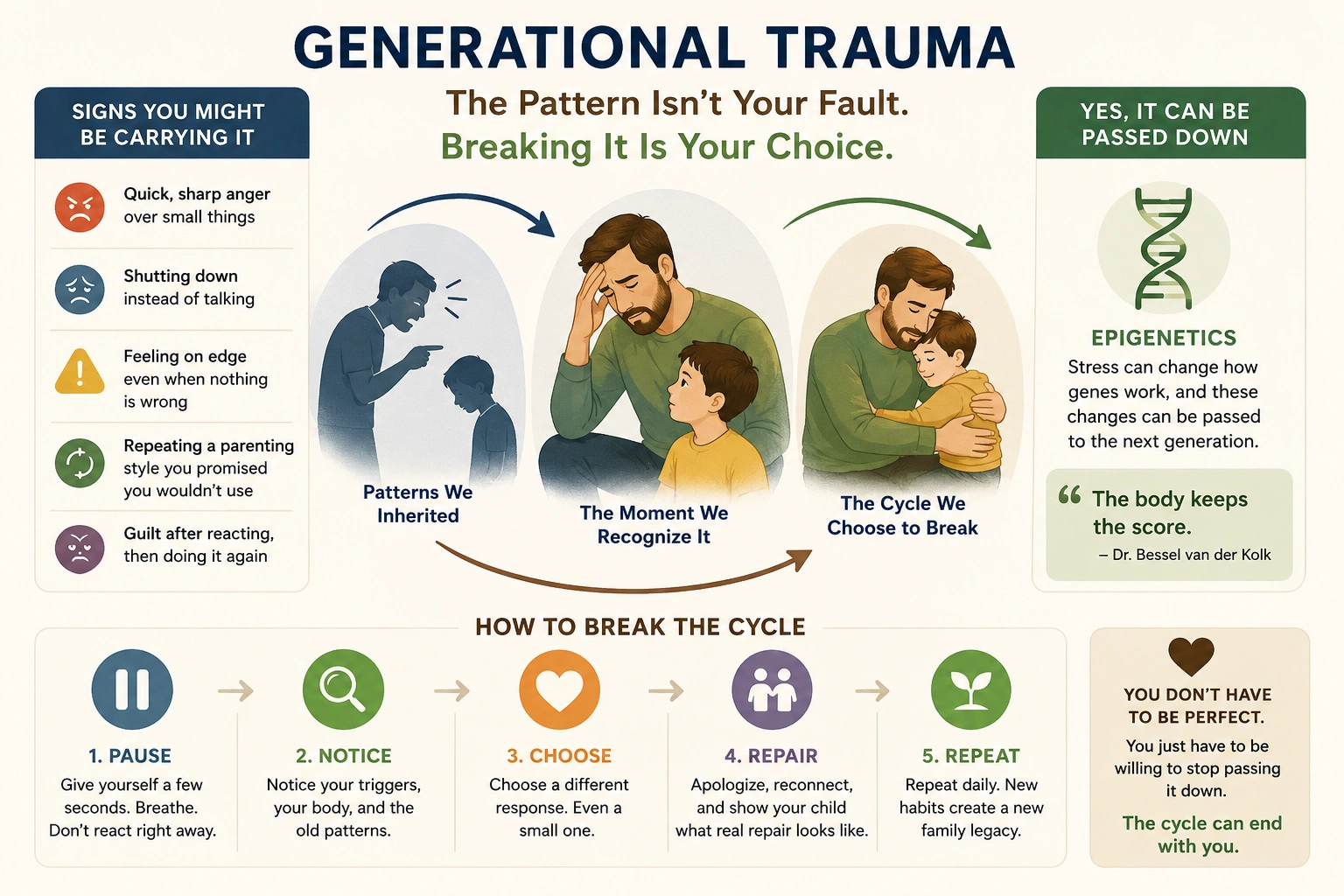

The shoes are still by the door. The child says no. You repeat yourself. The child argues. Your voice gets sharper, their resistance gets bigger, and suddenly the family is no longer solving a shoe problem. Everyone is trying to prove who is in charge.
Power struggles with children happen when the focus shifts from the actual need to winning the contest. The way out is not to surrender every limit, and it is not to overpower the child. Step out of the contest while continuing to protect the boundary.
That may sound impossible in the middle of defiance. It becomes practical when you know which decisions belong to the adult, where the child can have real control, and what calm follow-through looks like when the child still refuses.
At a Glance
To stop a power struggle:
- Regulate your own urgency.
- Identify the real nonnegotiable.
- Reduce words and remove the audience.
- Offer two acceptable choices when choice is real.
- Follow through on what you control.
- Solve the deeper problem after everyone is calm.
The aim is not immediate emotional agreement. It is safe, respectful movement without turning the relationship into a contest.
Why Power Struggles Start
A power struggle often begins with an ordinary developmental need. Children seek autonomy. Adults carry responsibility. Conflict appears where those two realities meet.
The struggle becomes more likely when:
- A child is tired, hungry, overstimulated, or rushed
- The instruction interrupts a preferred activity without warning
- The child has very little meaningful control elsewhere
- The adult interprets resistance as disrespect or rejection
- The family has repeated the same conflict so often that both sides expect battle
- The limit is unclear or changes according to the adult’s mood
- The child has learned that arguing delays the task
- Past experiences make adult control feel threatening
Behavior is communication, but it is not a complete command. Understanding why a child resists helps you respond wisely; it does not require you to let unsafe or destructive behavior continue. See What Your Child’s Behavior Is Actually Communicating for a deeper explanation.
Notice When the Goal Changes From Teaching to Winning

Ask yourself, “What actually needs to happen here?”
Perhaps the child needs to leave for school. Perhaps the medicine must be taken as directed. Perhaps the gaming device must be put away. The real need is usually smaller than the argument surrounding it.
Signs that the goal has changed to winning include:
- You keep adding consequences during the argument
- You demand the final word
- You correct tone, posture, facial expression, and every sentence at once
- You make the child admit that you are right
- You continue lecturing after the necessary action has happened
- You reject workable solutions because they were the child’s idea
You can remain the responsible adult without forcing the child to feel cheerful, look grateful, or agree with your judgment.
Step 1: Regulate the Adult’s Urgency
Power struggles feed on speed. The adult feels that compliance must happen now and must look a particular way. The child’s refusal then feels like an emergency.
Before speaking again:
- Lower your shoulders
- Slow your exhale
- Drop your volume rather than raising it
- Move closer if it is safe
- Decide which part truly cannot change
Try saying to yourself, “I do not have to win this moment. I need to lead it.”
This is part of drama-free parenting: refusing to let intensity make every decision for you.
Step 2: Find the Smallest Nonnegotiable
Separate what must happen from how it happens.
The nonnegotiable may be:
- The body must remain safe
- The family must leave by a certain time
- The device must be off overnight
- The child must attend school unless excused
- Property cannot be damaged
- A respectful pause is required before the conversation continues
Other parts may be flexible:
- Which shoes the child wears
- Whether homework happens at the table or desk
- Whether the child walks to the car or is helped
- Whether the conversation resumes in ten minutes or thirty
- Whether a shower happens before or after a television program
When adults try to control every detail, children may fight for control through the only tool still available: refusal.
Step 3: Say Less
During escalation, explanations often sound like pressure. Use one clear sentence.
Instead of:
“How many times have I told you that we have to leave, and you always do this when I am already late, and it is completely disrespectful?”
Try:
“We are leaving now. Shoes on by yourself, or I will bring them to the car.”
Instead of debating every objection, repeat the boundary once:
“I hear that you do not want to go. We are still leaving.”
This is not coldness. It prevents the conversation from becoming fuel.
Step 4: Offer Choices Only When Both Options Are Acceptable
Choice can reduce a power struggle because it returns appropriate control to the child. But false choices create more distrust.
Useful choices:
- “Homework before snack or after snack?”
- “Walk beside me or hold my hand?”
- “Turn the game off now or when the two-minute timer ends?”
- “Talk here or in the car?”
False choices:
- “Do you want to go to school?” when staying home is not an option
- “Are you ready for bed?” when bedtime has already arrived
- “Will you stop hitting?” when the adult must immediately prevent harm
If the child does not choose, the adult chooses calmly: “You are having trouble choosing, so I will choose this time.”
Step 5: Follow Through on What You Control
Avoid trying to control a child’s internal state. You cannot force willingness, gratitude, or calm. You can control access, location, timing, your own participation, and the environment.
“I will not argue about the device. I am putting it on the charger now.”
“I will not let anyone hit. I am moving between you.”
“I am pausing this conversation while we are insulting each other. I will return at seven.”
“The car is leaving at 7:30. If your hair is not finished, you can bring the brush.”
Follow-through should be safe, proportionate, and related to the situation. It should not be designed to humiliate or frighten the child.
For more guidance on limits, read How to Set Boundaries Without Yelling.
When the Adult Must Make the Decision
Some situations are not collaborative in the moment. Adults must intervene when there is immediate danger, serious aggression, medical need, legal responsibility, or a limit the child cannot yet manage.
Use direct language:
“I will not let you run into the road. I am holding your hand.”
“The doctor prescribed this medicine. We can discuss how to make taking it easier, but we are following the medical plan.”
“You are not safe to drive tonight. I am keeping the keys.”
Safety action should be as calm and respectful as the situation allows. If you face aggression, self-harm, threats, dangerous elopement, or another crisis, seek professional or emergency support appropriate to the risk.
Scripts for Common Power Struggles

Getting dressed
“Your body needs clothes before school. Blue shirt or green shirt? If you do not choose, I will bring the blue one.”
Leaving the playground
“You wanted more time. The timer is finished. Walk to the gate or hold my hand.”
Homework refusal
“I will not argue about whether the assignment exists. We can decide whether you begin with math or reading and whether I sit nearby.”
If the work is consistently impossible, investigate learning difficulty, anxiety, attention, exhaustion, or unclear expectations instead of assuming the refusal is simply a character problem.
Screen shutdown
“The game ends after this round. You can save it, or I will turn off the system when the timer ends.”
Teen curfew
“I hear that you want a later time. Tonight’s agreement is eleven. We can review the curfew tomorrow based on how tonight goes.”
Disrespectful language
“I want to understand your point. I will listen when we are not insulting each other. I am taking ten minutes and will come back.”
What If the Child Still Refuses?
Refusal does not mean the approach failed. Your next action depends on the task, age, safety risk, and child’s abilities.
You may:
- Help a young child complete the transition
- Remove access to the item connected to the limit
- Let a safe, natural outcome occur
- Pause the demand when the child is genuinely overwhelmed
- Return to the responsibility with more support
- Seek school, medical, developmental, or mental health guidance when refusal is persistent and impairing
Do not turn every refusal into a character verdict. “You are lazy,” “You are manipulative,” and “You never care” make the problem larger and less solvable.
Solve the Pattern Outside the Conflict
The best time to solve a repeated power struggle is not during the struggle.
At a calm time, ask:
- What makes this routine hard?
- What part can the child control?
- Does the expectation fit the child’s age and abilities?
- Would a visual routine, timer, warning, or checklist help?
- Is the child avoiding shame, confusion, sensory discomfort, or fear?
- What will the adult do consistently after one clear reminder?
Invite the child into planning where appropriate:
“Mornings keep turning into a battle. We both need a better plan. What would help you get ready without me repeating everything?”
The adult keeps final responsibility, but the child may see practical barriers the adult has missed.
Children With Trauma or Relationship Loss
A child who has experienced frightening, inconsistent, or disappearing adults may test control and connection differently. Care can feel risky. A routine limit can sound like the beginning of rejection.
Use predictability and relational reassurance:
“You do not have to agree with me. I am staying with you, and I am keeping the limit.”
“I will come back after our ten-minute break. I am not leaving the relationship.”
“You can have space. I will be in the kitchen when you are ready.”
Connection before correction does not remove the adult’s role. It helps the child receive the correction without also fighting for relational safety. Read Connection Before Correction for more.
What If You Get Pulled Into the Struggle?
Stop and repair your part without abandoning the issue.
“I turned this into a battle. I am going to start again. The boundary is that the phone charges outside the bedroom. You can be unhappy about that. I am not going to argue or insult you.”
If you yelled, use the complete five-step process in What to Do After You Yell at Your Child.
A One-Week Power-Struggle Reset
Choose one repeated conflict. For seven days:
- Give one advance warning.
- State the nonnegotiable in one sentence.
- Offer no more than two real choices.
- Follow through after one reminder.
- Do not add unrelated punishments.
- Discuss improvements at a calm time.
- Notice whether the adult or child needs additional support.
Track what reduces friction. The goal is not a week without protest. The goal is less escalation and more predictable leadership.

Frequently Asked Questions
Are power struggles normal?
Yes. Autonomy develops across childhood and adolescence. Frequent, intense, or dangerous struggles may signal stress, unrealistic expectations, developmental differences, mental health concerns, or a family pattern that needs support.
Does offering choices let the child control the parent?
No, when the adult selects two acceptable options. The adult defines the boundary; the child controls an appropriate part of the process.
Should I ignore disrespect?
You can address disrespect without fighting over it in the hottest moment. Pause the conversation, model the tone you expect, and return when both people can participate safely.
What if my child argues about everything?
Reduce unnecessary commands, create real areas of autonomy, and look for patterns such as fatigue, anxiety, attention difficulties, sensory stress, or repeated relational conflict. Seek professional guidance when arguing seriously disrupts home, school, or safety.
Can I use consequences?
Yes, when they are safe, proportionate, predictable, and related to the behavior. Consequences work poorly when they become weapons added during an argument.
Lead Without Entering the Contest
You do not need to overpower your child to remain the adult. You need to know what matters, say it clearly, allow appropriate control, and follow through without making the relationship the price of resistance.
Step out of the contest. Keep the boundary. Return to teaching when the nervous systems in the room can learn again.
For Richard Dixson’s broader framework for transforming reactive parenting patterns, explore The Drama-Free Parent and read the available free chapter.
Sources and Further Reading
- PBS Parents: Parenting Without Power Struggles
- CDC: Positive Parenting Tips
- HealthyChildren.org: Effective Discipline to Raise Healthy Children
This article provides general educational information and is not a substitute for individualized medical, mental health, legal, or emergency advice.